

Why are Echinoderms Categorized Together? Exploring Shared Characteristics and Evolutionary History
Echinoderms, including starfish, sea urchins, and sea cucumbers, are categorized together due to a unique combination of features including their internal skeleton (endoskeleton), a distinctive water vascular system, and pentaradial symmetry in adults. These features, along with shared developmental traits, strongly suggest a common evolutionary ancestry and justify their placement in the phylum Echinodermata.
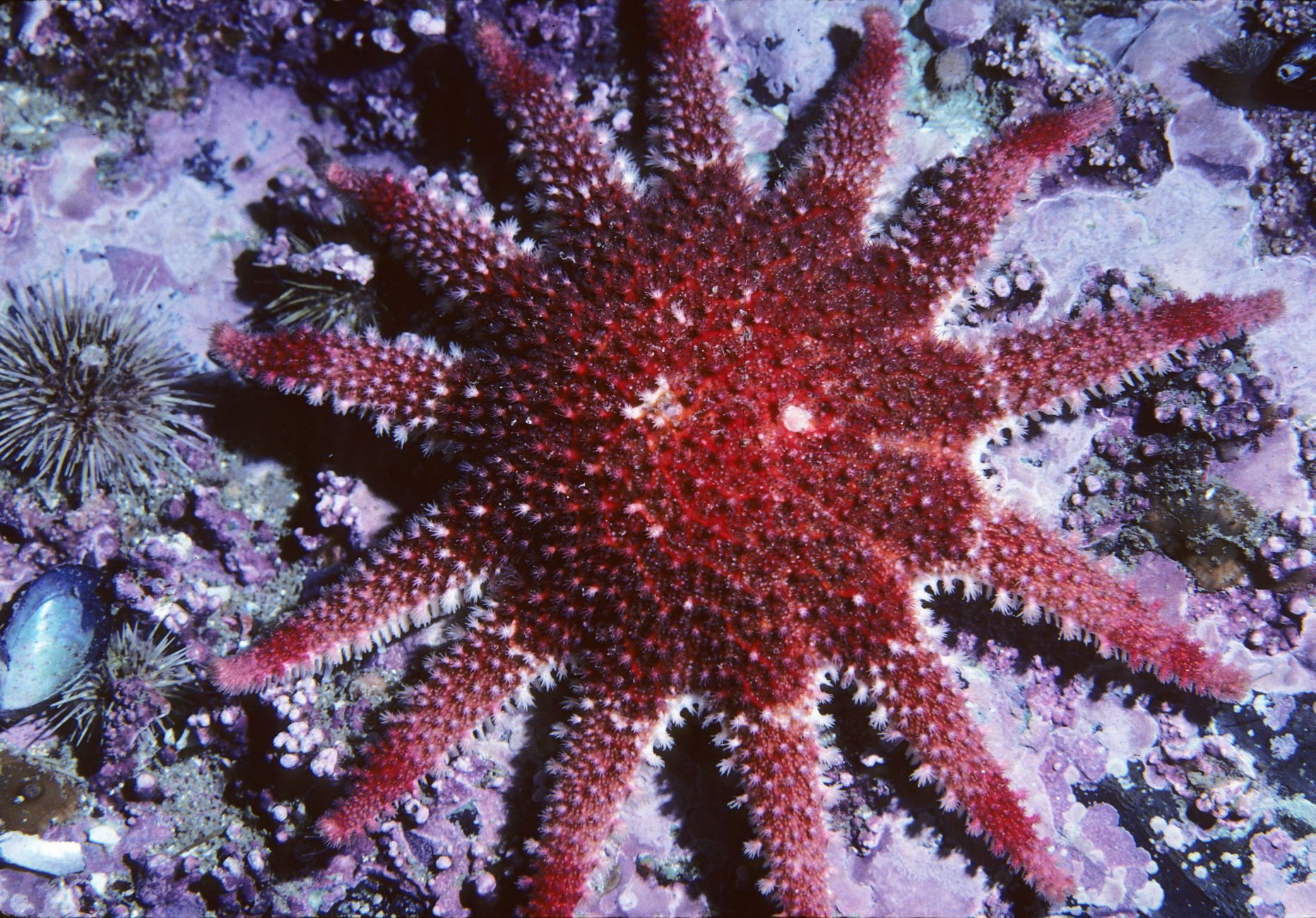
Introduction to Echinoderms
Echinoderms, meaning “spiny skin,” are a diverse group of marine invertebrates that populate oceans worldwide. Their classification within the phylum Echinodermata reflects a fascinating convergence of morphological, physiological, and developmental characteristics. Understanding why are echinoderms categorized together requires delving into these key features that set them apart from other animal groups. Their unique body plan and evolutionary history make them a captivating subject for biological study.

Is distilled water good for goldfish?
What colours are fish most attracted to?
Can you put your finger in a trout's mouth?
Is methylene blue anti bacterial?
Key Characteristics Unifying Echinoderms

Several defining traits unite the diverse group of animals we call echinoderms. These shared features, inherited from a common ancestor, provide the basis for their classification within the phylum Echinodermata.
-
Endoskeleton: Unlike insects with their external exoskeletons, echinoderms possess an internal skeleton, or endoskeleton, composed of calcareous ossicles. These ossicles can be fused together to form a rigid test, as seen in sea urchins, or remain more flexible, as in starfish. This internal support structure is a crucial feature.
-
Water Vascular System: Perhaps the most distinctive characteristic, the water vascular system is a hydraulic network of canals and tube feet used for locomotion, feeding, respiration, and sensory perception. This unique system, found only in echinoderms, represents a major evolutionary innovation. It allows for intricate movements and interactions with the environment.
-
Pentaradial Symmetry: Adult echinoderms exhibit pentaradial symmetry, meaning their body parts are arranged in five or multiples of five around a central axis. While larval stages are bilaterally symmetrical, the transition to pentaradial symmetry is a defining feature of their adult form. This symmetry is related to their sedentary lifestyle.
-
Developmental Similarities: Echinoderms share developmental similarities with chordates (animals with a backbone), including deuterostome development. This means that during embryonic development, the anus forms before the mouth. This shared characteristic points to a close evolutionary relationship between echinoderms and chordates, placing them together within the Deuterostomia clade.
Evolutionary History and Classification
The evolutionary history of echinoderms helps explain why are echinoderms categorized together. Fossil evidence suggests that echinoderms originated over 500 million years ago during the Cambrian period. Early echinoderms possessed diverse body plans, and pentaradial symmetry evolved later in their lineage. Their close relationship to chordates, based on deuterostome development, provides further justification for their grouping. The phylum Echinodermata is divided into five main classes:
| Class | Examples | Key Characteristics |
|---|---|---|
| Asteroidea | Starfish | Star-shaped body with typically five arms; tube feet with suckers; able to regenerate lost limbs. |
| Ophiuroidea | Brittle stars | Star-shaped body with long, slender arms that are distinctly set off from the central disc; tube feet without suckers; use arms for locomotion. |
| Echinoidea | Sea urchins, sand dollars | Globular or disc-shaped body enclosed in a rigid test; spines for protection and locomotion; Aristotle’s lantern (a complex feeding apparatus). |
| Holothuroidea | Sea cucumbers | Elongated, cucumber-shaped body; leathery skin; tube feet modified for feeding; capable of evisceration (expelling internal organs as a defense mechanism). |
| Crinoidea | Sea lilies, feather stars | Flower-like appearance; attached to the substrate by a stalk (sea lilies) or mobile (feather stars); filter feeders with arms bearing pinnules. |
Understanding Echinoderm Diversity
The diversity within Echinodermata is remarkable, given their shared characteristics. Variations in body shape, feeding strategies, and ecological roles contribute to their success in various marine environments. Studying the adaptations of different echinoderm classes provides insights into the evolutionary processes that have shaped this fascinating group of animals. The shared developmental and morphological characteristics explain why are echinoderms categorized together, despite their diverse adaptations.
Frequently Asked Questions (FAQs)
Why is pentaradial symmetry significant in echinoderm classification?
Pentaradial symmetry is significant because it is a defining characteristic of adult echinoderms and reflects their sedentary lifestyle and interaction with the environment in a 360-degree radius. It distinguishes them from bilaterally symmetrical animals and supports their classification within Echinodermata.
What is the function of the water vascular system?
The water vascular system is a hydraulic network responsible for locomotion, feeding, respiration, and sensory perception in echinoderms. Its unique structure and function are exclusive to echinoderms and are a key reason for their classification together.
How does the endoskeleton of echinoderms differ from the exoskeleton of insects?
Echinoderms possess an endoskeleton, an internal skeleton composed of calcareous ossicles, while insects have an exoskeleton, an external skeleton made of chitin. This difference in skeletal structure reflects fundamental differences in their body plans and evolutionary histories.
What is deuterostome development, and why is it important in understanding echinoderm evolution?
Deuterostome development refers to the embryonic development where the anus forms before the mouth. This developmental pattern is shared by echinoderms and chordates, suggesting a close evolutionary relationship and providing evidence for their placement within the Deuterostomia clade.
What are the main classes within the phylum Echinodermata?
The main classes within Echinodermata are Asteroidea (starfish), Ophiuroidea (brittle stars), Echinoidea (sea urchins and sand dollars), Holothuroidea (sea cucumbers), and Crinoidea (sea lilies and feather stars). Each class possesses distinctive characteristics but shares fundamental features that unite them as echinoderms.
Can echinoderms regenerate lost body parts?
Yes, many echinoderms, particularly starfish, have the remarkable ability to regenerate lost body parts, including arms and even entire individuals from a severed arm. This regenerative capacity is a distinctive feature within the phylum.
What is Aristotle’s lantern, and which echinoderms possess it?
Aristotle’s lantern is a complex feeding apparatus found in sea urchins. It consists of a series of calcareous plates and muscles used for scraping algae and other food sources from surfaces.
How do sea cucumbers defend themselves?
Sea cucumbers have several defense mechanisms, including evisceration, the expulsion of their internal organs, which can startle predators. They can later regenerate these lost organs.
What is the ecological significance of echinoderms?
Echinoderms play important ecological roles as predators, grazers, and deposit feeders in marine ecosystems. They help maintain balance in marine food webs and contribute to nutrient cycling.
Are echinoderms closely related to vertebrates (animals with backbones)?
Yes, based on deuterostome development and molecular evidence, echinoderms are considered to be among the closest invertebrate relatives of vertebrates. This surprising relationship highlights the evolutionary connections between seemingly disparate animal groups.
What is the fossil record of echinoderms like?
The fossil record reveals a diverse array of ancient echinoderms, including forms with different body plans than modern species. This record provides insights into the evolutionary history and diversification of the phylum.
How do scientists determine evolutionary relationships between organisms?
Scientists use a combination of morphological data, developmental patterns, and molecular data (DNA and RNA) to reconstruct evolutionary relationships between organisms. Phylogenetic analysis helps to understand the evolutionary history. This is all part of understanding why are echinoderms categorized together.