
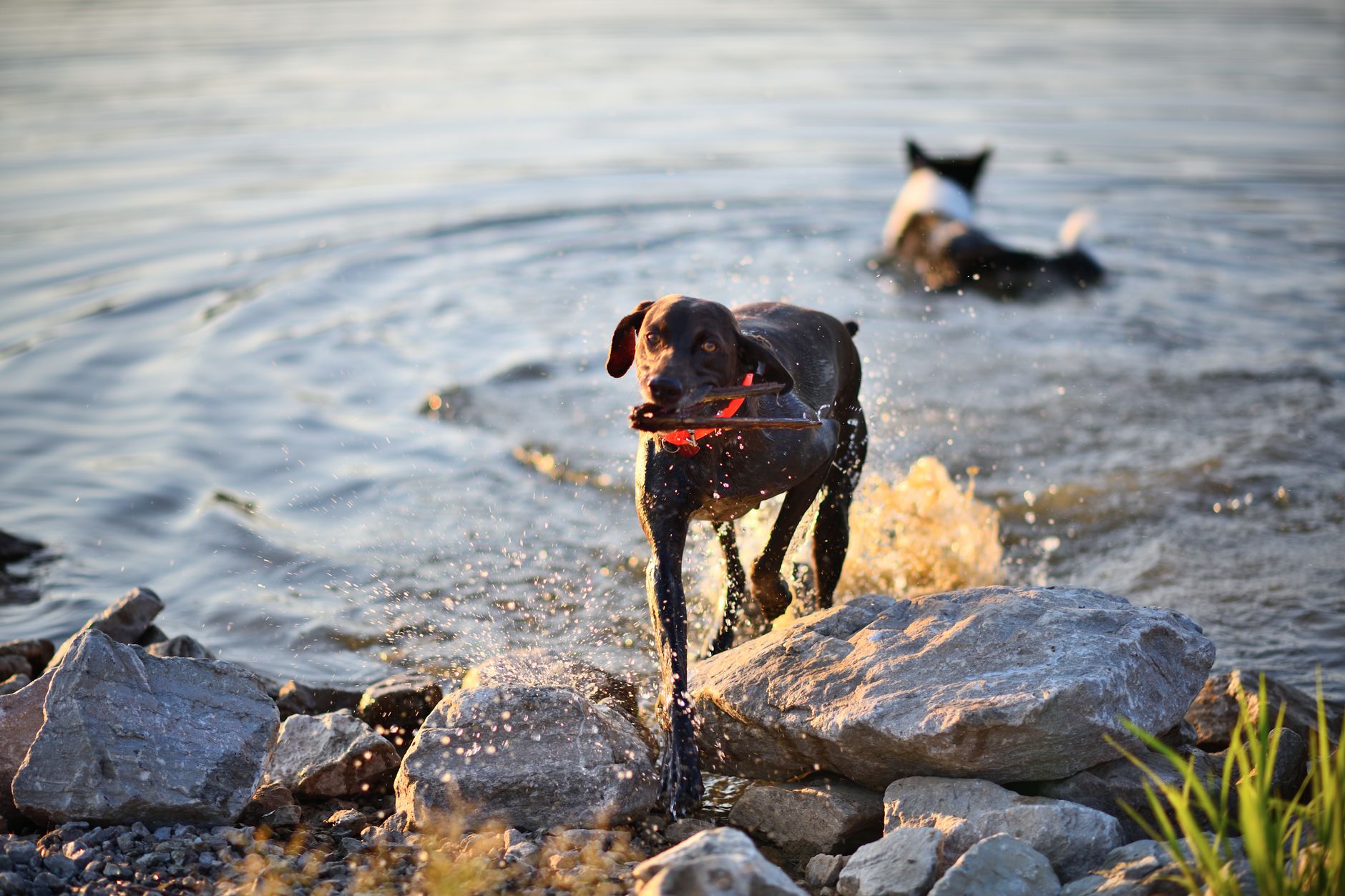
Why are Dogs Afraid of Blue Water?
Dogs aren’t necessarily afraid of blue water specifically, but rather react to what the color blue might indicate about the water’s depth or properties; more accurately, they may be wary of any unfamiliar water body if they can’t clearly perceive its bottom or potential dangers. This fear stems from a combination of instinct, visual perception, and past experiences.

Understanding Canine Water Aversion
Many factors contribute to a dog’s hesitancy or outright fear of water, regardless of color. While some breeds, like Labrador Retrievers and Portuguese Water Dogs, are naturally inclined towards swimming, others are more cautious. Why are dogs afraid of blue water? Because it often hides the bottom, making it impossible for them to gauge the depth and potential hazards.
- Instinctual Caution: Dogs, like many animals, are naturally cautious of the unknown. Unfamiliar environments trigger an innate survival mechanism, prompting them to assess potential risks before venturing forward. A body of water with an indiscernible bottom presents such a risk.
- Visual Perception: Dogs’ vision differs from humans’. They have dichromatic vision (seeing primarily in blues and yellows) compared to our trichromatic vision (seeing in red, green, and blue). This difference affects how they perceive depth and clarity in water. Clear water, regardless of whether it’s tinged blue, can be difficult for them to gauge.
- Past Experiences: A negative experience, such as nearly drowning or being forced into water, can create a lasting aversion. Even a seemingly minor incident can imprint a fear response.

Can planaria live in bottled water?
Can fish hear water?
How do I add oxygen to my goldfish water?
Do carbon filters remove water hardness?
The Color Blue and Depth Perception

The color blue itself isn’t the primary cause of fear. However, the association of blue with deep water plays a significant role.
- Lack of Visual Cues: Deep water, especially in swimming pools or dark lakes, often appears intensely blue. This color obscures the bottom, removing vital visual cues that dogs rely on to assess the depth and safety of the water.
- Reflected Light: The way water reflects light can also contribute to the perception of depth. The more light that’s absorbed, the darker the water appears, leading to a perceived greater depth.
Breed Predispositions and Individual Differences
It’s crucial to remember that every dog is an individual. Why are dogs afraid of blue water? The answer varies significantly from dog to dog.
- Breed Heritage: Breeds bred for water activities generally have a higher tolerance and even enjoyment of water.
- Individual Temperament: A naturally shy or anxious dog is more likely to exhibit fear responses to new or unfamiliar situations, including bodies of water.
- Socialization: Early exposure to water, in a positive and controlled environment, can greatly reduce the likelihood of developing a fear of water.
Gradual Introduction and Positive Reinforcement
Overcoming a dog’s fear of water requires patience, understanding, and positive reinforcement.
- Start Slowly: Begin by introducing your dog to water in a shallow, controlled environment.
- Use Positive Reinforcement: Reward your dog with treats, praise, and toys for any interaction with the water, no matter how small.
- Make it Fun: Turn the experience into a game, using toys and playful encouragement.
- Avoid Forcing: Never force your dog into the water, as this will only reinforce their fear.
- Consider Professional Help: If your dog’s fear is severe, consult a professional dog trainer or behaviorist.
Comparing Water Fears Across Breeds
The table below illustrates how different breeds respond to water environments.
| Breed | Water Affinity | Likely Fear Source | Mitigation Strategy |
|---|---|---|---|
| Labrador Retriever | High | Unlikely, unless negative past experience. | Continue positive reinforcement. |
| Chihuahua | Low | Cold water, fear of the unknown, perceived danger. | Gradual introduction, warm water. |
| Bulldog | Moderate | Breathing difficulties in water, body shape. | Life vest, supervised shallow water play. |
| Poodle | High | Rarely fearful, loves games in the water. | Continued exposure to water activities. |
Practical Steps to Help a Fearful Dog
If you are wondering “Why are dogs afraid of blue water?,” here are practical steps to take to help them overcome their fear.
- Controlled Environment: Start with a kiddie pool or shallow stream.
- Supervised Interaction: Always be present and provide reassurance.
- Positive Association: Use treats and praise to create positive experiences.
- Consistency: Regular, short sessions are more effective than infrequent, long ones.
- Professional Guidance: Seek help from a certified trainer if needed.
Frequently Asked Questions
Why is my dog suddenly afraid of water when they used to love it?
This can stem from a negative experience, even if you weren’t aware of it happening. Perhaps they slipped and fell, got caught in a current, or encountered an unexpectedly cold patch of water. A medical condition causing pain, like arthritis, could also make water immersion uncomfortable. Consult your vet to rule out underlying health problems.
Can dogs see the bottom of a pool as clearly as humans?
No, their vision isn’t as sharp. They have fewer cone cells in their eyes which affects their depth perception and ability to see details clearly, especially underwater. Blue water adds to the difficulty as it often obscures the bottom further.
Does the temperature of the water affect a dog’s fear response?
Absolutely. Dogs are more sensitive to temperature changes than humans. Cold water can be a significant deterrent, particularly for small breeds with less body mass. Always ensure the water is a comfortable temperature before encouraging your dog to enter.
Is it cruel to force a dog to swim if they’re afraid?
Yes, it is. Forcing a dog into water will only exacerbate their fear and create a negative association. Patience and positive reinforcement are key to helping them overcome their aversion.
Are certain dog breeds more prone to water fear?
Yes, breeds not traditionally bred for water work, such as Chihuahuas, Bulldogs, and Shih Tzus, are often more hesitant around water. This is due to a combination of physical characteristics and a lack of innate water drive. However, individual temperaments also play a significant role.
What are some signs that my dog is afraid of water?
Common signs include trembling, panting excessively, trying to escape, refusing to approach the water, tucking their tail, and having dilated pupils. Pay close attention to your dog’s body language and avoid pushing them beyond their comfort zone.
How long does it typically take to overcome a dog’s fear of water?
It varies greatly depending on the individual dog, the severity of their fear, and the consistency of the training. Some dogs may overcome their fear in a few weeks, while others may take months or even years. Consistency and patience are crucial.
Can I use treats to bribe my dog into the water?
While treats can be a valuable tool, they should be used as a reward for positive interaction with the water, not as a bribe to force them in. Start by rewarding them for simply approaching the water, then gradually increase the difficulty.
Is it safe to use a life vest on a dog who’s afraid of water?
Yes, a properly fitted life vest can provide added security and confidence, particularly for breeds that aren’t natural swimmers or have physical limitations. Ensure the vest fits snugly and allows for full range of motion.
What should I do if my dog starts panicking in the water?
Remain calm and gently guide them back to safety. Avoid panicking yourself, as this will only amplify their fear. Once they’re safe, provide comfort and reassurance.
Should I consult a professional dog trainer to help with my dog’s water fear?
If your dog’s fear is severe or you’re unsure how to proceed, consulting a certified dog trainer or behaviorist is highly recommended. They can provide personalized guidance and strategies tailored to your dog’s specific needs.
Why are dogs afraid of blue water and can this water be used as a therapeutic tool?
Dogs might be afraid of blue water because they can’t see the bottom, creating a sense of uncertainty. Gradual exposure to water, guided by a trainer, may help some dogs relax and enjoy it, offering potential therapeutic benefits related to exercise and decreased anxiety.