
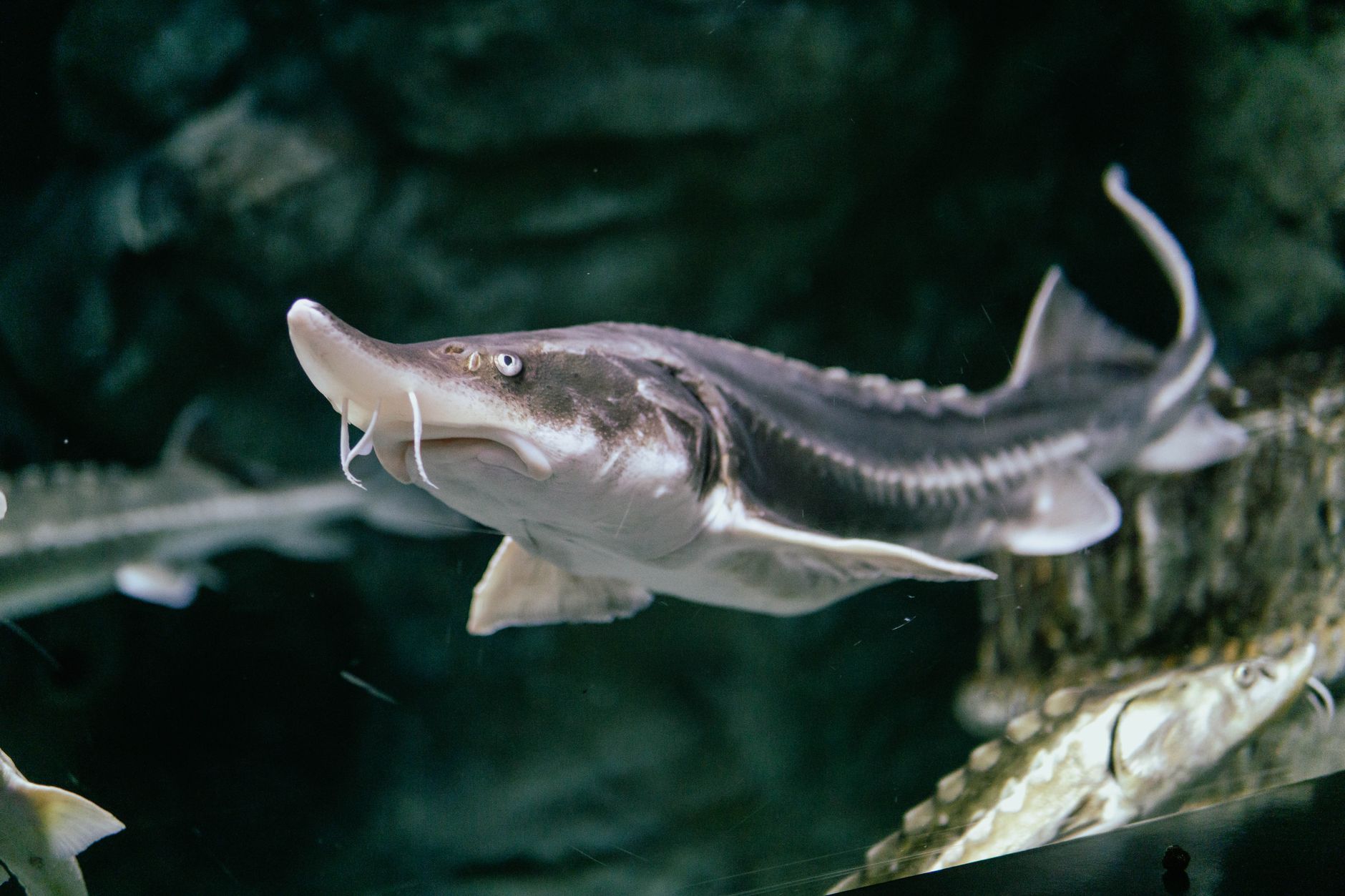
Differentiating Osteichthyes and Chondrichthyes: Key Characteristics
Which characteristics of bony fishes separate them from the members of class Chondrichthyes? The defining feature lies in their skeletal structure: bony fishes (Osteichthyes) possess a skeleton primarily composed of bone, while Chondrichthyes (sharks, rays, and chimaeras) have skeletons made of cartilage. This fundamental difference dictates many other physical and physiological disparities.

Introduction: The Tale of Two Fish Classes
The vast underwater world teems with diverse life, and among the most captivating inhabitants are the fishes. Two major classes, Osteichthyes (bony fishes) and Chondrichthyes (cartilaginous fishes), represent significant evolutionary pathways. Understanding the distinctions between them provides crucial insights into the adaptability and diversification of aquatic life. This article will explore which characteristics of bony fishes separate them from the members of class Chondrichthyes, providing a comprehensive overview suitable for both enthusiasts and budding marine biologists.

Is distilled water good for goldfish?
What colours are fish most attracted to?
Can you put your finger in a trout's mouth?
Is methylene blue anti bacterial?
Skeletal Composition: Bone vs. Cartilage

The most fundamental difference lies in their skeletal composition.
- Osteichthyes (Bony Fishes): As their name suggests, bony fishes possess a skeleton primarily composed of bone. This bony skeleton provides greater rigidity and support, contributing to their diverse body plans.
- Chondrichthyes (Cartilaginous Fishes): In contrast, cartilaginous fishes have skeletons made almost entirely of cartilage, a flexible and lighter tissue. While cartilage offers flexibility, it lacks the strength and rigidity of bone.
Operculum: Gill Cover and Respiratory Efficiency
The operculum, a bony flap covering the gills, is a distinguishing feature of bony fishes.
- Osteichthyes (Bony Fishes): Bony fishes possess an operculum. This structure allows them to pump water over their gills, enabling respiration even when stationary. This enhances their ability to thrive in various aquatic environments.
- Chondrichthyes (Cartilaginous Fishes): Cartilaginous fishes lack an operculum. They typically rely on ram ventilation (swimming with their mouths open to force water over their gills) or buccal pumping (actively drawing water in through their mouth). This often necessitates constant movement, although some species have spiracles for supplemental respiration.
Swim Bladder: Buoyancy Control
The swim bladder, an internal gas-filled sac, plays a crucial role in buoyancy regulation.
- Osteichthyes (Bony Fishes): Most bony fishes have a swim bladder, allowing them to regulate their buoyancy and maintain their position in the water column with minimal energy expenditure.
- Chondrichthyes (Cartilaginous Fishes): Cartilaginous fishes generally lack a swim bladder. They rely on other mechanisms, such as oily livers and heterocercal tails (uneven lobes), to generate lift and prevent sinking.
Scales: Morphology and Composition
The scales covering the body differ significantly in morphology and composition.
- Osteichthyes (Bony Fishes): Bony fishes have various types of scales, including cycloid scales (smooth and circular) and ctenoid scales (comb-like edges). These scales are derived from bone and are covered by a thin layer of skin.
- Chondrichthyes (Cartilaginous Fishes): Cartilaginous fishes have placoid scales (dermal denticles), which are structurally similar to teeth. These scales are sharp and give the skin a rough, sandpaper-like texture.
Reproduction: Strategies for Procreation
Reproductive strategies also differ considerably between the two classes.
- Osteichthyes (Bony Fishes): Bony fishes exhibit diverse reproductive strategies, including external fertilization (spawning) and internal fertilization. They can be oviparous (egg-laying), viviparous (live-bearing), or ovoviviparous (eggs hatch internally).
- Chondrichthyes (Cartilaginous Fishes): Cartilaginous fishes exclusively employ internal fertilization. They can be oviparous (laying tough, leathery egg cases), viviparous (giving birth to live young nourished by a placenta-like structure), or ovoviviparous (eggs hatch internally, and young are nourished by yolk sacs).
Mouth Position and Jaw Protrusion
The position of the mouth and the ability to protrude the jaw are also distinct characteristics of bony fishes that separate them from the members of class Chondrichthyes.
- Osteichthyes (Bony Fishes): Bony fishes commonly have a terminal mouth (at the end of the head) and often possess the ability to protrude their jaws, aiding in capturing prey.
- Chondrichthyes (Cartilaginous Fishes): Cartilaginous fishes typically have a ventral mouth (underneath the head) and lack jaw protrusion. They are reliant on powerful biting and tearing to subdue prey.
Gill Slits: Number and Visibility
The number and visibility of gill slits also distinguish the two groups.
- Osteichthyes (Bony Fishes): Bony fishes have a single gill opening on each side of the head, covered by the operculum, making the individual gill slits not directly visible.
- Chondrichthyes (Cartilaginous Fishes): Cartilaginous fishes typically have 5-7 visible gill slits on each side of their head, without an operculum.
Summary of Key Differences
| Feature | Osteichthyes (Bony Fishes) | Chondrichthyes (Cartilaginous Fishes) |
|---|---|---|
| Skeleton | Primarily bone | Primarily cartilage |
| Operculum | Present | Absent |
| Swim Bladder | Usually present | Usually absent |
| Scales | Cycloid, ctenoid | Placoid (dermal denticles) |
| Fertilization | External or Internal | Internal only |
| Mouth Position | Terminal (often) | Ventral |
| Jaw Protrusion | Often present | Absent |
| Gill Slits | Single opening, covered by operculum | 5-7 visible slits |
Frequently Asked Questions (FAQs)
What is the evolutionary significance of the bony skeleton in Osteichthyes?
The bony skeleton provided increased structural support and rigidity, allowing for greater diversification in body shapes and sizes. It also facilitated the evolution of more powerful swimming muscles and allowed bony fishes to exploit a wider range of ecological niches.
How does the absence of a swim bladder impact the lifestyle of Chondrichthyes?
Without a swim bladder, cartilaginous fishes must continuously swim to avoid sinking, relying on their oily livers and heterocercal tails for lift. This constant movement influences their hunting strategies and habitat preferences.
Why are placoid scales considered to be similar to teeth?
Placoid scales, also known as dermal denticles, share a similar structure to teeth, consisting of enamel, dentine, and a pulp cavity. This structural similarity suggests a shared evolutionary origin.
Which characteristics of bony fishes separate them from the members of class Chondrichthyes in terms of sensory systems?
While both classes possess well-developed sensory systems, bony fishes often have more advanced lateral line systems for detecting vibrations in the water. Additionally, some bony fishes have specialized electroreceptors that are not as common or well-developed as the ampullae of Lorenzini found in cartilaginous fishes.
What role does the operculum play in the respiration of bony fishes?
The operculum allows bony fishes to efficiently pump water over their gills, enabling them to breathe even when stationary. This is particularly advantageous in environments with low oxygen levels or when ambushing prey.
How does the cartilaginous skeleton of Chondrichthyes benefit them?
While less rigid than bone, the cartilaginous skeleton offers greater flexibility and reduced weight. This is beneficial for maneuverability in the water and can contribute to their agility as predators.
Are there any bony fishes that lack a swim bladder?
Yes, some benthic (bottom-dwelling) bony fishes, such as certain flatfishes and sculpins, lack a swim bladder. This adaptation allows them to maintain better contact with the substrate.
Do all Chondrichthyes lay eggs in tough egg cases?
No. While some cartilaginous fishes, like certain sharks and skates, are oviparous and lay eggs in tough egg cases (often called “mermaid’s purses”), others are viviparous or ovoviviparous, giving birth to live young.
How does jaw protrusion in bony fishes aid in feeding?
Jaw protrusion allows bony fishes to rapidly extend their mouths, creating a suction force that helps them capture prey from a distance. This adaptation enhances their feeding efficiency and allows them to target a wider range of prey items.
What is the lateral line system, and how does it differ between the two classes?
The lateral line system is a sensory organ that detects vibrations and pressure changes in the surrounding water. While present in both classes, the system can be more refined and integrated with other sensory structures in bony fishes.
Which characteristics of bony fishes separate them from the members of class Chondrichthyes regarding their evolutionary history?
Osteichthyes (bony fish) diverged earlier than Chondrichthyes (cartilaginous fish) in evolutionary history. Bony fish led to tetrapods (four-limbed vertebrates) making them significantly influential to the success of terrestrial life, while Chondrichthyes remained solely aquatic.
Are there any exceptions to the general rules differentiating Osteichthyes and Chondrichthyes?
Yes, there are exceptions. For example, some ancient bony fishes possessed cartilaginous skeletons, and some cartilaginous fishes have rudimentary bone-like structures in their vertebrae. These exceptions highlight the gradual nature of evolutionary change and the interconnectedness of different taxa.