

Where Do Fish Go When the Water Gets Cold? Unveiling Aquatic Winter Strategies
During winter, fish don’t disappear; instead, they adapt by migrating to deeper, more stable waters, slowing their metabolism, and sometimes even entering a state of dormancy. This allows them to survive the frigid temperatures and reduced food availability.
Introduction: A Winter Wonderland (or Not) for Fish
The image of a shimmering lake or a rushing river is often associated with the warmth of summer. But what happens when the season shifts, and ice begins to form at the edges? The question, “Where do fish go when the water is cold?,” isn’t just a matter of curiosity; it’s a crucial aspect of understanding aquatic ecosystems. Fish, being cold-blooded, are profoundly impacted by water temperature. As the mercury drops, they embark on a variety of strategies to survive the winter months. These strategies range from dramatic migrations to subtle shifts in behavior, all aimed at finding warmer, safer havens.

What fish is Flo?
How intelligent are fish?
Are fish heads good for the garden?
What is cotton rot in fish?
Understanding the Impact of Cold Water

The most significant effect of cold water on fish is the reduction in their metabolic rate. Metabolism is the set of chemical processes that occur within a living organism to maintain life. Colder temperatures slow these processes down considerably. This means fish need less food, but it also means they become less active and more vulnerable to predators if they can’t find suitable shelter.
- Reduced Metabolism: This impacts feeding, growth, and overall activity.
- Oxygen Levels: Cold water can hold more dissolved oxygen, but ice cover can prevent oxygen replenishment.
- Water Density: As water cools, it becomes denser, sinking to the bottom. This creates temperature stratification, providing warmer refuges at the bottom.
Survival Strategies: Adaptation in Action
Fish employ several ingenious methods to weather the cold. The best strategy depends on the species, the type of water body (lake, river, ocean), and the severity of the winter.
- Migration to Deeper Water: This is a common strategy, as deeper water tends to be warmer and more stable in temperature. For example, many lake fish will move to the deepest parts of the lake.
- Seeking Shelter: Finding refuge under submerged logs, rocks, or dense vegetation provides protection from predators and slightly warmer microclimates.
- Slowing Down Metabolism: Reducing activity levels significantly conserves energy. Fish may become sluggish and feed less frequently.
- Dormancy (Torpor): Some fish, like certain species of carp, can enter a state of torpor, a period of inactivity with a significantly reduced metabolic rate. This allows them to survive prolonged periods of cold and low food availability.
- Freeze Tolerance: A few rare species, primarily in Arctic regions, possess antifreeze proteins in their blood, allowing them to survive in partially frozen conditions.
Case Studies: Examples from Different Habitats
To illustrate these strategies, let’s look at some specific examples:
- Lake Fish (e.g., Bass, Trout, Perch): These fish often migrate to the deepest part of the lake. Bass may huddle together in groups for warmth and protection. Trout prefer cold, oxygen-rich water and may move upstream to find springs or tributaries.
- River Fish (e.g., Salmon, Trout, Catfish): Salmon migrate to warmer ocean waters to avoid the harsh winter conditions of rivers. Trout may seek out deeper pools or spring-fed areas. Catfish often bury themselves in the mud at the bottom of the river to conserve energy.
- Ocean Fish (e.g., Cod, Flounder): Many ocean fish migrate to warmer, deeper waters during the winter. Some, like cod, may also aggregate in large schools for warmth and protection.
Impacts on Fishing
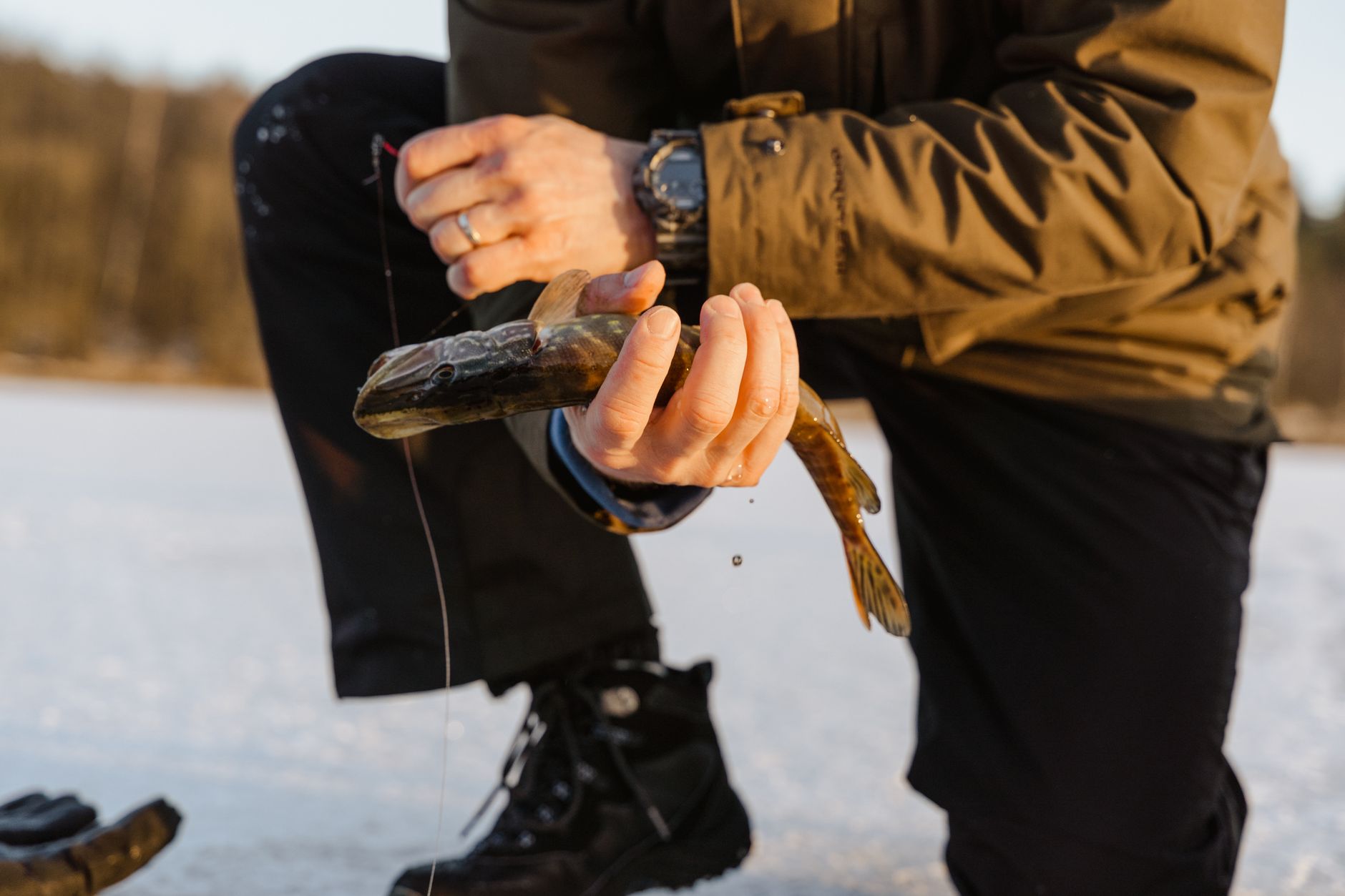
Understanding where fish go when the water is cold is vital for anglers. While fishing may be slower during the winter, knowing the locations and behaviors of different species can significantly increase success. Ice fishing is a popular winter activity that directly targets fish concentrated in deeper parts of frozen lakes. Anglers often use sonar to locate fish before drilling holes and dropping their lines.
Summary: Back to the Core Question
The core question of, “Where do fish go when the water is cold?“, has multiple answers depending on the species and the environment. However, most fish cope with winter by seeking deeper, more thermally stable waters while also decreasing activity and slowing metabolism to conserve energy. This is how they endure the winter until warmer temperatures return.
Frequently Asked Questions (FAQs)
What is thermal stratification in lakes, and how does it help fish in winter?
Thermal stratification is the layering of water in a lake based on temperature differences. In winter, the coldest water (around 39°F or 4°C) is typically at the bottom, because water is densest at this temperature. This provides a slightly warmer refuge for fish compared to the surface, which may be near freezing or covered in ice.
How does ice cover affect fish populations?
Ice cover can have both positive and negative effects. It can provide protection from predators (like birds) and stabilize the water temperature. However, it can also reduce sunlight penetration, limiting photosynthesis and oxygen production. If ice cover persists for extended periods, it can lead to oxygen depletion and fish kills.
Do all fish migrate to deeper water in the winter?
No, not all fish migrate. Some species, particularly those adapted to cold water, may remain in shallower areas. The determining factor is often the availability of suitable habitat and food.
What are antifreeze proteins, and which fish use them?
Antifreeze proteins are special proteins in the blood that prevent ice crystals from forming in the body tissues of fish. These are found in some Arctic and Antarctic fish species, allowing them to survive in extremely cold conditions.
How do fish conserve energy during the winter?
Fish conserve energy by reducing their activity levels, slowing their metabolism, and reducing their feeding. They may also seek out sheltered locations to minimize exposure to currents and cold temperatures.
Does the size of a lake or river affect fish wintering behavior?
Yes, the size significantly impacts fish wintering behavior. Larger lakes and rivers offer a greater range of habitats and thermal refuges, allowing fish more options for overwintering. Smaller bodies of water may freeze solid, making survival difficult or impossible for some species.
Are some fish species more vulnerable to winter conditions than others?
Yes, some species are more vulnerable. Fish with high metabolic rates or those that require warmer water temperatures are more susceptible to winterkill. Also, younger fish or those weakened by disease may be more vulnerable.
How do fish find food in the winter when there’s less available?
Many fish reduce their feeding during the winter, relying on stored energy reserves. They may also forage opportunistically for any available food sources, such as insects or decaying organic matter. Some smaller prey species like insects may also enter a torpor state, making them easier targets for fish.
What is winterkill, and what causes it?
Winterkill is the death of fish populations due to oxygen depletion under ice cover. It typically occurs in shallow lakes with high levels of organic matter. As bacteria decompose the organic matter, they consume oxygen, leading to low oxygen levels that suffocate the fish.
How does climate change impact fish wintering habits?
Climate change is altering water temperatures and ice cover patterns, affecting fish wintering habitats. Warmer winters may reduce ice cover, alter thermal stratification, and allow invasive species to expand their range, potentially harming native fish populations.
How can anglers help protect fish populations during the winter?
Anglers can help by practicing catch and release, minimizing disturbance to fish spawning grounds, and avoiding fishing during periods of extreme cold or winterkill. Supporting conservation efforts to protect aquatic habitats is also crucial.
Where do fish go when the water is cold in the ocean?
In the ocean, many fish undertake large-scale migrations to warmer waters. Other species move to deeper parts of the ocean where temperatures are more stable. Some may also seek out areas near thermal vents or upwelling zones that provide warmer water. The precise location depends on the species and their specific physiological requirements.