

How Intelligent Are Feral Hogs? Understanding Their Cognitive Abilities
Feral hogs, also known as wild pigs, possess a surprising level of intelligence, exhibiting complex social structures, problem-solving skills, and adaptability that make them challenging adversaries for landowners and wildlife managers. Understanding just how intelligent are feral hogs is crucial for effective control strategies.

Introduction to Feral Hog Intelligence
The perception of animals often relies on anthropomorphic biases. We tend to underestimate the cognitive capabilities of species that don’t exhibit intelligence in ways we readily recognize. However, research is revealing that feral hogs ( Sus scrofa), despite their often-destructive behavior, possess a remarkable degree of intelligence. They are far from simple-minded creatures driven solely by instinct. In fact, understanding how intelligent are feral hogs is vital for designing effective management strategies.

Is distilled water good for goldfish?
What colours are fish most attracted to?
Can you put your finger in a trout's mouth?
Is methylene blue anti bacterial?
Key Indicators of Feral Hog Intelligence
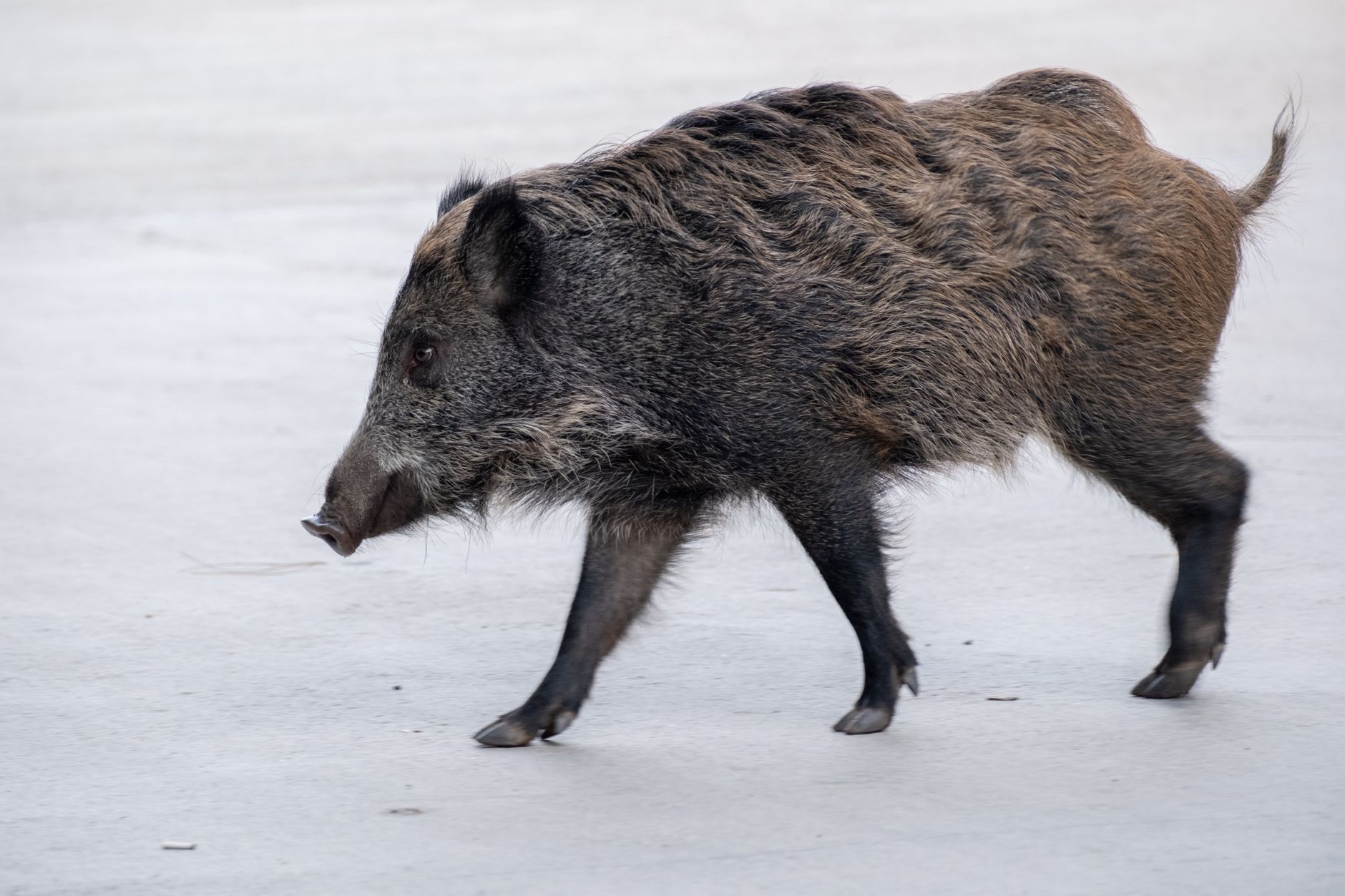
Several factors contribute to the classification of feral hogs as intelligent animals. These include their social behavior, problem-solving abilities, and capacity for learning and adaptation.
- Social Structure: Feral hogs live in matriarchal groups called sounders. These sounders exhibit cooperative behaviors, and the sows actively teach their young survival skills. This social learning is a hallmark of intelligence.
- Problem-Solving Skills: Studies have demonstrated that feral hogs can solve complex problems to obtain food. They can navigate mazes, open gates, and even learn to use tools. This cognitive flexibility underscores their intelligence.
- Adaptability: Feral hogs are incredibly adaptable to different environments and food sources. They can thrive in diverse habitats, from forests to grasslands, and can adjust their diets based on what is available. Their environmental awareness is a testament to their cognitive abilities.
- Memory: Feral hogs possess excellent memories, allowing them to remember the location of food sources, avoid traps, and recognize individuals. This spatial and social memory contributes to their survival and success.
Comparative Intelligence: Feral Hogs vs. Other Animals
How intelligent are feral hogs compared to other animals? It’s a valid question. Their cognitive abilities are often compared to those of dogs, primates, and even young children.
| Feature | Feral Hog | Dog | Primate |
|---|---|---|---|
| Social Complexity | Complex sounders, social learning | Variable; breed-dependent, pack behavior | Highly complex, social hierarchies |
| Problem Solving | Excellent, adaptable | Good, trainable | Excellent, tool use in some species |
| Environmental Adapt | Highly adaptable to diverse environments | Adaptable, dependent on human assistance | Adaptable, specific to habitat |
| Memory | Good spatial and social memory | Good, especially for scent | Excellent, both spatial and social |
While primates typically exhibit more sophisticated cognitive abilities, feral hogs surpass many other mammals, including dogs, in certain aspects of problem-solving and environmental adaptability.
Implications for Feral Hog Management
The intelligence of feral hogs poses significant challenges for wildlife managers and landowners. Traditional methods, such as trapping and hunting, often become ineffective as the hogs learn to avoid them. Therefore, a more nuanced understanding of their cognitive abilities is crucial for developing successful control strategies.
- Adaptive Management: Recognizing that feral hogs can learn and adapt requires implementing adaptive management strategies. This involves monitoring the effectiveness of control methods and adjusting them as needed.
- Innovative Techniques: New technologies, such as remote sensing and artificial intelligence, can be used to track hog movements and behavior. This information can then be used to develop more targeted and effective control strategies.
- Integrated Approach: A comprehensive approach that combines multiple control methods, such as trapping, hunting, and exclusion, is more likely to be successful than relying on a single technique.
- Education and Outreach: Educating landowners and the public about the intelligence of feral hogs and the importance of responsible management practices is essential.
Frequently Asked Questions (FAQs)
How do feral hogs exhibit problem-solving skills?
Feral hogs demonstrate problem-solving skills by navigating obstacles to access food, learning to avoid traps, and adapting their behavior in response to environmental changes. They are also known to work together to overcome challenges, such as opening gates or fences.
Are feral hogs trainable like dogs?
While feral hogs are intelligent, their independent nature makes them difficult to train like dogs. However, they can be conditioned to associate certain stimuli with food or danger, which is sometimes utilized in research and management strategies.
Do feral hogs use tools?
Unlike some primates, feral hogs do not typically use tools in the traditional sense. However, they may use their snouts to manipulate objects and uncover food, demonstrating a basic level of object interaction.
How does social learning contribute to feral hog intelligence?
Social learning plays a significant role in feral hog intelligence. Young hogs learn essential survival skills from their mothers and other members of the sounder, including foraging techniques, predator avoidance, and navigating their environment.
Can feral hogs recognize individual humans?
There is evidence that feral hogs can differentiate between individual humans based on scent and appearance. This ability allows them to avoid people they perceive as a threat and approach those they associate with food or safety.
What is the role of memory in feral hog survival?
Memory is crucial for feral hog survival. They remember the location of food sources, the layout of their territory, and past experiences with traps or predators. This information helps them make informed decisions and avoid danger.
How do feral hogs adapt to different environments?
Feral hogs are remarkably adaptable to diverse environments. They can adjust their diets based on available food sources, modify their behavior to cope with different weather conditions, and utilize a wide range of habitats for shelter and breeding.
Are some feral hogs more intelligent than others?
Just like humans, individual variation exists in feral hog intelligence. Some hogs may be more adept at problem-solving or learning than others. Genetics, environment, and social experiences can all contribute to these differences.
What are some common mistakes in feral hog management that underestimate their intelligence?
A common mistake is using static control methods that feral hogs quickly learn to avoid. For example, setting traps in the same location repeatedly or using the same bait can lead to trap shyness.
How can technology be used to better understand feral hog intelligence?
Technology can be used to track hog movements, monitor their behavior, and analyze their social interactions. Remote sensing, GPS tracking, and camera traps can provide valuable data on their cognitive abilities and adaptive strategies.
What is the most effective way to control feral hog populations, considering their intelligence?
An integrated approach is the most effective way to control feral hog populations. This involves combining multiple control methods, such as trapping, hunting, and exclusion, while adapting strategies based on hog behavior and learning.
How can landowners protect their property from feral hogs, given their intelligence?
Landowners can protect their property by implementing exclusion fencing, removing food sources, and using adaptive trapping methods. It is also important to stay informed about the latest research and best practices in feral hog management. Remember, understanding how intelligent are feral hogs is the first step toward effective control.