
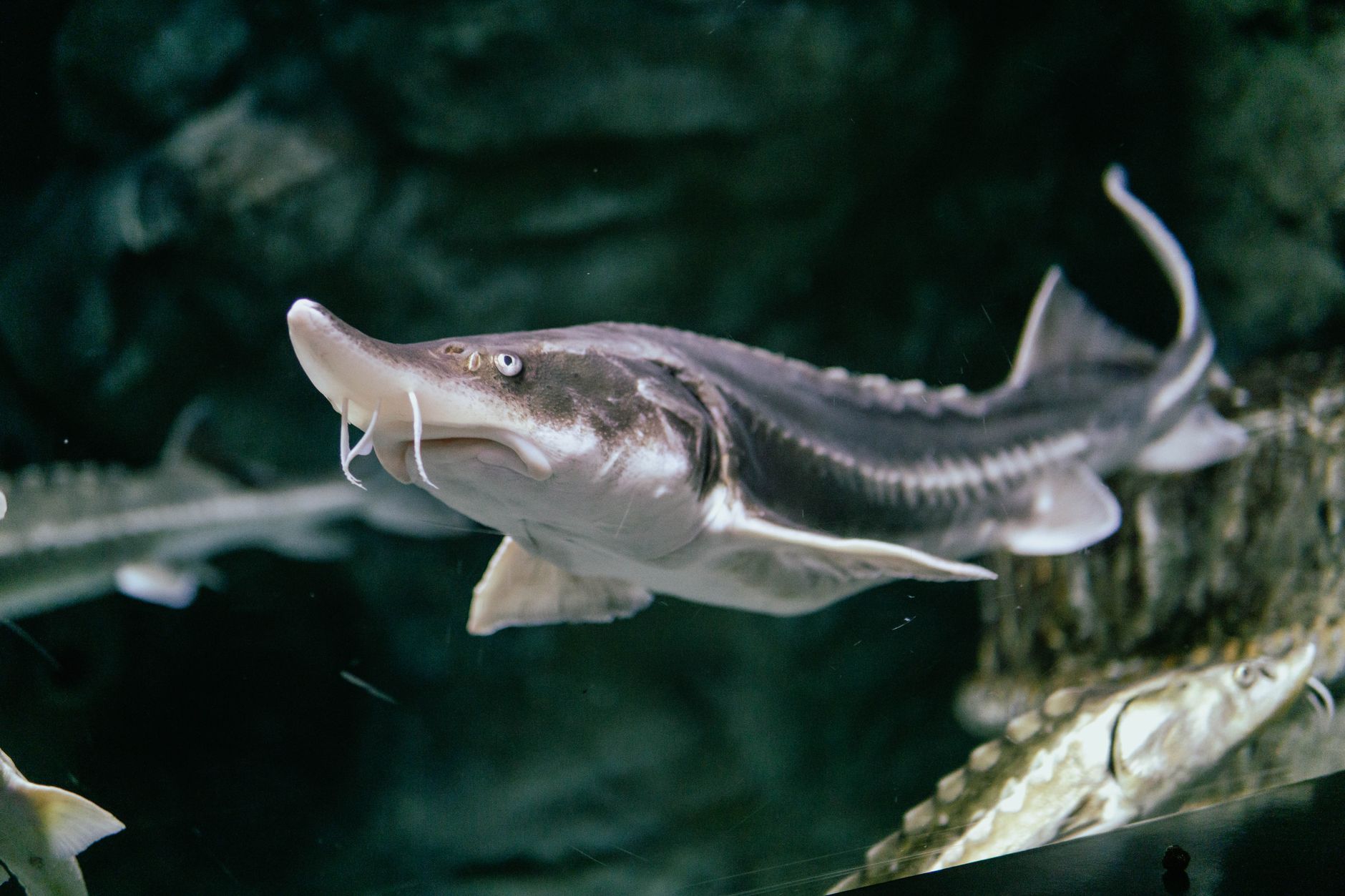
How Bony Fish are Masterfully Adapted for Aquatic Movement
Bony fish have evolved a suite of remarkable adaptations for efficient locomotion in their aquatic environment. Their bodies are streamlined, their fins provide precise control, and their swim bladders allow for neutral buoyancy, all contributing to their masterful ability to navigate the water with grace and power. How bony fish is adapted to movement in water? can be understood by examining the interplay of these specialized features.

Understanding the Adaptations of Bony Fish to Aquatic Movement
The secret to a bony fish’s agility and efficiency in water lies in a combination of anatomical features and physiological mechanisms. These adaptations minimize drag, maximize propulsion, and allow for precise control of movement.

What fish is Flo?
How intelligent are fish?
Are fish heads good for the garden?
What is cotton rot in fish?
Streamlined Body Shape: Reducing Drag

-
Fusiform Shape: Most bony fish possess a fusiform body shape, resembling a torpedo. This streamlined design minimizes hydrodynamic drag, the resistance encountered as the fish moves through the water. This efficient shape allows the fish to expend less energy on propulsion.
-
Smooth Scales: Overlapping scales, covered in a layer of mucus, further reduce friction between the fish’s body and the surrounding water. The mucus also protects the fish from infection.
Fin Morphology and Function: Propulsion and Steering
-
Caudal Fin (Tail Fin): The caudal fin is the primary propulsive force in most bony fish. Its shape and size vary depending on the fish’s lifestyle. Forked or lunate (crescent-shaped) caudal fins are common in fast-swimming species, while rounded fins are found in slower, more maneuverable fish.
-
Pectoral Fins: Located behind the gills, pectoral fins are used for steering, braking, and maneuvering. They can also be used to provide lift, preventing the fish from sinking.
-
Pelvic Fins: Situated on the ventral (belly) side of the fish, pelvic fins provide stability and can assist in steering.
-
Dorsal and Anal Fins: These fins, located on the back and underside of the fish, respectively, serve primarily as stabilizers, preventing the fish from rolling or yawing during swimming.
The Swim Bladder: Achieving Neutral Buoyancy
-
Hydrostatic Organ: The swim bladder is a gas-filled sac located in the body cavity of most bony fish. It functions as a hydrostatic organ, allowing the fish to achieve neutral buoyancy. This means the fish can maintain its depth in the water column with minimal effort.
-
Gas Exchange: The amount of gas in the swim bladder is regulated by specialized tissues, allowing the fish to control its buoyancy. Some fish have a direct connection between the swim bladder and the esophagus (physostomous fish), while others rely on gas exchange between the swim bladder and the blood (physoclistous fish).
Musculoskeletal System: Powering the Movement
-
Myomeres: Bony fish possess segmented muscle blocks called myomeres that run along the length of their body. These muscles contract in a coordinated wave-like manner, propelling the fish forward.
-
Flexible Spine: The vertebral column of bony fish is flexible, allowing for efficient side-to-side movement during swimming. This flexibility contributes to the fish’s maneuverability.
Sensory Systems: Navigation and Orientation
-
Lateral Line System: This unique sensory system detects vibrations and pressure changes in the water, allowing the fish to sense the presence of predators, prey, and obstacles, even in murky water. How bony fish is adapted to movement in water? is also strongly related to having very well developped sensory system.
-
Vision: Many bony fish have excellent vision, allowing them to navigate and find food in their aquatic environment.
Comparison Table of Adaptations
| Adaptation | Function | Benefit |
|---|---|---|
| Fusiform Body | Reduces hydrodynamic drag | Energy-efficient swimming |
| Smooth Scales | Reduces friction | Faster swimming, less energy loss |
| Caudal Fin | Propulsion | Forward movement |
| Pectoral Fins | Steering, braking, maneuvering | Precise control of movement |
| Swim Bladder | Neutral buoyancy | Maintaining depth with minimal effort |
| Lateral Line | Detecting vibrations and pressure changes | Awareness of surroundings |
Frequently Asked Questions (FAQs)
What is the significance of the swim bladder in bony fish movement?
The swim bladder is crucial for neutral buoyancy, allowing the fish to maintain its depth without expending energy. This is especially important for fish that spend a lot of time in the water column, as it conserves energy for foraging and avoiding predators.
How do bony fish control the amount of gas in their swim bladder?
The method of controlling gas volume depends on the species. Physostomous fish can gulp air into the swim bladder or release it through the pneumatic duct. Physoclistous fish control gas volume by secreting gas from the blood into the swim bladder or absorbing gas back into the blood via the oval.
What are the different types of caudal fins and how do they affect swimming performance?
Different caudal fin shapes are adapted for different swimming styles. Forked or lunate fins are efficient for sustained swimming at high speeds, while rounded or truncated fins provide greater maneuverability in complex habitats.
How does the lateral line system help bony fish move and navigate?
The lateral line system allows bony fish to detect vibrations and pressure changes in the water, helping them sense the presence of prey, predators, and obstacles. This is especially useful in murky water where visibility is limited. This also answers part of the “How bony fish is adapted to movement in water?” question.
What role do scales play in the movement of bony fish?
Scales, covered in mucus, reduce friction between the fish’s body and the water, making swimming more efficient. The mucus also protects the fish from parasites and infections.
How does the musculoskeletal system contribute to the movement of bony fish?
The myomeres, arranged in segmented blocks along the body, contract in a coordinated wave-like manner to propel the fish forward. The flexible spine allows for efficient side-to-side movement.
How does body shape contribute to efficient swimming in bony fish?
The fusiform body shape, streamlined like a torpedo, minimizes hydrodynamic drag. This reduces the amount of energy required to move through the water.
Why are pectoral fins important for bony fish movement?
Pectoral fins provide steering, braking, and maneuvering capabilities. They can also generate lift, preventing the fish from sinking.
How do bony fish maintain stability in the water?
Dorsal and anal fins act as stabilizers, preventing the fish from rolling or yawing during swimming. Pelvic fins also contribute to stability.
What are the trade-offs between speed and maneuverability in bony fish?
Fish adapted for high-speed swimming often have streamlined bodies and powerful caudal fins, but may sacrifice maneuverability. Fish adapted for maneuvering in complex habitats may have more rounded bodies and flexible fins, but may not be as fast.
Do all bony fish have swim bladders?
No, not all bony fish have swim bladders. Some bottom-dwelling fish, such as flounders, and some fast-swimming species, such as tuna, lack swim bladders. In these cases, other adaptations compensate for the lack of buoyancy control.
How is the swimming ability of a bony fish linked to its lifestyle and habitat?
A bony fish’s swimming ability is directly related to its lifestyle and habitat. Fish that live in fast-flowing rivers need to be strong swimmers to maintain their position. Fish that live in coral reefs need to be highly maneuverable to navigate the complex environment. For these bony fish is the main point for its “How bony fish is adapted to movement in water?“.