
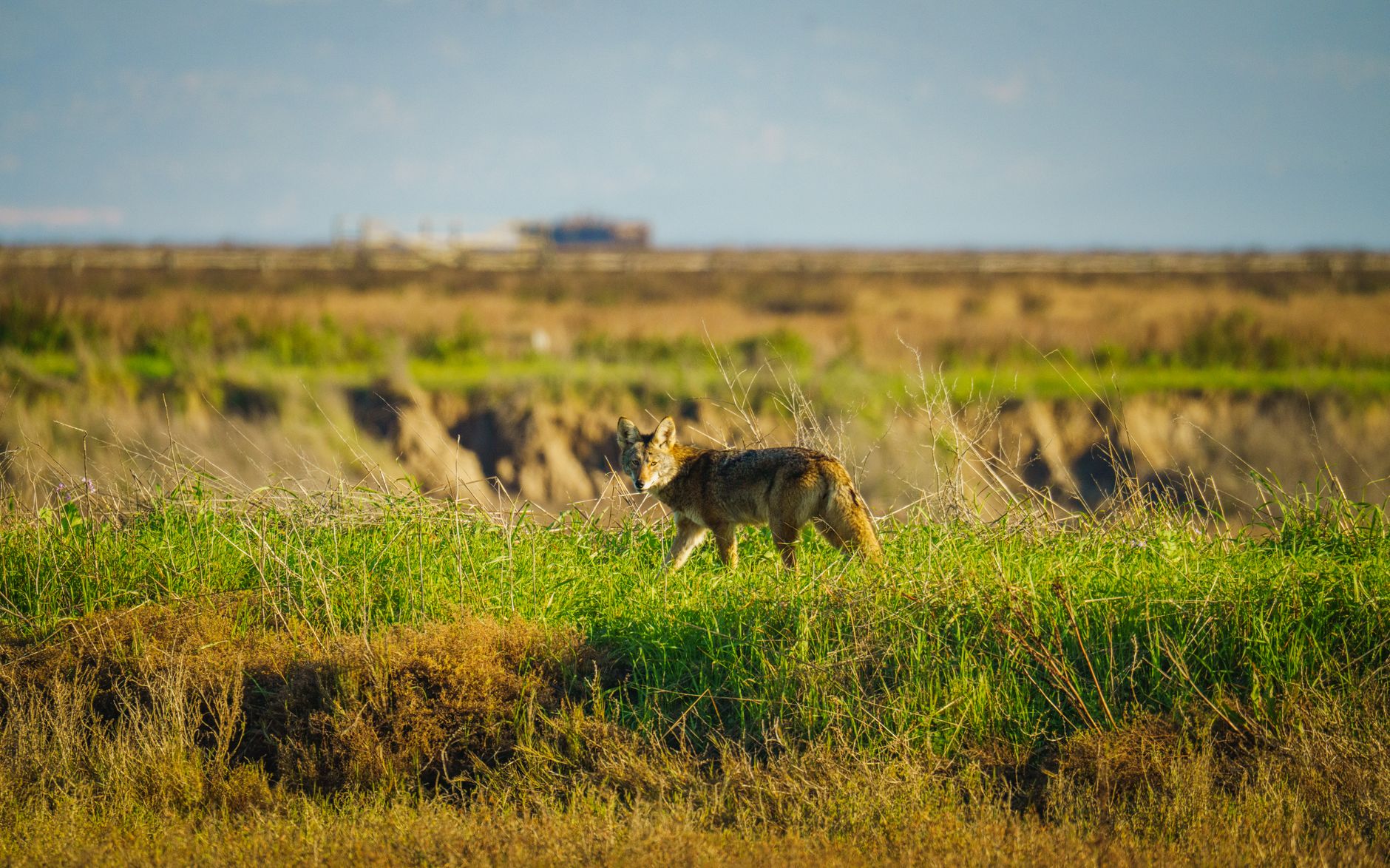
How Big Is a Full Grown Coyote?
A typical full grown coyote stands around 23-26 inches tall at the shoulder and measures 41-53 inches in total length, including its tail. Weight usually ranges between 20-50 pounds, depending on geographic location and available food sources.

Understanding Coyote Size and Dimensions
Coyotes, often called American jackals, are adaptable canids found throughout North America. Their size is a critical factor in their survival, influencing everything from hunting strategies to interactions with other animals, including humans. While there is a general size range for full grown coyotes, several factors contribute to variations.

Is distilled water good for goldfish?
What colours are fish most attracted to?
Can you put your finger in a trout's mouth?
Is methylene blue anti bacterial?
Factors Influencing Coyote Size

The question “How big is a full grown coyote?” is not easily answered with a single number. Several factors influence a coyote’s overall size and weight:
- Geographic Location: Coyotes in different regions exhibit size variations, a phenomenon known as Bergmann’s Rule. This rule suggests that animals in colder climates tend to be larger to conserve heat. Western coyotes are typically smaller than those in the eastern regions of North America.
- Diet: Food availability and dietary habits play a significant role. Coyotes with access to abundant food resources, particularly larger prey, may grow larger than those that primarily subsist on smaller rodents. Scavenging from human sources may also contribute to increased size.
- Age: Obviously, juvenile coyotes are smaller than adults. Coyotes generally reach their full adult size within their first year or two of life.
- Genetics: Like any species, genetic variations within coyote populations can contribute to differences in size.
Average Coyote Size Metrics
While individual coyotes can vary, understanding average measurements provides a good baseline. The following table represents typical size ranges:
| Measurement | Average Range | Notes |
|---|---|---|
| Shoulder Height | 23-26 inches | Height at the highest point of the shoulder when the coyote is standing. |
| Total Length (incl. tail) | 41-53 inches | Measurement from the tip of the nose to the tip of the tail. |
| Weight | 20-50 pounds | Weight can fluctuate based on season and food availability. |
| Tail Length | 11-16 inches | Contributes significantly to the overall length. Coyotes use their tails for balance. |
Coyote Coloration and Appearance
While size is a key characteristic, understanding coyote coloration and appearance is also important for identification. Their coat color typically ranges from grayish-brown to reddish-brown, with some individuals exhibiting darker or lighter variations. They have a bushy tail, often held low to the ground, and a pointed muzzle.
The Eastern Coyote “Coywolf”
The Eastern Coyote is a significant point to consider when discussing coyote size. In the eastern United States and Canada, coyotes have hybridized with wolves and domestic dogs. These hybrid coyotes, often called “coywolves,” tend to be larger than their western counterparts. This genetic mixing complicates the question of “How big is a full grown coyote?” because these animals can exhibit a wider range of sizes and weights, sometimes exceeding 60 pounds.
Impact of Coyote Size on Ecology
The size of a coyote directly impacts its role in the ecosystem. Larger coyotes are capable of taking down larger prey, potentially affecting populations of deer, rabbits, and other animals. Their scavenging habits also influence nutrient cycling. Smaller coyotes are more likely to focus on rodents and smaller prey, controlling populations of those species. Understanding coyote size is, therefore, essential for understanding their ecological impact.
Frequently Asked Questions (FAQs)
What is the average lifespan of a coyote?
Coyotes typically live 6-14 years in the wild, although their lifespan can be significantly shorter due to hunting, trapping, and vehicle collisions. In captivity, they can live longer, sometimes exceeding 18 years.
How does coyote size compare to that of a wolf?
Wolves are significantly larger than coyotes. A gray wolf can weigh between 80 and 150 pounds, whereas the average coyote weighs between 20 and 50 pounds. Shoulder height is also considerably different.
Are coyotes dangerous to humans?
Coyotes are generally wary of humans and attacks are rare. However, habituated coyotes that have lost their fear of humans, particularly those that have been fed, can pose a risk. It’s important to maintain a safe distance and avoid feeding them.
Do male and female coyotes differ in size?
Male coyotes are typically slightly larger than females, but the difference is not always pronounced. Body weight and shoulder height are the most common metrics used for size differentiation.
What do coyotes eat?
Coyotes are opportunistic omnivores, meaning they eat a wide variety of foods. Their diet includes rodents, rabbits, birds, reptiles, insects, fruits, and carrion (dead animals). They will also scavenge from human sources if the opportunity arises.
Where do coyotes live?
Coyotes are found throughout North America, from Alaska and Canada to Mexico and Central America. They inhabit a variety of habitats, including forests, grasslands, deserts, and even urban areas.
How many pups do coyotes typically have in a litter?
Coyote litters typically consist of 3-7 pups. The number of pups can vary depending on food availability and the health of the mother.
How can I tell the difference between a coyote and a dog?
Several factors can help differentiate between coyotes and dogs. Coyotes have a bushy tail that is usually held low to the ground, a pointed muzzle, and a more slender build. Domestic dogs have a wider range of appearances, and their tail carriage and body shape vary greatly.
What is the purpose of coyote howling?
Coyotes howl for a variety of reasons, including communication with other members of their pack, establishing territory, and signaling their presence. Howling can also be used to coordinate hunting efforts.
Are coyotes protected by law?
Coyote protection varies depending on the location. In some areas, they are classified as game animals and can be hunted or trapped with a license. In other areas, they may have some level of protection. It’s important to check local regulations.
What should I do if I encounter a coyote?
If you encounter a coyote, maintain a safe distance. Do not approach it. If it approaches you, make yourself appear larger by raising your arms, making noise, and throwing objects. Report any aggressive or habituated coyotes to local authorities.
How can I keep coyotes away from my property?
Several steps can be taken to deter coyotes from your property:
- Secure garbage cans and compost piles.
- Do not leave pet food outside.
- Keep pets indoors, especially at night.
- Install fencing to protect your yard.
- Use motion-activated lights and sprinklers.
Understanding the question “How big is a full grown coyote?” is just the beginning. Appreciating their adaptability, behavior, and ecological role is vital for coexisting with these fascinating creatures.