

Did Dinosaurs and Megalodons Live in the Same Time Period?
The answer is a resounding no. Did dinosaurs and Megalodons live in the same time period? No, these creatures existed millions of years apart, separated by massive geological and evolutionary changes.

The Age of Dinosaurs: A Terrestrial Reign
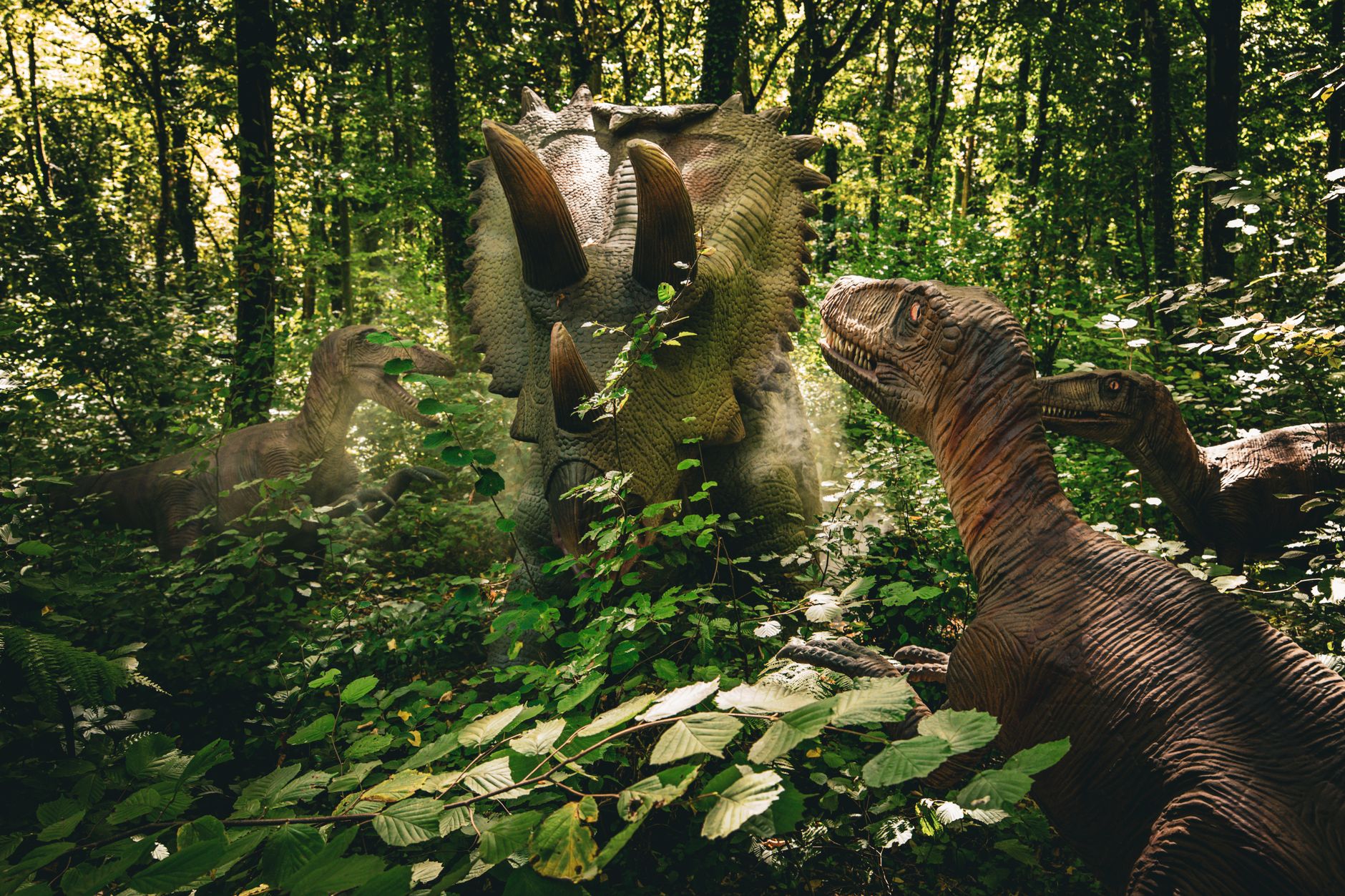
The Mesozoic Era, often called the Age of Dinosaurs, spanned from approximately 252 million to 66 million years ago. This era is further divided into three periods: the Triassic, Jurassic, and Cretaceous. Dinosaurs dominated terrestrial ecosystems during this immense stretch of time, evolving into diverse forms and sizes.
- Triassic Period (252 to 201 million years ago): The emergence of early dinosaurs alongside other reptiles.
- Jurassic Period (201 to 145 million years ago): The age of giant sauropods and iconic predators like Allosaurus.
- Cretaceous Period (145 to 66 million years ago): The reign of Tyrannosaurus rex and Triceratops, culminating in the Cretaceous-Paleogene extinction event.
The dinosaurs were not a monolithic group. They evolved, diversified, and went extinct in stages throughout the Mesozoic Era. The final major extinction event, caused by a large asteroid impact, wiped out all non-avian dinosaurs at the end of the Cretaceous Period.
The Rise of the Megalodon: An Ocean Apex Predator
Megalodon (Otodus megalodon), meaning “big tooth,” was a massive extinct shark that lived during the Cenozoic Era, specifically from the Early Miocene to the Pliocene epochs (approximately 23 million to 3.6 million years ago). This was long after the extinction of the dinosaurs. Megalodon was an apex predator of the oceans, preying on whales, seals, and other large marine animals.
Megalodon fossils, primarily its teeth, have been found across the globe, indicating a widespread distribution in warmer waters. Its immense size and powerful bite made it one of the most formidable marine predators to ever exist.
Timeline Discrepancies: Why They Never Met
Did dinosaurs and Megalodons live in the same time period? Clearly, the timelines of these creatures did not overlap. The dinosaurs went extinct approximately 66 million years ago, while Megalodon emerged roughly 43 million years later. The gap between these periods is enormous, representing significant evolutionary shifts and changes in Earth’s environment.
The following table illustrates the temporal separation:

| Creature | Time Period | Approximate Dates |
|---|---|---|
| Dinosaurs | Mesozoic Era (Triassic, Jurassic, Cretaceous) | 252 million – 66 million years ago |
| Megalodon | Cenozoic Era (Miocene, Pliocene) | 23 million – 3.6 million years ago |
Reasons for the Confusion
Misconceptions about the co-existence of dinosaurs and Megalodons often arise from popular culture and a general lack of understanding of geological timescales. Movies and documentaries sometimes take liberties with scientific accuracy for entertainment purposes. Furthermore, the sheer size and fearsome nature of both creatures can lead to the assumption that they must have lived concurrently.
- Popular Culture: Movies and fiction often blend prehistoric creatures inaccurately.
- Misunderstanding of Scale: The vastness of geological time is difficult for many to grasp.
- Sensationalism: The impressive size and predatory nature of both animals pique interest, often leading to simplified or exaggerated portrayals.
The Importance of Accurate Paleontological Information
Understanding the accurate timelines of prehistoric life is crucial for comprehending the history of life on Earth and the processes of evolution and extinction. By correcting misconceptions, we can foster a greater appreciation for scientific inquiry and the importance of evidence-based knowledge. Did dinosaurs and Megalodons live in the same time period? No, and it is important to understand why.
Frequently Asked Questions (FAQs)
What evidence proves Megalodon lived after the dinosaurs?
Fossil evidence, particularly the location of Megalodon teeth in geological strata, places them firmly within the Cenozoic Era, millions of years after the extinction of the dinosaurs at the end of the Cretaceous Period. The absence of Megalodon fossils in Mesozoic rocks confirms that they did not coexist.
How did Megalodon become extinct?
Several factors likely contributed to Megalodon’s extinction around 3.6 million years ago. These include climate change, leading to shrinking habitats and changes in prey distribution, and competition with other apex predators like the great white shark, which evolved later.
What was Megalodon’s primary prey?
Megalodon primarily preyed on large marine mammals, including whales, seals, and other marine animals. Fossil evidence shows bite marks on whale bones consistent with Megalodon tooth morphology.
What was the average size of Megalodon?
Estimates vary, but Megalodon is believed to have reached lengths of 15 to 20 meters (49 to 66 feet), making it one of the largest predators to ever live. This dwarfs even the largest great white sharks.
Have any Megalodon fossils been found recently?
While new Megalodon fossils are occasionally discovered, these are typically isolated teeth or vertebrae. No complete skeleton has ever been found, adding to the challenges of accurately reconstructing the animal’s appearance and biology.
Could Megalodon still be alive today?
The scientific consensus is overwhelmingly no. There is no credible evidence to support the existence of Megalodon in modern oceans. The ocean is vast but not infinitely so, and an animal of that size would leave a significant ecological and fossil record.
How did the extinction of the dinosaurs affect the evolution of Megalodon?
The extinction of the dinosaurs opened ecological niches in the oceans, paving the way for the evolution of large marine predators like Megalodon. The rise of marine mammals, a primary food source for Megalodon, occurred after the dinosaur extinction.
Are there any creatures alive today that lived during the time of the dinosaurs?
Yes, several groups of animals alive today have ancient lineages that predate the extinction of the dinosaurs. These include crocodiles, turtles, sharks, and some birds, which are considered modern-day dinosaurs.
What is the difference between a dinosaur and a reptile?
Dinosaurs are a specific group of reptiles characterized by unique skeletal features and evolutionary history. All dinosaurs are reptiles, but not all reptiles are dinosaurs.
How do scientists determine the age of fossils?
Scientists use various dating methods, including radiometric dating (such as carbon-14 dating for relatively recent fossils and potassium-argon dating for older ones) and relative dating based on the position of fossils in rock layers.
What is the Cenozoic Era?
The Cenozoic Era is the current geological era, spanning from 66 million years ago to the present. It is often called the “Age of Mammals” because mammals diversified and dominated terrestrial ecosystems during this period.
Why is it important to study extinct animals like dinosaurs and Megalodon?
Studying extinct animals provides valuable insights into the history of life on Earth, the processes of evolution and extinction, and the impact of environmental changes. Understanding the past helps us to better understand the present and predict the future.