
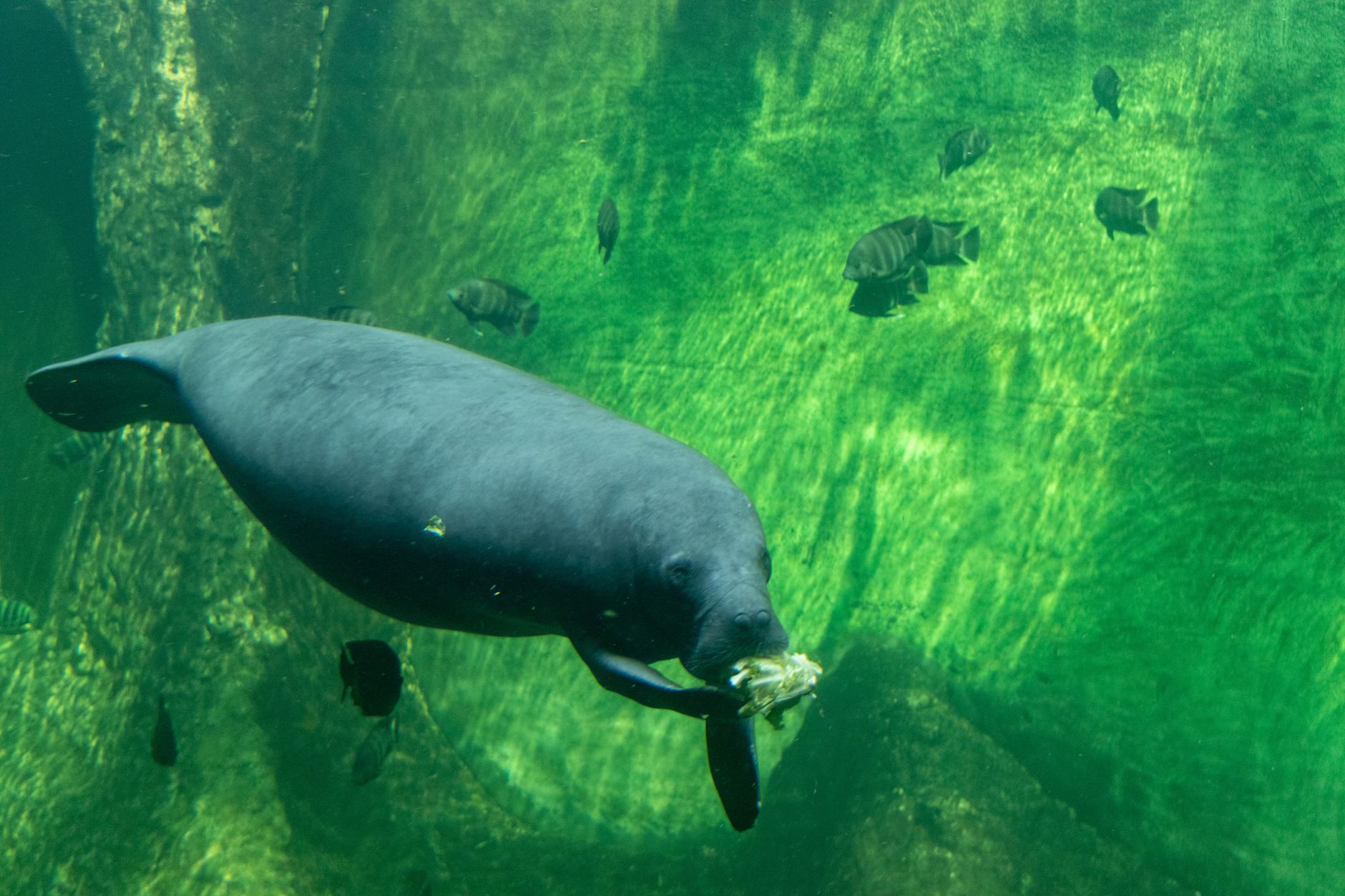
Why Do Manatees Seem to Gravitate Towards Humans?
Why do manatees like people? Manatees don’t necessarily “like” people in the human sense, but rather, their apparent attraction is often driven by learned behaviors, food association, or a search for warmth and freshwater. This article explores the complex factors contributing to these interactions, clarifying that while endearing, these behaviors can pose serious risks for these gentle giants.

The Allure of Humans: Beyond Affection
It’s a common sight in Florida waterways: a gentle manatee approaching a boat or swimmer. But why do manatees like people enough to venture so close? The answer isn’t as simple as affection. Understanding the reasons behind these interactions is crucial for both manatee conservation and human safety.
The Siren Song of Freshwater and Warmth

Manatees are remarkably sensitive to cold temperatures. During the winter months, they seek refuge in warmer waters, often congregating near natural springs, power plants, and even human-made canals. These areas, unfortunately, are often frequented by humans.
- Power Plants: These facilities discharge warm water, creating artificial “hot spots” that attract manatees.
- Natural Springs: Freshwater sources are vital for manatee hydration and temperature regulation.
- Canals and Marinas: Offer slightly warmer, more sheltered environments compared to open water.
Learned Behavior and Food Association
Tragically, some manatees have learned to associate humans with food. This can stem from well-intentioned but misguided individuals feeding them, or from manatees scavenging discarded food near boats or docks. This creates a dangerous reliance and significantly increases their risk of boat strikes and entanglement in fishing gear.
- Artificial Feeding: Never, under any circumstances, feed a manatee. This alters their natural foraging behavior and makes them dependent on humans.
- Scavenging: Manatees may learn to associate specific boats or docks with readily available food scraps.
The Curiosity Factor
Manatees are naturally curious creatures. They may approach boats or humans out of simple inquisitiveness, especially young or inexperienced individuals. This curiosity, combined with a lack of understanding of the dangers posed by boats, can lead to tragic consequences.
Anthropomorphism: Avoiding Human-Centric Views
It’s crucial to avoid anthropomorphizing manatees. While they may exhibit behaviors that appear “friendly,” attributing human emotions and motivations to them can be misleading. Their interactions are more likely driven by basic needs such as warmth, food, or curiosity.
The Dangers of Human Interaction
While encounters with manatees can be awe-inspiring, it’s vital to remember that these interactions can be detrimental to their well-being.
- Boat Strikes: One of the leading causes of manatee mortality.
- Entanglement: Fishing gear and other debris can entangle manatees, leading to injury, starvation, or drowning.
- Habituation: Repeated exposure to humans can lead to habituation, making them less wary of boats and other dangers.
- Disease Transmission: Close contact can potentially facilitate the transmission of diseases between humans and manatees.
Responsible Viewing and Conservation
The best way to appreciate manatees is from a safe distance. Observe them respectfully, without interfering with their natural behavior.
- Maintain Distance: Stay at least 50 feet away from manatees.
- Avoid Touching or Feeding: Never attempt to touch or feed a manatee.
- Report Injured or Distressed Manatees: Contact your local wildlife authorities immediately.
- Support Conservation Efforts: Contribute to organizations dedicated to manatee research and protection.
The Future of Manatee-Human Interactions
Managing manatee-human interactions is a complex challenge that requires a multi-faceted approach, including education, regulation, and habitat protection. By promoting responsible viewing practices and addressing the underlying factors that attract manatees to human-populated areas, we can help ensure the long-term survival of these remarkable creatures.

Frequently Asked Questions (FAQs)
Is it legal to touch a manatee?
It is illegal under both Florida state law and federal law (Marine Mammal Protection Act of 1972) to harass, hunt, capture, or kill any marine mammal, including manatees. Touching a manatee is considered harassment, as it disrupts their natural behavior. Penalties can include hefty fines and even jail time. Therefore, it is imperative to admire manatees from a respectful distance.
Do manatees have any natural predators?
Adult manatees have few natural predators. Historically, jaguars and crocodiles may have posed a threat in some areas. However, today, the primary threats to manatees are human-related, including boat strikes, entanglement in fishing gear, and habitat loss.
What should I do if I accidentally hit a manatee with my boat?
If you accidentally hit a manatee with your boat, it is crucial to report the incident immediately to the Florida Fish and Wildlife Conservation Commission (FWC) or the U.S. Fish and Wildlife Service (USFWS). Even if the manatee appears unharmed, internal injuries may be present. Providing accurate information about the location and circumstances of the collision can help authorities locate and assist the injured animal. Failure to report such an incident can result in legal penalties.
Why are manatees sometimes called “sea cows”?
Manatees are often called “sea cows” because they are herbivorous marine mammals that spend much of their time grazing on aquatic vegetation, much like cows graze on grass. Their gentle nature and slow, deliberate movements further contribute to this comparison.
How can I tell the difference between a manatee and a dugong?
While both manatees and dugongs are marine mammals belonging to the order Sirenia, there are distinct physical differences. Manatees have paddle-shaped tails, while dugongs have fluked tails similar to dolphins. Manatees also have nails on their flippers, whereas dugongs do not. Their skull structures also differ significantly. The geographical distribution is also a key factor: manatees are found primarily in the Americas and West Africa, while dugongs are found in the Indo-Pacific region.
Do manatees migrate?
Manatees undertake seasonal migrations to find suitable water temperatures. In the winter, they move to warmer waters in Florida, such as springs and power plant discharge areas. In the summer, they may travel further north along the Atlantic coast or west along the Gulf Coast.
What is the average lifespan of a manatee?
In the wild, manatees can live for 50-60 years or more. However, human-related factors such as boat strikes and entanglement significantly reduce their lifespan. In captivity, manatees have been known to live even longer.
How do manatees communicate with each other?
Manatees communicate through a variety of vocalizations, including squeals, chirps, and whistles. They also use tactile communication, such as nudging and rubbing, to maintain social bonds. These vocalizations are particularly important for mothers and calves.
What do manatees eat?
Manatees are herbivores and primarily feed on aquatic plants, including seagrass, water hyacinth, and hydrilla. They can consume a significant amount of vegetation each day, playing an important role in maintaining the health of aquatic ecosystems.
How much does an adult manatee typically weigh?
Adult manatees typically weigh between 800 and 1,200 pounds, but some individuals can weigh over 3,000 pounds. They are large, bulky animals with a streamlined body shape that helps them move through the water.
How many manatees are left in the world?
The estimated population of Florida manatees is around 7,520 individuals, according to a 2023 USFWS report, up from the low of 1,267 in 1991. Despite this increase, they still face significant threats, and their population is vulnerable. They have been reclassified from “Endangered” to “Threatened”, but conservation efforts are still needed. Populations of other manatee species outside Florida are less well understood.
Why do manatees sometimes have scars on their backs?
The scars seen on manatees are primarily caused by boat propellers. Manatees often surface to breathe and are slow-moving, making them vulnerable to collisions with boats. These scars serve as a grim reminder of the impact of human activity on manatee populations. Understanding why do manatees like people, or are at least attracted to human activity, helps conservation efforts to try and separate the two.