
What is the External Feature of Bony Fish: A Comprehensive Guide
The external features of bony fish (Osteichthyes) are primarily characterized by their bony skeleton, scales, fins, and operculum, playing crucial roles in protection, locomotion, respiration, and sensory perception in their aquatic environments.

Introduction: Exploring the Outer World of Bony Fish
What is the external feature of bony fish? Understanding these physical characteristics is essential for identifying different species, appreciating their adaptations to diverse habitats, and comprehending their ecological roles. Bony fish, comprising nearly all fish species, showcase an astonishing array of forms, colors, and external structures. This article will delve into the key external attributes of these fascinating creatures, providing a detailed overview of their form and function.
The Bony Skeleton: Foundation of Form

The most defining characteristic of bony fish, as the name suggests, is their internal skeleton made of bone, which provides support and protection. This contrasts with cartilaginous fish like sharks, whose skeletons are composed of cartilage. The bony skeleton dictates the overall shape and structure of the fish, influencing its swimming ability and habitat preference.
- Provides structural support.
- Protects vital organs.
- Serves as an attachment point for muscles.
Scales: Armor and Adaptation
Scales are overlapping plates that cover the bodies of most bony fish, providing protection from predators and parasites. There are several types of scales, each with distinct characteristics:
- Cycloid Scales: Smooth, rounded scales found in many soft-rayed fish like salmon and carp.
- Ctenoid Scales: Serrated scales with small spines on the edge, common in spiny-rayed fish like bass and perch.
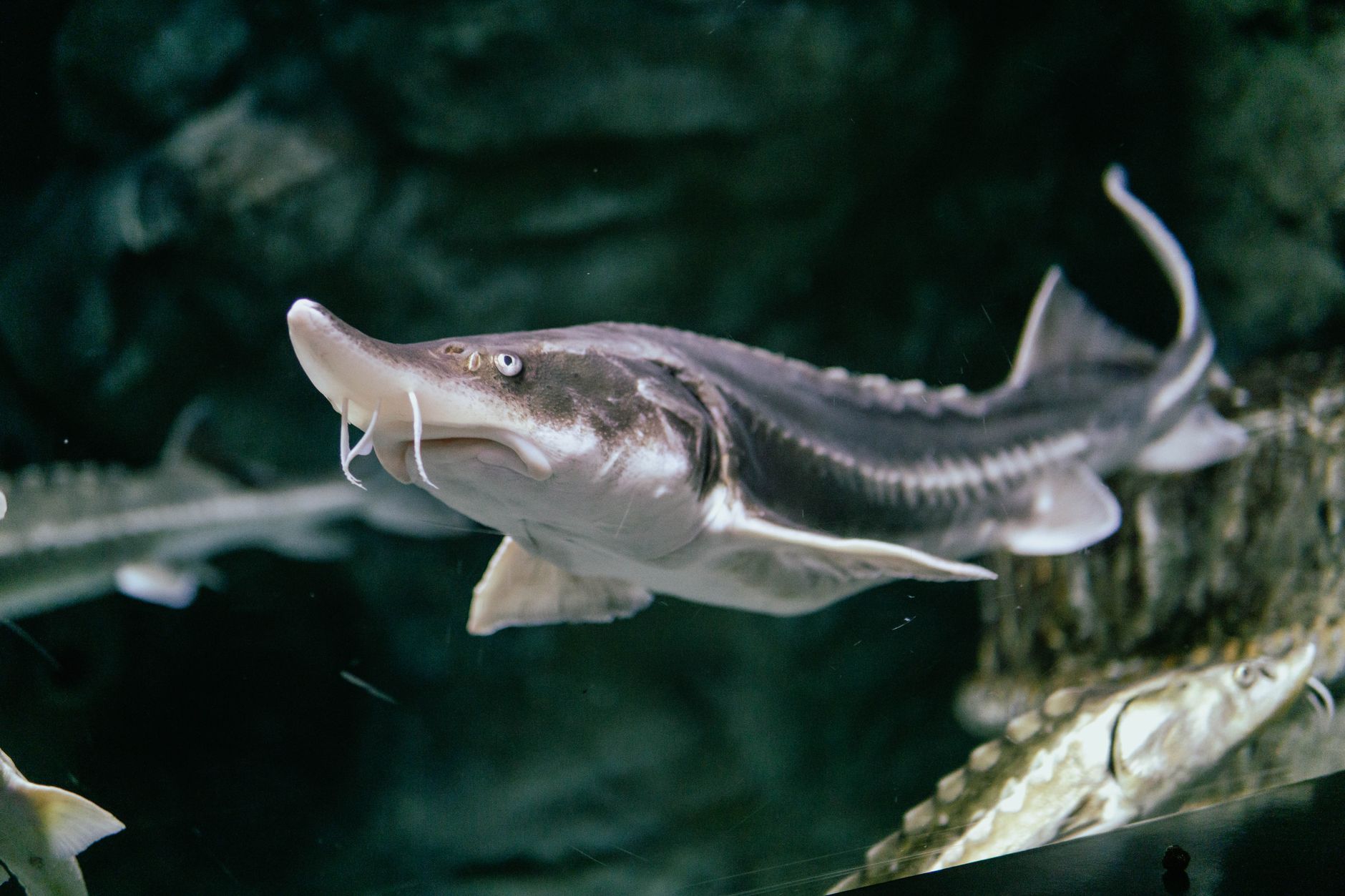
- Ganoid Scales: Hard, enamel-like scales found in primitive fish like gars and sturgeons.
The type of scale a fish possesses can reflect its lifestyle and habitat. For example, fish living in turbulent waters may have smaller, more tightly packed scales for better protection.
Fins: Masters of Movement
Fins are crucial for locomotion, balance, and maneuvering in the water. Bony fish possess several types of fins, each serving a specific purpose:
- Caudal Fin (Tail Fin): Primarily used for propulsion. Its shape can indicate swimming style; for instance, a forked caudal fin is often found in fast-swimming fish.
- Dorsal Fin: Provides stability and helps prevent rolling. Can also be used for defense or display.
- Anal Fin: Provides stability and helps control pitch.
- Pectoral Fins: Used for steering, braking, and hovering. Located near the gills.
- Pelvic Fins: Help with stability and maneuvering. Position can vary depending on the species.
The shape, size, and placement of fins are incredibly diverse among bony fish species, reflecting their specific swimming styles and ecological niches.
Operculum: The Gill Cover
The operculum is a bony flap that covers and protects the gills. This unique structure allows bony fish to breathe efficiently without having to swim constantly. By rhythmically opening and closing the operculum, they can draw water over their gills, facilitating gas exchange.
Sensory Organs: Perceiving the Aquatic World
Bony fish possess a variety of sensory organs that allow them to perceive their environment. These include:
- Eyes: Positioned on the sides of the head, providing a wide field of vision.
- Lateral Line: A sensory organ that detects vibrations and pressure changes in the water, allowing fish to sense nearby objects and predators.
- Nares (Nostrils): Used for detecting chemicals in the water, playing a role in finding food and mates. (Note: Unlike mammals, fish nostrils are not connected to their respiratory system.)
- Barbels: Whisker-like projections near the mouth that contain taste buds, aiding in locating food in murky waters.
Coloration and Patterns: Camouflage and Communication
The coloration and patterns of bony fish serve various purposes, including camouflage, signaling, and attracting mates.
- Camouflage: Helps fish blend in with their surroundings, avoiding predators or ambushing prey.
- Signaling: Bright colors and patterns can be used to warn predators of toxicity or to establish territory.
- Mate Attraction: Elaborate displays and vibrant colors can play a crucial role in attracting mates during spawning season.
Mouth Morphology: Feeding Adaptations
The shape and size of a fish’s mouth are closely related to its feeding habits.
- Terminal Mouth: Located at the end of the head, common in fish that feed on prey in front of them.
- Superior Mouth: Points upwards, adapted for feeding on prey above.
- Inferior Mouth: Points downwards, suitable for bottom-feeding.
The presence and type of teeth also vary greatly depending on the diet of the fish.
Common Misconceptions about Bony Fish
One common misconception is that all fish are the same externally. However, what is the external feature of bony fish? It’s an incredibly diverse area and there are vast differences in body shape, fin arrangement, scale type, and coloration, reflecting their diverse lifestyles and habitats. Another misconception is that all fish have the same senses; some have highly developed vision, while others rely more on their lateral line or chemical senses.
External Features and Environmental Factors
Environmental factors significantly influence the external features of bony fish. For example, fish living in fast-flowing rivers may have streamlined bodies and strong fins to help them maintain their position, while fish living in murky waters may have specialized sensory organs like barbels to help them locate food.
| Feature | Fast-Flowing River Fish | Murky Water Fish |
|---|---|---|
| Body Shape | Streamlined, Fusiform | Variable, often flattened |
| Fin Strength | Strong, well-developed | May be smaller or modified |
| Sensory Organs | Emphasis on vision and balance | Emphasis on lateral line and barbels |
| Coloration | Often cryptic, blends with surroundings | Can be muted or highly patterned |
Conservation Implications
Understanding the external features of bony fish is crucial for conservation efforts. By identifying species based on their unique characteristics, scientists can monitor populations and assess the impact of environmental changes. Furthermore, knowledge of their feeding habits and adaptations helps in managing fisheries and protecting critical habitats.

Frequently Asked Questions (FAQs)
What is the purpose of the lateral line in bony fish?
The lateral line is a sensory organ that runs along the sides of bony fish and detects vibrations and pressure changes in the water. This allows fish to sense the presence of nearby objects, predators, and prey, even in murky conditions. It plays a crucial role in orientation, navigation, and social interactions.
Do all bony fish have scales?
While most bony fish have scales, there are exceptions. Some species, like certain catfish, have reduced or absent scales, relying instead on thick skin or bony plates for protection. The presence and type of scales depend on the fish’s environment and lifestyle.
What determines the color of a bony fish?
The color of a bony fish is determined by pigment cells called chromatophores located in the skin. These cells contain different pigments that can reflect light, creating a wide range of colors and patterns. Environmental factors like diet and water quality can also influence coloration.
How do bony fish use their fins for movement?
Bony fish use their fins for a variety of movements. The caudal fin provides the main source of propulsion, while the dorsal and anal fins provide stability. The pectoral and pelvic fins are used for steering, braking, and maneuvering. The specific use of each fin varies depending on the fish’s swimming style and activity.
What is the function of the operculum?
The operculum is a bony flap that covers and protects the gills. It allows bony fish to breathe efficiently by creating a pressure gradient that draws water over the gills, facilitating gas exchange. This mechanism enables fish to breathe without constantly swimming.
Are the scales of bony fish living structures?
Scales are not living structures in the same way that bone is. They are secreted by cells in the dermis and are composed of collagen and calcium salts. However, scales can grow and regenerate, and their patterns can provide information about the fish’s age and growth rate.
What is the difference between cycloid and ctenoid scales?
Cycloid scales are smooth and rounded, while ctenoid scales have small spines or teeth on their outer edge, giving them a rough texture. This difference is related to the type of fish and its lifestyle; cycloid scales are common in soft-rayed fish, while ctenoid scales are more common in spiny-rayed fish.
Why do some bony fish have barbels?
Barbels are whisker-like projections near the mouth that contain taste buds. They are used to detect food in murky waters or in the substrate. Fish with barbels often live in habitats where visibility is limited.
How do bony fish use their swim bladder?
While technically an internal feature, the swim bladder’s impact on the external form is significant. The swim bladder is an internal gas-filled sac that helps bony fish control their buoyancy. By adjusting the amount of gas in the swim bladder, fish can maintain their position in the water column without expending energy.
Do all bony fish have teeth?
Not all bony fish have teeth in the traditional sense. While many possess teeth in their jaws, others may have teeth on their palate, pharynx, or even tongue. The presence and type of teeth depend on the fish’s diet.
What is the purpose of the lateral line pores?
The lateral line pores are small openings along the lateral line that connect the sensory receptors within the lateral line canal to the external environment. These pores allow fish to detect vibrations and pressure changes in the water.
How do external features adapt for camouflage?
External features adapt for camouflage in numerous ways. Coloration can match the surrounding environment (e.g., green in weedy areas, brown in muddy bottoms). Patterns, such as stripes or spots, can break up the fish’s outline, making it harder to detect. Some fish can even change their color to match their surroundings. Furthermore, the body shape itself can contribute to camouflage, such as the flattened body of a flounder blending in with the seabed.