

How Does a Hermit Crab Give Birth? Unveiling the Secrets of Reproduction
Hermit crabs don’t technically “give birth” in the traditional sense. Instead, they release fertilized eggs into the water, where they hatch into free-swimming larvae.

A Land-Lover’s Aquatic Beginning: Hermit Crab Reproduction Explained
Hermit crabs, those charming crustaceans known for their scavenged shells, present a fascinating reproductive strategy. While they spend their adult lives primarily on land (though requiring access to saltwater), their journey begins in the ocean. Understanding how does a hermit crab give birth? requires delving into the intricacies of their mating rituals, egg fertilization, and larval development. This seemingly simple question unlocks a complex world of marine biology.
Mating Rituals: From Courting to Fertilization
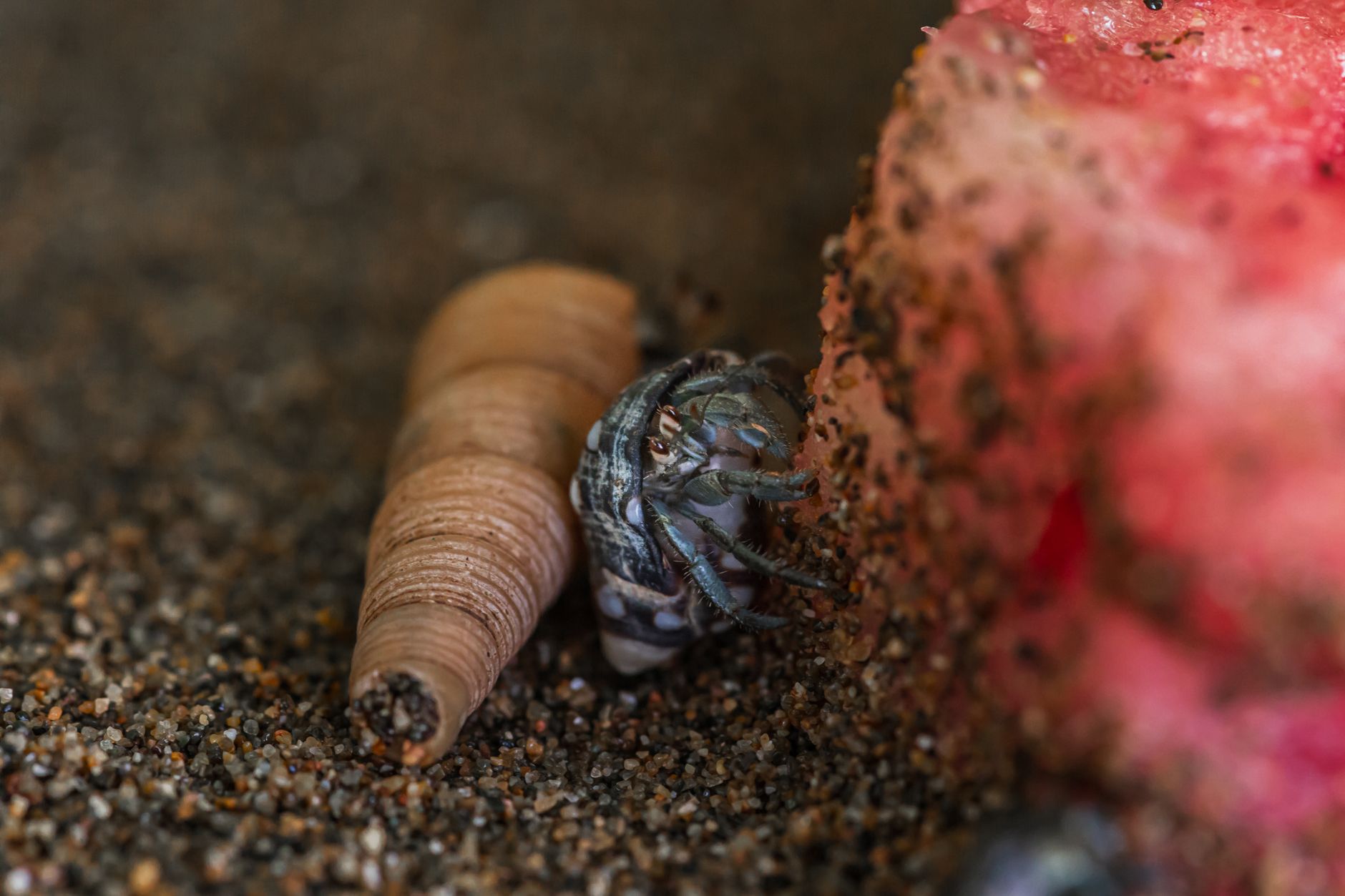
Hermit crab mating is a delicate dance. It often begins with the male displaying dominance and attracting a female. The specific courtship rituals vary between species, but common elements include:
- Claw waving: Males often wave their claws to attract the attention of females.
- Shell rapping: Some males will tap on the female’s shell, possibly as a form of communication.
- Physical touching: Males may gently touch or stroke the female.
Once a female is receptive, the male will carefully maneuver her outside of her shell. Fertilization is external, with the male depositing sperm onto the female’s abdomen. This sperm then fertilizes the eggs as they are released. Unlike many terrestrial creatures, there is no internal gestation period.
Egg Carrying and Release: A Mother’s Burden
After fertilization, the female attaches the fertilized eggs to her pleopods – small, feathery appendages on her abdomen. She carries these eggs with her, providing them with oxygenated water as she moves. The eggs, resembling tiny berries, are typically orange or brown in color.
The crucial moment of “birth” arrives when the eggs are ready to hatch. The female hermit crab migrates to the shoreline or even directly into the water. Using her pleopods, she vigorously shakes the eggs, releasing the newly hatched larvae into the ocean. This synchronized release often coincides with high tide, increasing the larvae’s chances of survival.
Larval Development: From Zooea to Glaucothoe
The released larvae, known as zoeae, are free-swimming plankton. They bear little resemblance to adult hermit crabs. The zoeae go through several molting stages, gradually transforming. These stages are characterized by changes in their body shape and appendages.
After several weeks or months, the zoea metamorphoses into a glaucothoe. The glaucothoe is a more recognizable miniature hermit crab. This stage is crucial because the glaucothoe actively searches for a small shell to inhabit. Once it finds a suitable shell, it settles into a benthic (bottom-dwelling) lifestyle. This is where the journey truly begins for a juvenile hermit crab.
Threats to Reproduction: Ensuring Future Generations
Hermit crab populations face various threats, particularly during the vulnerable larval stage.
- Pollution: Chemical pollutants and plastic debris in the ocean can harm or kill larvae.
- Habitat destruction: Coastal development and habitat degradation can reduce suitable breeding grounds.
- Climate change: Rising sea temperatures and ocean acidification can negatively impact larval development and survival.
- Over-collection: The demand for hermit crabs as pets can deplete populations, particularly those of desirable shell sizes and species.
Ensuring Successful Reproduction: Conservation Efforts
Protecting hermit crab populations requires a multi-pronged approach, focusing on:
- Habitat conservation: Protecting coastal wetlands, mangroves, and beaches.
- Pollution reduction: Reducing plastic waste and chemical runoff into the ocean.
- Sustainable pet trade practices: Promoting responsible pet ownership and discouraging the collection of wild hermit crabs.
- Educating the public: Raising awareness about the importance of hermit crab conservation.

Frequently Asked Questions About Hermit Crab Reproduction
What time of year do hermit crabs usually release their eggs?
The timing of egg release varies depending on the species and geographic location. However, most hermit crab species tend to breed during the warmer months, when water temperatures are more favorable for larval development. Specific seasons may differ depending on factors like lunar cycles and food availability.
How long do hermit crab eggs take to hatch?
The incubation period for hermit crab eggs also varies by species, but generally ranges from a few weeks to several months. Temperature plays a significant role; warmer temperatures typically accelerate development.
How many eggs does a female hermit crab carry?
The number of eggs a female hermit crab carries depends on her size and species. However, it can be hundreds or even thousands of eggs at a time. This high number is necessary because the vast majority of larvae will not survive to adulthood.
What do hermit crab larvae eat?
Hermit crab larvae are planktonic feeders, meaning they consume microscopic organisms like phytoplankton and zooplankton. They are also opportunistic, and may consume detritus (dead organic matter) in the water column.
Do hermit crabs mate for life?
No, hermit crabs do not mate for life. They are not known to form long-term pair bonds. Mating is a temporary interaction, and both males and females may mate with multiple partners throughout their lives.
How do hermit crabs choose their shells?
Hermit crabs choose shells based on several factors, including size, shape, weight, and condition. They prefer shells that provide adequate protection without being too heavy to carry. They may also compete with other crabs for desirable shells.
Do hermit crabs ever get stuck in their shells?
While it’s uncommon, hermit crabs can sometimes get stuck in their shells, particularly if the shell is damaged or too small. This can be dangerous, as they are vulnerable to predators and dehydration without a properly fitting shell.
Can hermit crabs breed in captivity?
Yes, hermit crabs can breed in captivity, but it is not always easy. It requires a carefully controlled environment with appropriate water parameters, substrate, and food. The larval stage is particularly challenging to manage.
What role do hermit crabs play in the ecosystem?
Hermit crabs play a crucial role as scavengers, feeding on dead organisms and detritus. This helps to recycle nutrients and keep the environment clean. They also serve as a food source for larger predators.
Are all hermit crabs marine?
No, not all hermit crabs are marine. There are also terrestrial hermit crab species, such as the Caribbean hermit crab ( Coenobita clypeatus), which spend most of their lives on land but require access to saltwater for reproduction.
What are the biggest threats to hermit crab populations?
The biggest threats to hermit crab populations include habitat destruction, pollution, climate change, and over-collection for the pet trade. These factors can negatively impact their survival and reproduction.
How can I help protect hermit crabs?
You can help protect hermit crabs by reducing your plastic consumption, supporting sustainable seafood choices, advocating for coastal conservation, and avoiding the purchase of wild-caught hermit crabs as pets. Choosing captive-bred options and educating others about hermit crab conservation are also beneficial.