

How to Tell If Your Cat Is a Tabby
It’s easier than you think! The easiest way to tell is by looking for the distinctive “M” marking on their forehead, a tell-tale sign that your feline friend is indeed a tabby.

Determining whether your feline companion boasts the coveted title of “tabby” might seem straightforward, but delving into the nuances of feline genetics and coat patterns reveals a fascinating complexity. While often mistaken for a specific breed, tabby actually refers to a coat pattern common across numerous breeds. This article provides a comprehensive guide on how do you tell if your cat is a tabby?, equipping you with the knowledge to confidently identify this prevalent and charming feline characteristic.
Understanding the Tabby Gene and Pattern
The tabby pattern isn’t a single entity; rather, it’s a collection of distinct patterns controlled by the agouti gene. When the agouti gene is expressed, it allows for banding in the individual hairs, creating the striped or spotted appearance we associate with tabbies. Without the agouti gene, a cat would be solid colored (although ghost tabby markings may still be visible). Understanding the role of this gene is fundamental to understanding how do you tell if your cat is a tabby?.
The Signature “M” Marking
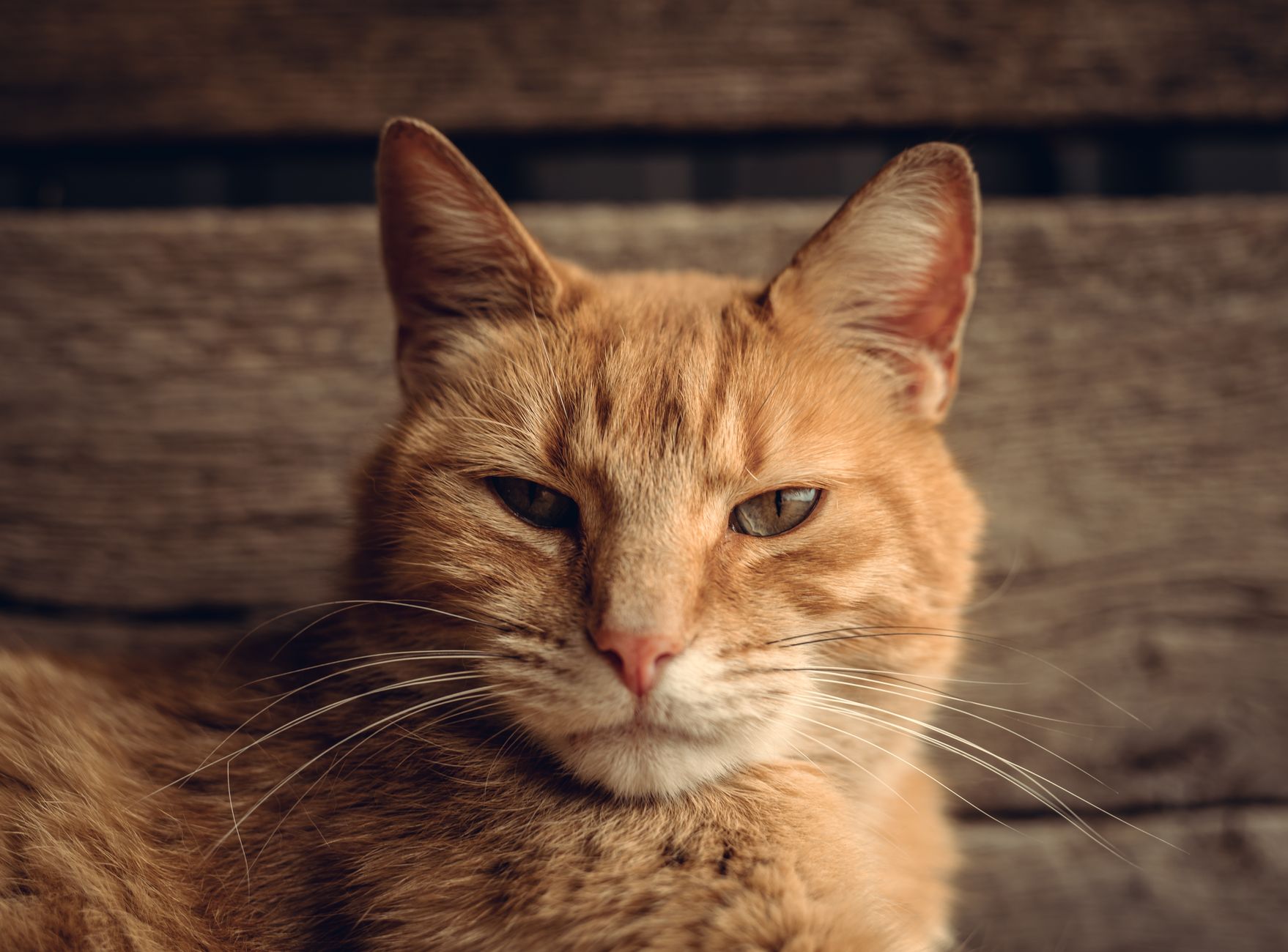
Perhaps the most recognizable characteristic of a tabby cat is the distinctive “M” marking on their forehead. This marking, regardless of the specific tabby pattern, is almost always present and is considered a defining feature. Look closely, and you’ll see it!
Four Main Tabby Patterns
While the “M” is universal, the overall coat pattern varies. Here are the four primary tabby patterns:
- Classic Tabby: Features swirling patterns on the sides of the body, often resembling a target.
- Mackerel Tabby: This is the most common pattern, characterized by narrow, parallel stripes running along the cat’s sides, resembling a fish skeleton (hence the name “mackerel”).
- Spotted Tabby: As the name suggests, this pattern features spots of varying sizes distributed across the body. These spots are essentially broken stripes.
- Ticked Tabby: Also known as Abyssinian tabby, this pattern lacks the obvious stripes or spots. Instead, each hair is banded with different colors, giving the cat a subtly speckled appearance. The “M” on the forehead is still present.
Color Variations
Tabby patterns can appear in a wide array of colors, including:
- Brown Tabby (black stripes on a brown background)
- Orange Tabby (ginger or red stripes on a lighter orange background)
- Grey Tabby (blue or grey stripes on a lighter grey background)
- Cream Tabby (cream stripes on a white or lighter cream background)
The color of the tabby pattern depends on other genes besides the agouti gene, which control pigmentation.
Distinguishing Tabby from Other Patterns
It’s important to differentiate tabby patterns from other feline coat patterns, such as:
- Solid Color: Cats with a single, uniform color (e.g., black, white, blue). However, younger cats may display ghost tabby markings that fade with age.
- Tortoiseshell: A mix of red and black (or diluted versions of these colors, such as cream and blue). These cats are almost always female.
- Calico: Similar to tortoiseshell, but with the addition of white patches.
- Colorpoint: Light-colored bodies with darker points (ears, paws, tail, and face), as seen in Siamese cats.
Understanding these differences is crucial when trying to assess how do you tell if your cat is a tabby?.
Table: Key Characteristics of Tabby Patterns
| Feature | Classic Tabby | Mackerel Tabby | Spotted Tabby | Ticked Tabby |
|---|---|---|---|---|
| Body Pattern | Swirling, target-like patterns | Narrow, parallel stripes | Spots of varying sizes | Banded hairs, no distinct stripes or spots |
| Legs & Tail | Often have broken or complete rings | Often have rings | Often have spots or broken rings | May have faint rings |
| Forehead Marking | Distinct “M” | Distinct “M” | Distinct “M” | Distinct “M” |
| Common in Breeds | American Shorthair, British Shorthair, Persians | Many breeds, very common | Egyptian Mau, American Bobtail | Abyssinian, Somali |
Why is Identifying the Tabby Pattern Important?
While simply knowing your cat is a tabby might seem like a matter of curiosity, it can be valuable for several reasons:
- Understanding Breed Mix: Identifying a tabby pattern can offer clues about your cat’s potential breed heritage, particularly if you have a mixed-breed cat.
- Genetic Information: Recognizing the tabby pattern provides insight into your cat’s genetic makeup.
- Appreciating Diversity: It allows you to appreciate the remarkable diversity and beauty within the feline world.

Frequently Asked Questions
Is “tabby” a cat breed?
No, tabby is not a breed. It refers to a coat pattern seen in numerous breeds. Think of it like “blonde” for people – it describes hair color, not ethnicity. Many breeds, from Maine Coons to Persians, can display tabby patterns. The term simply describes the distinctive markings on the cat’s coat.
Do all tabby cats have stripes?
Not necessarily. While stripes are common, the spotted tabby has spots, and the ticked tabby has banded hairs, creating a salt-and-pepper effect without distinct stripes or spots. All, however, share the signature “M” on their forehead.
Can kittens have ghost tabby markings?
Yes, many solid-colored kittens display faint tabby markings, called “ghost tabby” patterns. These markings tend to fade as the kitten matures, especially if the cat doesn’t have the agouti gene, which is required for a true tabby pattern.
Is an orange cat always a tabby?
Almost always. The gene responsible for orange coloration is sex-linked and usually expressed as a tabby pattern. While solid orange cats are rare, they do exist. However, the vast majority of orange cats display some form of tabby pattern.
What does the “M” on the forehead signify?
The distinctive “M” is a universal marker for all tabby patterns. While the precise evolutionary reason for this marking remains unknown, it’s a reliable indicator that a cat is a tabby, regardless of the rest of its coat pattern.
Are tabby cats more affectionate?
There’s no scientific evidence linking coat pattern to temperament. A cat’s personality is influenced by genetics, early socialization, and environment. Tabby cats can be just as affectionate (or aloof) as cats with any other coat pattern.
Can long-haired cats be tabbies?
Absolutely. The length of the cat’s hair has no bearing on whether it can be a tabby. Breeds like Maine Coons and Persians can exhibit beautiful and striking tabby patterns despite their long fur.
How can I tell if my cat is a ticked tabby?
Ticked tabbies lack the obvious stripes or spots of other tabby patterns. Look closely at the individual hairs – each hair will be banded with different colors. This creates a speckled or agouti appearance, rather than distinct markings.
What is a “torbie” cat?
A torbie is a cat that combines the tortoiseshell (tortie) and tabby patterns. These cats have patches of red/orange and black/brown, along with tabby markings. They are almost always female.
Are there any breeds that are exclusively tabby?
No, there are no breeds that are exclusively tabby. The tabby pattern is a coat pattern, not a breed characteristic. Many breeds commonly display tabby patterns, but none are exclusively tabby.
What is the rarest tabby pattern?
While it’s difficult to definitively say which is the rarest, the ticked tabby is often considered less common than the classic or mackerel tabby. This is because the banded hair appearance can be more subtle and easily overlooked.
Does the color of a tabby affect its health?
Generally, no. The color of a tabby pattern does not directly affect its health. However, certain breeds predisposed to specific health issues may also commonly exhibit certain tabby patterns. For example, orange tabby cats may be more common in breeds with genetic predispositions unrelated to their coat color. Knowing how do you tell if your cat is a tabby? is about identification of a pattern, not a health assessment.