

How Do Dolphins Name Themselves? Decoding the Whistles of Identification
Dolphins don’t use traditional names like humans; instead, they develop unique signature whistles, a distinctive sound pattern that acts as their individual identifier, essentially answering the question, How do dolphins name themselves?

Introduction: The Symphony of the Sea
The marine realm is a world of complex communication, and among its most skilled vocalists are dolphins. These intelligent cetaceans engage in a rich tapestry of sound, but perhaps the most fascinating aspect of their sonic repertoire is the concept of the signature whistle. This isn’t just any sound; it’s a personalized identifier, a vocal calling card that begs the question: How do dolphins name themselves? For decades, scientists have been unraveling the mysteries of dolphin communication, leading to groundbreaking discoveries about their social structure and cognitive abilities. The signature whistle is a crucial piece of this puzzle, providing invaluable insights into how these animals recognize each other, maintain social bonds, and navigate their complex underwater world.
The Anatomy of a Signature Whistle
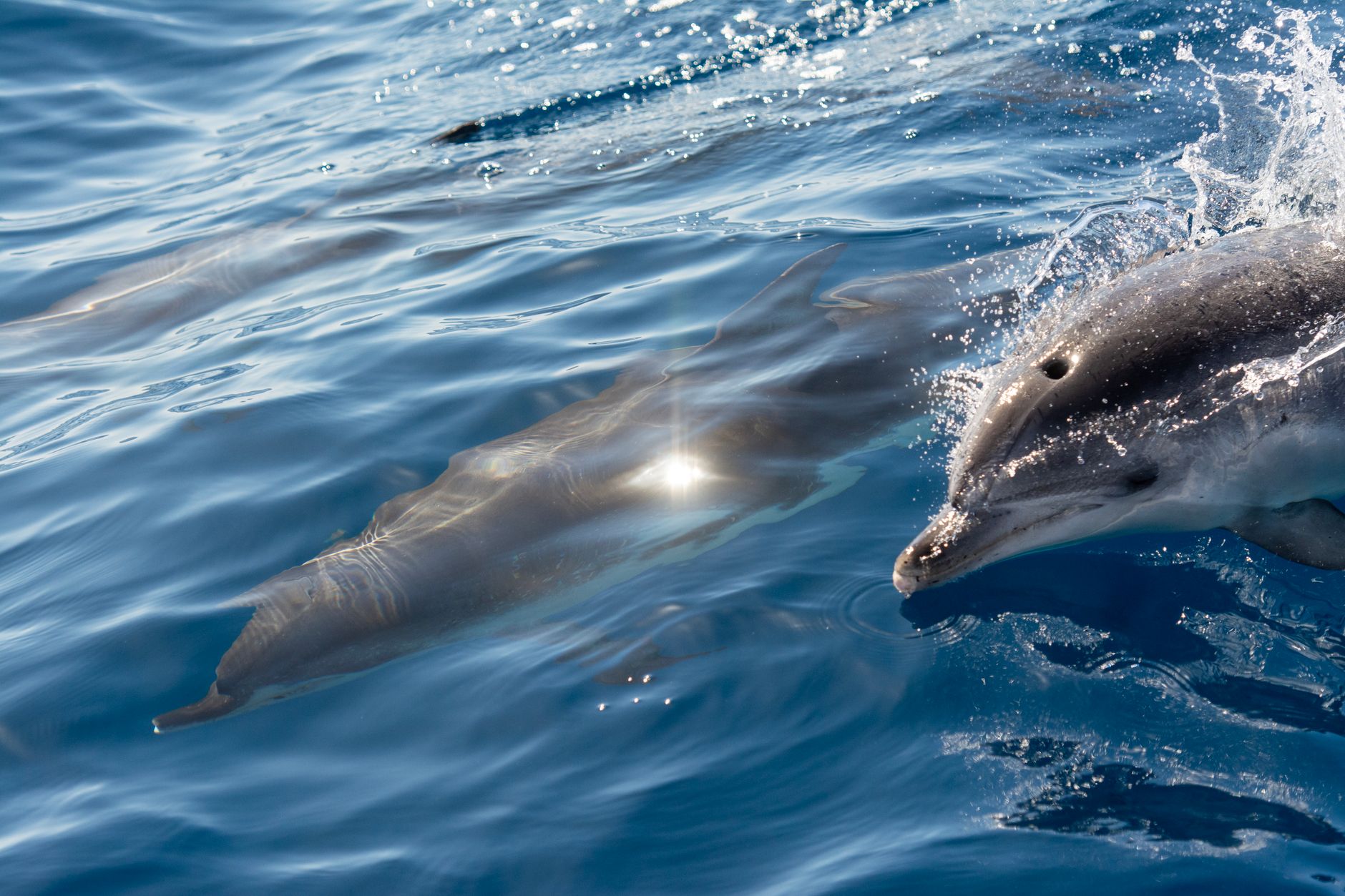
What exactly constitutes a signature whistle? It’s more than just a random noise. These whistles are:
- Individually Distinct: Each dolphin develops a whistle that is unique to them, differing in frequency, duration, and modulation from those of other dolphins.
- Learned, Not Inherited: Baby dolphins don’t automatically inherit their mother’s whistle. They develop their own through a process of vocal learning and experimentation.
- Stable Over Time: While minor variations can occur, a dolphin’s signature whistle generally remains consistent throughout its life, allowing for long-term recognition.
- Used as a Reference Call: Dolphins use their signature whistles to announce their presence, attract attention, and refer to themselves in social interactions.
The Learning Process: Developing a Vocal Identity
The journey of developing a signature whistle begins in infancy. Calves are exposed to a cacophony of sounds within their pod, including the signature whistles of their mothers, siblings, and other group members. Through imitation and vocal experimentation, the calf begins to develop its own unique whistle. This process involves:
- Auditory Learning: Calves listen to the sounds around them and attempt to mimic them.
- Vocal Exploration: Calves experiment with different vocalizations, refining their sounds over time.
- Feedback and Reinforcement: Social interactions likely play a role, with other dolphins responding differently to certain sounds, shaping the calf’s vocal development.
- Crystallization: Eventually, the calf settles on a particular whistle pattern that becomes their signature.
Functions of Signature Whistles in Dolphin Society
These signature whistles serve multiple crucial functions within dolphin society. These include:
- Individual Recognition: Allows dolphins to identify specific individuals, even at a distance.
- Group Cohesion: Helps maintain social bonds within a pod by enabling individuals to communicate and coordinate their activities.
- Long-Term Relationships: Facilitates the recognition and maintenance of relationships over extended periods.
- Information Sharing: Allows dolphins to convey information about their identity, location, and potentially their emotional state.
The Controversy of “Names”
While signature whistles function as individual identifiers, some researchers hesitate to call them “names” in the human sense. This is because:
- Lack of Intentional Referencing: It’s unclear whether dolphins consciously use their signature whistles to refer to themselves in the same way humans use names.
- Limited Contextual Understanding: We don’t fully understand the nuances of dolphin communication and the contextual information conveyed through signature whistles.
- Potential for Misinterpretation: Applying human concepts like “names” to dolphin communication may lead to inaccurate interpretations of their behavior.
Despite these caveats, the concept of signature whistles provides a fascinating glimpse into the complexities of dolphin communication and offers a valuable tool for studying their social dynamics. The question of How do dolphins name themselves? is constantly being re-examined as we learn more.

Challenges in Studying Dolphin Communication
Understanding dolphin communication is a complex undertaking, fraught with challenges. Some key obstacles include:
- The Underwater Environment: Studying sound in the ocean presents technical difficulties due to noise pollution, water pressure, and limited visibility.
- The Complexity of Dolphin Vocalizations: Dolphins produce a wide range of sounds, making it difficult to isolate and interpret specific signals.
- The Difficulty of Observation: Tracking and observing dolphins in their natural habitat can be challenging, limiting our ability to collect data.
- Ethical Considerations: Studying dolphins requires careful consideration of their welfare and the potential impact of research activities on their populations.
Future Directions in Dolphin Communication Research
Despite these challenges, research into dolphin communication continues to advance, fueled by technological innovations and a growing understanding of dolphin behavior. Future research directions include:
- Developing advanced underwater recording technologies.
- Using artificial intelligence to analyze dolphin vocalizations.
- Conducting long-term studies of dolphin social dynamics.
- Investigating the potential for cross-species communication.
Frequently Asked Questions (FAQs)
How is a signature whistle different from other dolphin sounds?
Signature whistles are distinctive because they are individually unique and relatively stable over time, unlike other dolphin vocalizations that may be used for various purposes, such as echolocation or conveying emotional states. They are primarily used for self-identification.
Can dolphins learn each other’s signature whistles?
Yes, dolphins can learn and recognize the signature whistles of other individuals within their social group. This is essential for maintaining social bonds and coordinating group activities. It supports how dolphins recognize each other, making the answer to How do dolphins name themselves? more complex than a simple self-identification.
Do all dolphin species have signature whistles?
While signature whistles have been extensively studied in bottlenose dolphins, evidence suggests that other dolphin species also possess similar individual recognition signals, although the specific characteristics and functions may vary. More research is needed to fully understand the prevalence and diversity of signature whistles across different dolphin species.
Do dolphins use their signature whistles more often in certain situations?
Dolphins tend to use their signature whistles more frequently in situations where they are separated from their group or need to announce their presence, such as during foraging activities or social encounters. They’re calling cards.
Are there any threats to dolphins’ ability to communicate effectively?
Yes, human activities, such as noise pollution from shipping and sonar, can interfere with dolphin communication, potentially disrupting their ability to find food, avoid predators, and maintain social bonds. This noise makes it harder to determine How do dolphins name themselves?
Can dolphins change their signature whistles over time?
While signature whistles are generally stable, minor variations can occur over time, particularly in response to changes in social dynamics or environmental conditions. However, the core features of the whistle remain consistent, allowing for long-term recognition.
How do researchers study dolphin signature whistles?
Researchers use underwater microphones (hydrophones) to record dolphin vocalizations. They then analyze the recordings to identify and categorize signature whistles based on their acoustic properties. By tracking the occurrence of specific whistles, researchers can study dolphin social behavior and communication patterns.
What are the ethical considerations when studying dolphin communication?
Research involving dolphins must be conducted ethically and with minimal disturbance to their natural behavior. Researchers must obtain permits and adhere to strict guidelines to ensure the welfare of the animals.
Do calves inherit their signature whistles from their mothers?
No, calves don’t inherit their signature whistles. They develop their own unique whistles through a process of vocal learning and experimentation, which is a critical element in How do dolphins name themselves?
Can signature whistles be used to track individual dolphins?
Yes, signature whistles can be used as a powerful tool for tracking individual dolphins and studying their movement patterns, social interactions, and habitat use.
Are signature whistles influenced by the environment?
While the core structure of a signature whistle is individually determined, the surrounding acoustic environment can influence how it is produced and perceived. Dolphins may adjust their whistles in response to background noise or the presence of other vocalizations.
Can dolphins mimic the signature whistles of other individuals?
Yes, dolphins have been observed to mimic the signature whistles of other individuals, potentially as a way to attract their attention, affiliate with them, or even deceive them. This mimicking capability further complicates How do dolphins name themselves?, showing there’s a social element to even the personal ‘name’.