
Does Kauai Have a Volcano? Unveiling the Garden Isle’s Fiery Past
No, Kauai does not currently have an active volcano, though its very existence is owed to ancient volcanic activity. The island is the oldest in the Hawaiian chain and its volcano is long extinct, shaped now by millions of years of erosion.

The lush landscapes of Kauai, the “Garden Isle,” are a testament to the powerful forces of nature that shaped its beginnings. Though the island boasts cascading waterfalls, dramatic cliffs, and emerald valleys, a question often lingers in the minds of visitors and those fascinated by geological history: Does Kauai have a volcano? While the answer is nuanced, understanding the island’s volcanic past is key to appreciating its present-day beauty.
Kauai’s Volcanic Origins: A Journey Through Time
Kauai, geologically speaking, is the grand old dame of the Hawaiian Islands. Its formation began approximately six million years ago when the Pacific Plate drifted over a hotspot in the Earth’s mantle. Molten rock, or magma, erupted from this hotspot, building up layer upon layer of volcanic material on the ocean floor. Over millions of years, this process resulted in the emergence of Kauai above sea level.
The primary volcano responsible for Kauai’s creation was known as the Kauai shield volcano. These shield volcanoes are characterized by their broad, gently sloping profiles, formed by the effusive eruption of relatively fluid basaltic lava. The Kauai shield volcano was active for an estimated half-million years, during which time it poured out vast quantities of lava that solidified to form the island’s foundation.
The Extinction of Kauai’s Volcano and the Rise of Erosion
The key to understanding the answer to “Does Kauai have a volcano?” lies in recognizing the timeline of geological processes. As the Pacific Plate continued to move northwestward, Kauai drifted away from the hotspot. This meant that the supply of magma was cut off, effectively extinguishing the Kauai shield volcano.
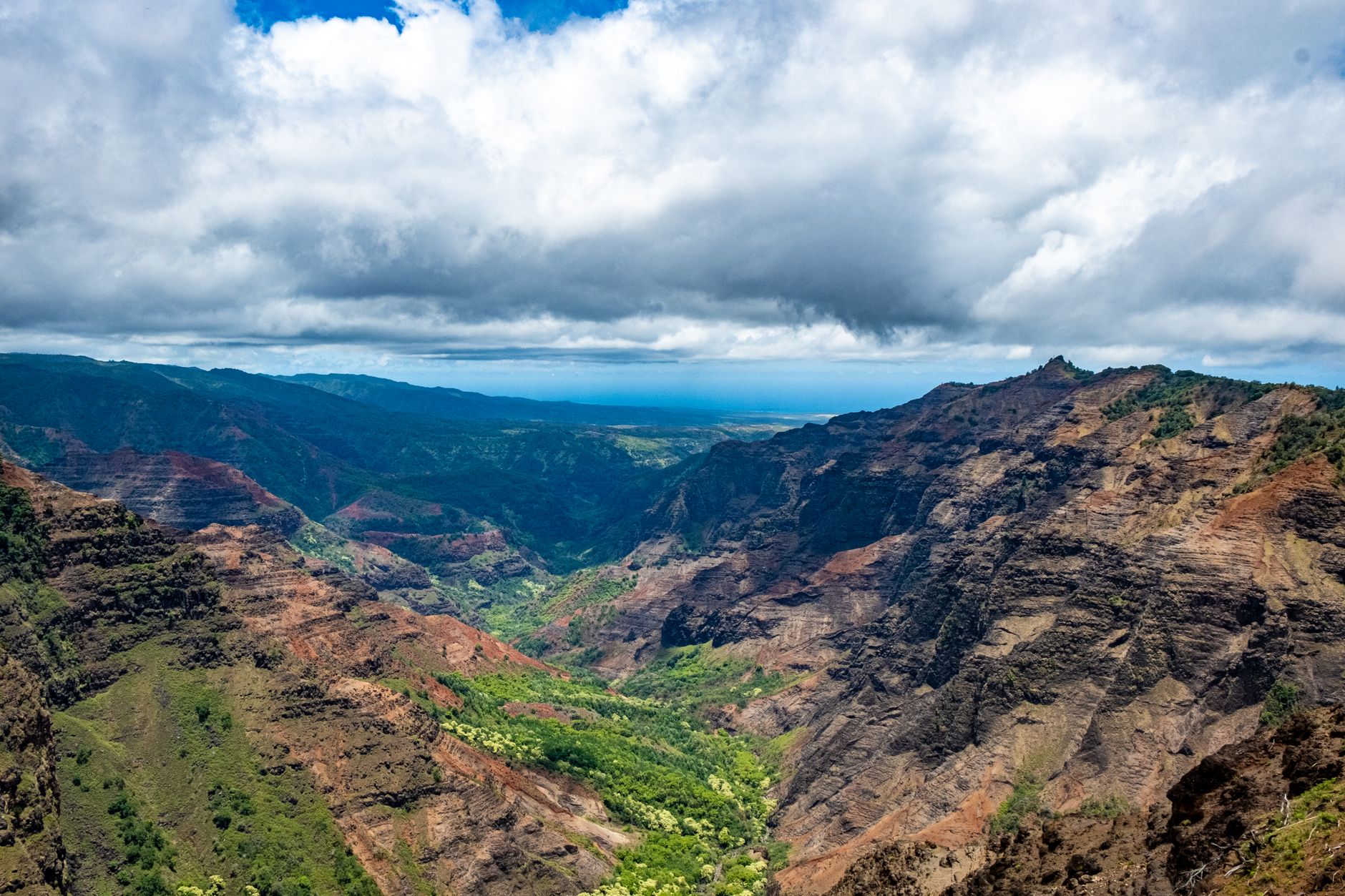
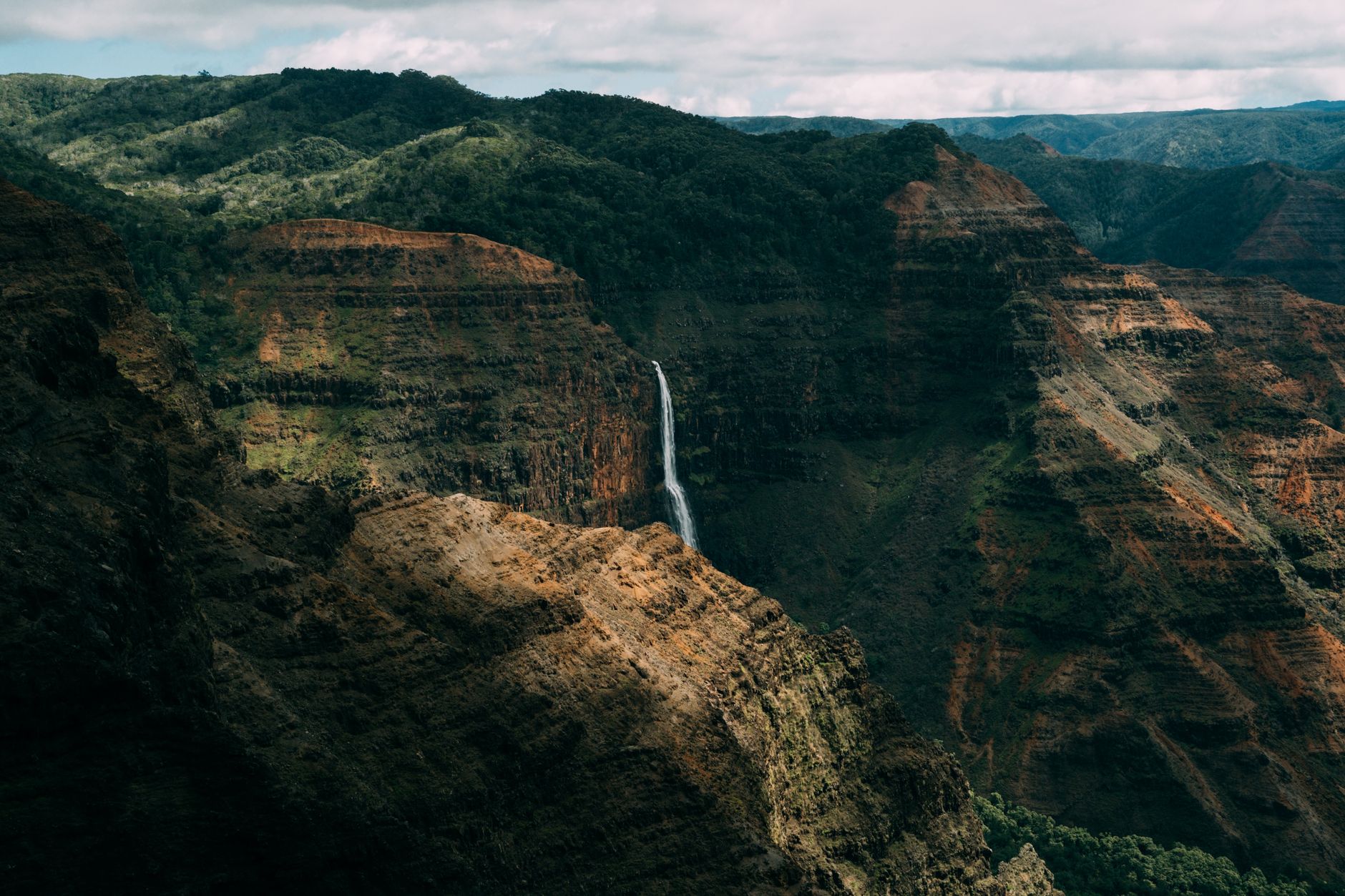
Without a continuous source of volcanic activity, the forces of erosion began to take over. Over millions of years, wind, rain, and waves relentlessly sculpted the landscape, carving out the dramatic valleys, towering cliffs, and intricate canyons that characterize Kauai today. This erosion is significantly responsible for the appearance of the island, and answering the question “Does Kauai have a volcano?” reveals the true nature of this ancient landscape.
- Rivers cut deep into the volcanic rock, forming the famous Waimea Canyon, often referred to as the “Grand Canyon of the Pacific.”
- The relentless pounding of waves created the iconic Na Pali Coast, with its sheer cliffs and hidden beaches.
- Rainfall, averaging hundreds of inches per year in some areas, fueled the lush vegetation that has earned Kauai its “Garden Isle” moniker.
Distinguishing Active, Dormant, and Extinct Volcanoes
To fully grasp the situation, it’s important to understand the different states of volcanoes:
- Active volcanoes: Those that have erupted within the recent geological past and are likely to erupt again.
- Dormant volcanoes: Those that have not erupted recently but are considered capable of erupting in the future.
- Extinct volcanoes: Those that are no longer considered capable of erupting.
Kauai’s volcano falls firmly into the extinct category. The island has been separated from the hotspot for millions of years, and there is no evidence of any ongoing magma activity beneath the surface. Therefore, the answer to “Does Kauai have a volcano?” is no – not an active one.
The Impact of Volcanic History on Kauai’s Landscape
Even though Kauai’s volcano is long extinct, its legacy is undeniable. The island’s fertile soils are derived from the weathered volcanic rock, providing a rich environment for plant growth. The unique geological formations, such as the Waimea Canyon and the Na Pali Coast, are direct results of the volcanic activity and subsequent erosion.
| Feature | Formation Process | Relationship to Volcanic History |
|---|---|---|
| Waimea Canyon | River erosion cutting through layers of volcanic rock | Exposes the layers of lava flows from the ancient volcano |
| Na Pali Coast | Wave erosion carving out cliffs along the volcanic shoreline | Shows the result of the volcano’s original land mass |
| Fertile Soils | Weathering of volcanic rock | Provides nutrients for plant growth |
Therefore, while there is not currently an active volcano to speak of when answering the question “Does Kauai have a volcano?“, the entire island’s ecology and environment are based upon the volcanic history of the Hawaiian islands.

Frequently Asked Questions (FAQs)
How old is Kauai compared to the other Hawaiian islands?
Kauai is the oldest of the main Hawaiian Islands, estimated to be around six million years old. This means it has had the longest time to erode and develop its unique landscape.
Is there any chance that Kauai’s volcano could become active again?
Due to its distance from the hotspot and the absence of any evidence of magma activity, it is highly unlikely that Kauai’s volcano will ever become active again.
What type of volcano was Kauai’s?
Kauai’s volcano was a shield volcano, characterized by its broad, gently sloping shape and effusive eruptions of basaltic lava.
How did the Waimea Canyon form?
The Waimea Canyon was primarily formed by river erosion over millions of years, cutting deep into the layers of volcanic rock that make up the island.
What is the significance of the Na Pali Coast?
The Na Pali Coast is a stunning example of coastal erosion, showcasing the power of waves to sculpt dramatic cliffs and hidden beaches from the volcanic landscape.
Are there any remnants of the volcano’s crater on Kauai?
While the original crater has been heavily eroded over millions of years, some remnants of the volcanic cone may be subtly visible in the island’s topography, particularly in the central highlands.
Does Kauai have black sand beaches like some of the other Hawaiian islands?
Kauai does have some small pockets of black sand beaches, but they are not as extensive as those found on islands like the Big Island, which has more recent volcanic activity.
What types of rocks are commonly found on Kauai?
The most common rocks found on Kauai are basaltic lava rocks, which are the result of the island’s volcanic origins.
How does Kauai’s volcanic history affect its agriculture?
The weathered volcanic rock has created fertile soils that are ideal for agriculture, allowing Kauai to support a diverse range of crops.
Are there any volcanic hot springs on Kauai?
Due to its long period of inactivity, Kauai does not have any volcanic hot springs.
Is it possible to hike on the remnants of the ancient volcano?
Yes, there are numerous hiking trails on Kauai that traverse the eroded landscape of the ancient volcano, offering stunning views of the island’s unique geology.
How does the geological history of Kauai compare to the Big Island of Hawaii?
The Big Island is the youngest and most volcanically active of the Hawaiian Islands, while Kauai is the oldest and most eroded. This difference in age and activity accounts for the significant differences in their landscapes. Understanding these differences provides further insight into the answer to “Does Kauai have a volcano?“, revealing the history of the islands.