
Does Earth Have 2 Moons? Unveiling Our Celestial Neighborhood
The answer is complex: While Earth only has one official moon, Does Earth have 2 moons? Not exactly. There are temporary, much smaller objects known as quasi-satellites or temporary moons that orbit the Sun but appear to loop around the Earth for a short period.

The One and Only: Earth’s Primary Moon
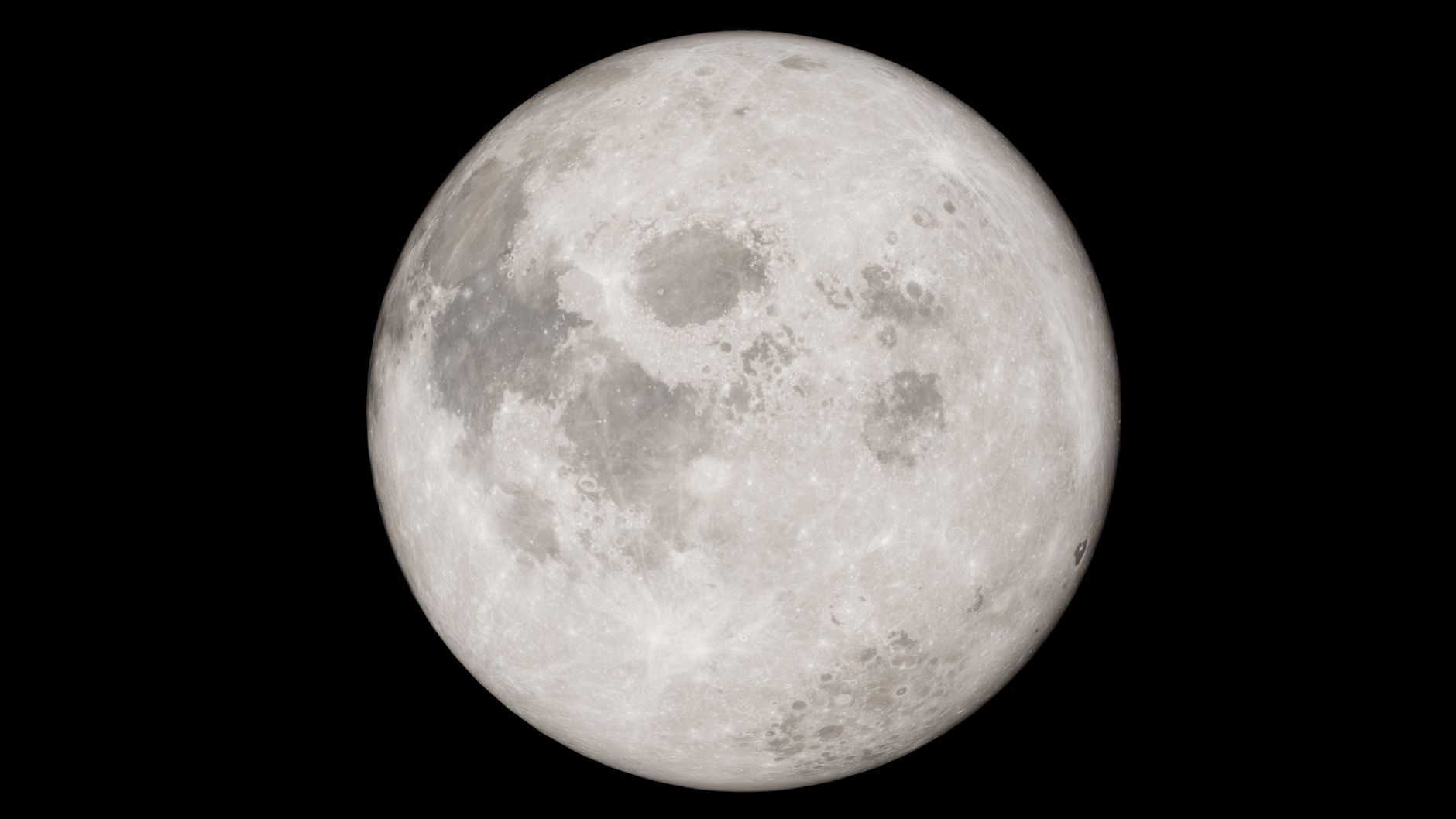
Our familiar Moon, Luna, is a substantial celestial body that has been a constant companion to Earth since the planet’s early days. It exerts significant influence on our planet, stabilizing our axial tilt and causing tides. Its presence is a defining characteristic of Earth’s cosmic environment. We’ve explored it extensively through robotic missions and human landings, deepening our understanding of its formation and composition.

Do all amphibians have eyelids?
Why do cuttlefish have W-shaped eyes?
Do all snakes have poison in them?
What is the GREY African clawed frog?
Quasi-Satellites and Temporary Moons
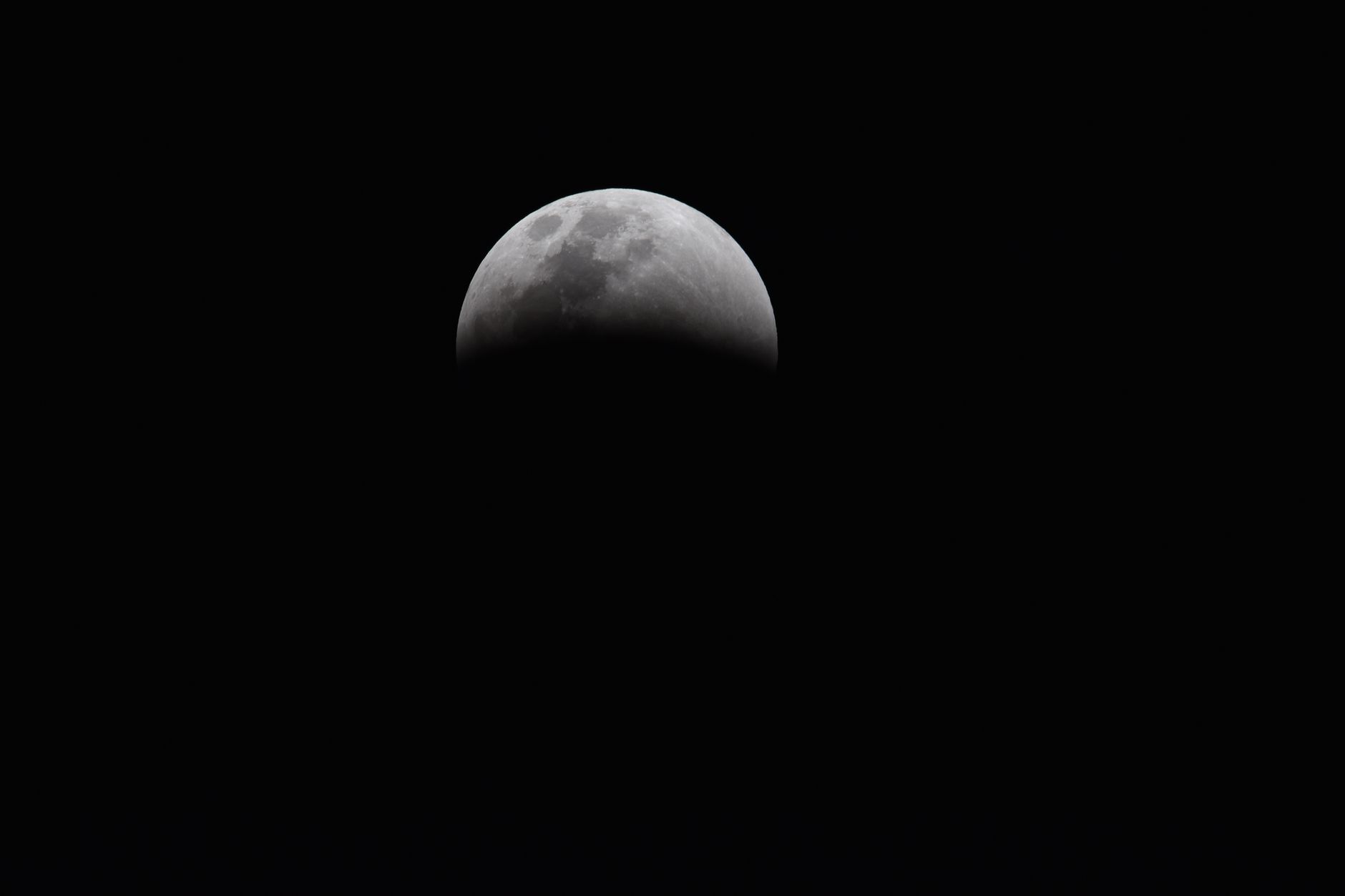
While Luna reigns supreme, the question Does Earth have 2 moons? often stems from the existence of quasi-satellites. These objects orbit the Sun in a similar path to Earth, but their trajectories are influenced by Earth’s gravity in such a way that they appear to orbit our planet in a looping pattern.
- They are much smaller than the Moon.
- Their orbits are highly elliptical and unstable.
- They are only temporary companions.
These distinctions are crucial. Quasi-satellites are not gravitationally bound to Earth in the same way as the Moon. They are, essentially, space rocks tagging along in our solar system neighborhood.
The Case of 2016 HO3 (Kamoʻoalewa)
One well-known quasi-satellite is 2016 HO3, also known as Kamoʻoalewa. This object is a prime example of a temporary moon. It orbits the Sun, but its path is perturbed by Earth’s gravity, causing it to loop around our planet.
- It’s estimated to be between 40 and 100 meters in diameter.
- Spectroscopic analysis suggests it may be composed of lunar material.
- Its orbit is stable enough that it has likely been a quasi-satellite of Earth for centuries, and may remain so for centuries more.
However, it is essential to reiterate that Kamoʻoalewa, like other quasi-satellites, is not a true moon. Its gravitational relationship with Earth is much weaker and temporary compared to Luna.
The Gravitational Dance: Lagrange Points
To further understand the complexities of Earth’s gravitational influence, it’s helpful to consider Lagrange points. These are five points in space where the gravitational forces of two large bodies, such as the Sun and Earth, balance each other out.
- L1, L2, and L3 are unstable and require constant correction to maintain an object’s position.
- L4 and L5 are stable, allowing objects to remain there for long periods.
While these points are not moons in the traditional sense, they can potentially host dust clouds or small asteroids, further blurring the lines when we consider Does Earth have 2 moons?. However, even objects residing in Lagrange points are distinct from our primary moon.
The Definition of “Moon”
Ultimately, the question Does Earth have 2 moons? comes down to the definition of a “moon.” Luna fits the bill perfectly: a natural satellite gravitationally bound to Earth in a stable orbit. Quasi-satellites, on the other hand, are not gravitationally bound in the same way, and their orbits are temporary. Therefore, by the established scientific definition, Earth has only one moon.
Implications of Multiple Moons (Hypothetically)
Imagine if Earth did have multiple moons, similar in size and gravitational influence to Luna. This would dramatically impact Earth in various ways:
- Increased Tidal Forces: Multiple moons would create much more complex and potentially stronger tidal forces, affecting coastal regions significantly.
- Orbital Instability: Multiple large moons might destabilize each other’s orbits, leading to collisions or ejection from Earth’s orbit.
- Lighting Conditions: Nights would be significantly brighter, impacting nocturnal animals and potentially affecting plant life.
While a fascinating thought experiment, the reality is that Earth’s single moon provides a stable and beneficial environment.
Table: Moon vs. Quasi-Satellite
| Feature | Moon (Luna) | Quasi-Satellite |
|---|---|---|
| Gravitational Bond | Strong, Stable | Weak, Temporary |
| Orbital Path | Around Earth | Around the Sun, loops near Earth |
| Size | Large (3,474 km diameter) | Small (meters to hundreds of meters) |
| Stability | Very Stable | Unstable |
| Example | Luna | 2016 HO3 (Kamoʻoalewa) |
Frequently Asked Questions (FAQs)
1. Could Earth ever gain a second “true” moon?
Theoretically, yes. If a large asteroid were to be captured by Earth’s gravity and settle into a stable orbit, it could become a second moon. However, such an event is highly unlikely given the current distribution of objects in our solar system. The energy and trajectory required for such a capture are extremely specific.
2. What is the difference between a quasi-satellite and a Trojan asteroid?
Both are influenced by the gravity of a planet and the Sun, but their orbital characteristics differ. Quasi-satellites orbit the Sun but remain near Earth, appearing to loop around our planet. Trojan asteroids share a planet’s orbit around the Sun and are located at Lagrange points L4 and L5 of the planet-Sun system, 60 degrees ahead and behind the planet.
3. Are there any plans to study quasi-satellites more closely?
Yes, there is increasing interest in studying quasi-satellites like Kamoʻoalewa. Their composition might provide insights into the early solar system or even the Moon’s formation. Missions could potentially be sent to these objects to collect samples and analyze their properties.
4. Why is it important to distinguish between a true moon and a quasi-satellite?
The distinction is crucial for understanding the gravitational dynamics of our solar system and accurately describing the celestial bodies around Earth. A true moon has a significant and lasting gravitational influence, while a quasi-satellite’s influence is minimal and temporary.
5. Does the term “temporary moon” accurately describe quasi-satellites?
The term “temporary moon” can be misleading because it implies a stronger gravitational relationship than actually exists. While it conveys the idea of a transient association, it’s important to emphasize that quasi-satellites are not truly orbiting Earth in the same way as Luna.
6. What are the chances of a quasi-satellite colliding with Earth?
The chances of a quasi-satellite colliding with Earth are relatively low, but not zero. Their orbits are unstable and can change over time, potentially leading to a close encounter with our planet. However, most quasi-satellites are small, so a collision would likely not be catastrophic.
7. How does the discovery of quasi-satellites impact our understanding of Earth’s cosmic environment?
The discovery of quasi-satellites broadens our understanding of the complexity of Earth’s gravitational interactions with other celestial bodies. It shows that Earth’s influence extends beyond its primary moon and affects the paths of smaller objects in its vicinity.
8. Are there any other planets in our solar system with quasi-satellites?
Yes, other planets in our solar system, including Venus, Mars, and Neptune, have been found to have quasi-satellites. This suggests that quasi-satellite relationships are a common phenomenon in planetary systems.
9. What is the primary method used to discover quasi-satellites?
Quasi-satellites are typically discovered through astronomical surveys that systematically scan the sky for near-Earth objects. Once a promising candidate is identified, its orbit is carefully analyzed to determine its relationship with Earth.
10. If Earth did have two moons, how would that affect the potential for life?
That’s a complex question dependent on many factors. Increased tidal forces might make coastal areas more volatile. The altered lighting conditions could impact plant and animal life cycles. Habitability would likely depend heavily on the size, distance, and composition of the second moon.
11. Has there ever been a time in Earth’s history when it had more than one “true” moon?
Some scientists theorize that Earth may have had a second smaller moon in its early history that eventually collided with the larger Moon or Earth. This is just a hypothesis, and there’s no definitive proof.
12. Can we use quasi-satellites for resource extraction or scientific purposes?
Potentially, yes. The proximity of quasi-satellites to Earth makes them attractive targets for future space missions. They could be used as staging posts for deep-space exploration or as sources of valuable resources. The lower energy needed to reach them compared to other asteroids further out in the solar system may make them an attractive first step.
In conclusion, while the notion that Does Earth have 2 moons? may be tempting, the answer lies in defining what constitutes a “moon.” Though temporary companions such as quasi-satellites exist, Earth only has one true, permanent moon, Luna.