

Do Echinoderms Have a Spine? Unveiling the Secrets of Starfish Skeletons
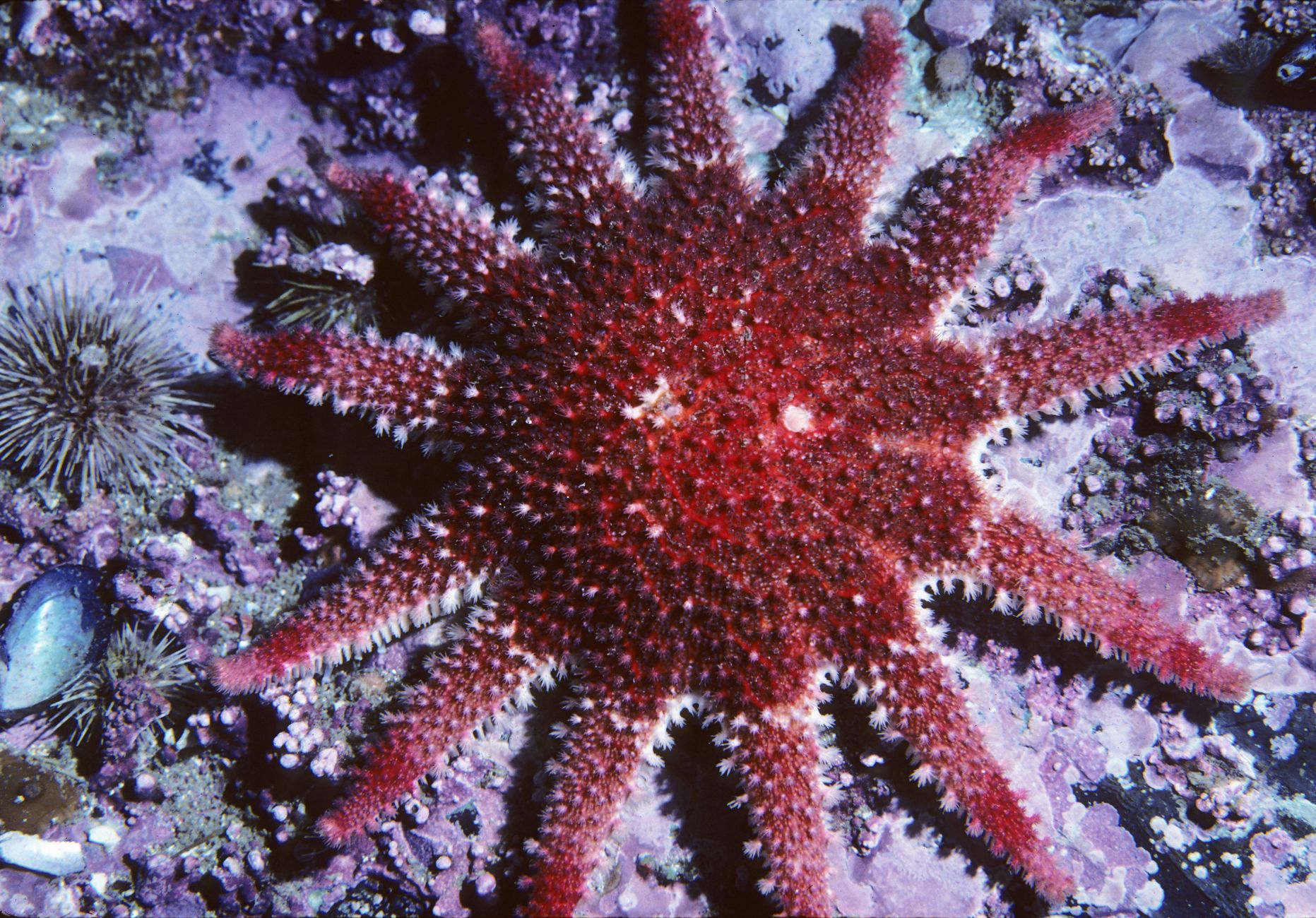
Echinoderms, such as starfish and sea urchins, do not possess a traditional spine made of vertebrae like mammals. Instead, they have an internal skeleton made of calcium carbonate plates called ossicles, which provides support and protection.

Unveiling the Echinoderm Enigma: A Skeletal Deep Dive
Echinoderms, a diverse group of marine animals including starfish, sea urchins, sea cucumbers, brittle stars, and sea lilies, exhibit a unique body plan that often raises questions about their skeletal structure. While they are undeniably invertebrates, meaning they lack a backbone in the same way vertebrates do, do echinoderms have a spine in any form? The answer lies in understanding the peculiar architecture of their internal skeleton.
Do all amphibians have eyelids?
Why do cuttlefish have W-shaped eyes?
Do all snakes have poison in them?
What is the GREY African clawed frog?
The Endoskeleton of Echinoderms: An Ossicle Orchestra

Instead of a vertebral column, echinoderms possess an endoskeleton, meaning a skeleton located inside the body. This endoskeleton is comprised of numerous small plates or spines called ossicles, composed of calcium carbonate (CaCO3). These ossicles are interconnected and form a rigid or semi-rigid framework, providing support and protection. The arrangement and shape of these ossicles vary greatly among different echinoderm classes, reflecting their diverse lifestyles.
- Starfish (Asteroidea): Ossicles are loosely connected, allowing for flexibility and movement.
- Sea Urchins (Echinoidea): Ossicles are fused together, forming a rigid test (shell).
- Sea Cucumbers (Holothuroidea): Ossicles are reduced to microscopic structures embedded in the body wall, granting great flexibility.
- Brittle Stars (Ophiuroidea): Ossicles form articulated vertebral-like structures in their arms.
- Sea Lilies (Crinoidea): Ossicles form a stalk and arms.
The Water Vascular System: A Hydrostatic Helper
Adding to the intrigue of echinoderm anatomy is the presence of the water vascular system. This unique hydraulic system uses water pressure to power the tube feet, which are essential for locomotion, feeding, and respiration. While not directly related to the skeletal structure, the water vascular system works in concert with the ossicles to enable the remarkable movements and functions of these marine creatures.
Echinoderms vs. Vertebrates: A Tale of Two Skeletons
To fully appreciate the unique nature of the echinoderm skeleton, it’s helpful to compare it with the vertebrate skeleton.
| Feature | Echinoderms | Vertebrates |
|---|---|---|
| Skeletal Type | Endoskeleton of calcium carbonate ossicles | Endoskeleton of bone and cartilage |
| Spinal Column | Absent | Present (vertebral column) |
| Skeleton Nature | Porous and often permeable | Dense and relatively impermeable |
| Growth | Ossicles grow and new ones are added | Bones grow through cell proliferation and remodeling |
Echinoderm Development: A Deuterostome Distinction
Echinoderms are part of a larger group of animals called deuterostomes, which also includes chordates (animals with a backbone). This evolutionary relationship is significant because it highlights a shared ancestry despite the vastly different skeletal structures. In deuterostomes, the blastopore (an opening formed during early embryonic development) becomes the anus, while in protostomes, it becomes the mouth. This fundamental difference in development underscores the distinct evolutionary pathways taken by echinoderms and vertebrates.
Do Echinoderms Have a Spine? Revisiting the Question
Returning to our central question, do echinoderms have a spine? The answer, as we’ve explored, is a nuanced one. While they lack a vertebral column in the traditional sense, their endoskeleton of ossicles provides crucial support and protection. In some echinoderms, like brittle stars, these ossicles even resemble vertebrae in their articulated arrangement. Therefore, while the term “spine” may not be entirely accurate, it’s important to recognize the sophisticated and effective skeletal adaptations that have allowed echinoderms to thrive in diverse marine environments for millions of years.
Unveiling the Evolutionary Significance
The unique skeletal structure of echinoderms is not just a quirk of nature; it’s a testament to the power of evolution to find diverse solutions to common challenges. The ossicles, while seemingly simple, provide a flexible and adaptable framework that has allowed echinoderms to diversify into a remarkable array of forms and lifestyles. From the slow-moving sea cucumber to the agile brittle star, the echinoderm skeleton is a key to understanding their ecological success.
The Future of Echinoderm Research
Understanding the echinoderm skeleton has implications beyond basic biology. Research into the formation and properties of ossicles may hold clues for developing new biomaterials. The ability of some echinoderms to regenerate lost limbs and even body parts is also a subject of intense study, with potential applications in regenerative medicine. Thus, the humble sea star and its kin offer a wealth of knowledge that continues to inspire and inform scientific inquiry.
Frequently Asked Questions (FAQs)
What are ossicles made of?
Ossicles are primarily composed of calcium carbonate (CaCO3) in the form of calcite. They also contain small amounts of other minerals and organic matrix components. The specific composition can vary slightly depending on the echinoderm species.
How do echinoderms grow their skeletons?
Echinoderms grow their skeletons by adding new ossicles and increasing the size of existing ossicles. This process is regulated by specialized cells called sclerocytes, which deposit calcium carbonate and other materials.
Do echinoderms have muscles associated with their skeletons?
Yes, echinoderms possess muscles that are directly associated with their ossicles. These muscles control the movement of the ossicles, allowing for a range of movements such as arm flexion in starfish and spine movement in sea urchins.
Are echinoderm skeletons external or internal?
Echinoderm skeletons are internal, or endoskeletons. This means that the skeletal structures are located inside the body, beneath the epidermis (outer layer of skin).
How strong is the echinoderm skeleton?
The strength of the echinoderm skeleton varies depending on the species and the arrangement of the ossicles. In sea urchins, the fused ossicles form a rigid test that provides substantial protection. In starfish, the more loosely connected ossicles allow for greater flexibility but less overall strength.
Can echinoderm skeletons be used for anything?
Yes, in some cultures, sea urchin tests (shells) are used for decorative purposes. Additionally, the calcium carbonate from echinoderm skeletons has potential applications in biomaterials research and as a source of lime.
Why don’t echinoderms have a backbone like vertebrates?
The absence of a backbone in echinoderms reflects their evolutionary history. Echinoderms diverged from the lineage leading to vertebrates very early in animal evolution. Their body plan and skeletal structure evolved along a different path.
What is the function of the spines on sea urchins?
The spines on sea urchins serve multiple functions, including defense against predators, locomotion, and sensory perception. The spines are connected to the test by ball-and-socket joints, allowing for a wide range of movement.
Do sea cucumbers have a skeleton?
Yes, but it’s significantly reduced. Sea cucumbers possess microscopic ossicles embedded in their body wall. These ossicles provide some support, but the sea cucumber’s flexibility is primarily due to the lack of a rigid skeletal framework.
Are echinoderm skeletons living tissue?
The ossicles themselves are not living tissue. However, they are surrounded by living tissue, including cells that maintain and repair the skeleton. The skeletal system is therefore a dynamic and integrated part of the echinoderm’s body.
How does the echinoderm skeleton contribute to regeneration?
In echinoderms that can regenerate, the skeleton plays a crucial role by providing a scaffolding for the new tissue to grow upon. The existing ossicles can also be reabsorbed and reorganized to form new skeletal elements in the regenerating limb or body part.
Do all echinoderms have the same type of skeletal structure?
No, while all echinoderms possess an endoskeleton made of ossicles, the arrangement and morphology of the ossicles vary considerably among the different classes. This variation reflects their diverse lifestyles and ecological niches.