

Do Animals Possess Zoom Vision: A Deep Dive into Ocular Abilities
Do any animals have zoom vision? The answer is nuanced: While no animal possesses a true optical zoom lens like a camera, some animals achieve a similar effect through specialized anatomical adaptations that allow them to significantly enhance their perception of detail at a distance.

Introduction: Beyond Human Eyesight
The human eye, remarkable as it is, has limitations. We often rely on technology like binoculars and telescopes to see distant objects with greater clarity. But do any animals have zoom vision? It’s a question that delves into the fascinating realm of comparative anatomy and visual ecology. Understanding how different creatures perceive the world around them sheds light on the evolutionary pressures that have shaped their unique optical systems. While true optical zoom, as we understand it in cameras, doesn’t exist in nature, several species have developed fascinating adaptations that approximate this function.
Do all amphibians have eyelids?
Why do cuttlefish have W-shaped eyes?
Do all snakes have poison in them?
What is the GREY African clawed frog?
Adaptations for Enhanced Distant Vision

While a camera lens changes focal length to zoom, animals use various anatomical and neurological tricks to achieve a similar effect. These can be broadly categorized into:
- Pupil Shape & Control: Some animals possess uniquely shaped pupils that allow for enhanced light gathering in specific directions, effectively “zooming” in on a particular field of view.
- Retinal Specialization: The distribution and density of photoreceptor cells (rods and cones) on the retina can be highly specialized for detecting fine details in certain areas.
- Eye Movement & Tracking: Highly refined eye movements and tracking abilities allow some animals to maintain focus on distant objects, mimicking the stability of a zoomed image.
- Neural Processing: The brain plays a crucial role in interpreting visual information. Sophisticated neural pathways can enhance contrast and sharpness, giving the perception of zoomed vision.
The Role of Retinal Density
The retina, the light-sensitive layer at the back of the eye, is crucial for determining visual acuity. Higher densities of photoreceptors (particularly cones, which are responsible for color vision and sharpness) in a specific area of the retina allow for greater detail perception. For example, birds of prey often have extremely high cone densities in their fovea, a specialized region of the retina responsible for central vision. This enhances their ability to spot small prey from great distances.
Examples of Animals with Enhanced Distant Vision
While no animal replicates the precise mechanism of a camera’s optical zoom, several species exhibit visual adaptations that come close.
- Birds of Prey (Eagles, Hawks, Falcons): These raptors possess exceptional visual acuity, enabling them to spot prey from incredible distances. Their high cone density and specialized retinal structures give them a “zoom-like” effect. Research has shown that some eagles can see up to eight times farther than humans.
- Chameleons: While known for their color-changing abilities, chameleons also possess highly independent eye movements. They can focus each eye independently, allowing them to create a stereoscopic view of a distant object and effectively “zoom” in on it.
- Mantid Shrimp: Perhaps the most bizarre example, mantid shrimp possess the most complex visual system known to science. Their eyes are mounted on stalks and can move independently. While not precisely zoom, they have amazing focusing power and also can view polarized light in ways we cant.
Limitations and Considerations
It’s important to reiterate that the term “zoom vision” is used loosely. These animals don’t possess a mechanical lens that actively changes focal length. Instead, they achieve a similar effect through a combination of anatomical adaptations and neural processing. Furthermore, visual acuity often comes at the expense of other visual capabilities, such as field of view or depth perception.
Common Misconceptions
A frequent mistake is assuming that all animals with good eyesight automatically have “zoom vision.” While many animals have sharper vision than humans, particularly in specific areas (like detecting motion), this doesn’t necessarily equate to the ability to focus on distant objects with magnified detail. The key lies in the specialized adaptations, like the high cone density in the fovea of birds of prey, or the independent eye movements of chameleons.
Frequently Asked Questions
What exactly is visual acuity, and how does it relate to “zoom vision”?
Visual acuity refers to the sharpness or clarity of vision. It’s often measured by how well someone can identify small details at a distance. While high visual acuity is essential for animals that need to see distant objects clearly, it doesn’t guarantee “zoom vision” in the true sense. Zoom vision implies an ability to magnify the image, whereas visual acuity is simply the ability to resolve finer details.
Do any insects have zoom vision?
Insects have compound eyes, which are made up of many individual light-sensing units called ommatidia. This design provides them with excellent motion detection, but typically not high visual acuity. Therefore, while some insects might be able to detect distant objects, they don’t possess the anatomical adaptations necessary for “zoom vision.”
How does the size of an animal’s eye affect its visual capabilities?
Generally, larger eyes allow for greater light gathering and can accommodate more photoreceptors, potentially leading to improved visual acuity. However, eye size is just one factor. The internal structure of the eye, the density of photoreceptors, and the neural processing pathways are all equally important.
Are there any mammals with exceptional distant vision comparable to birds of prey?
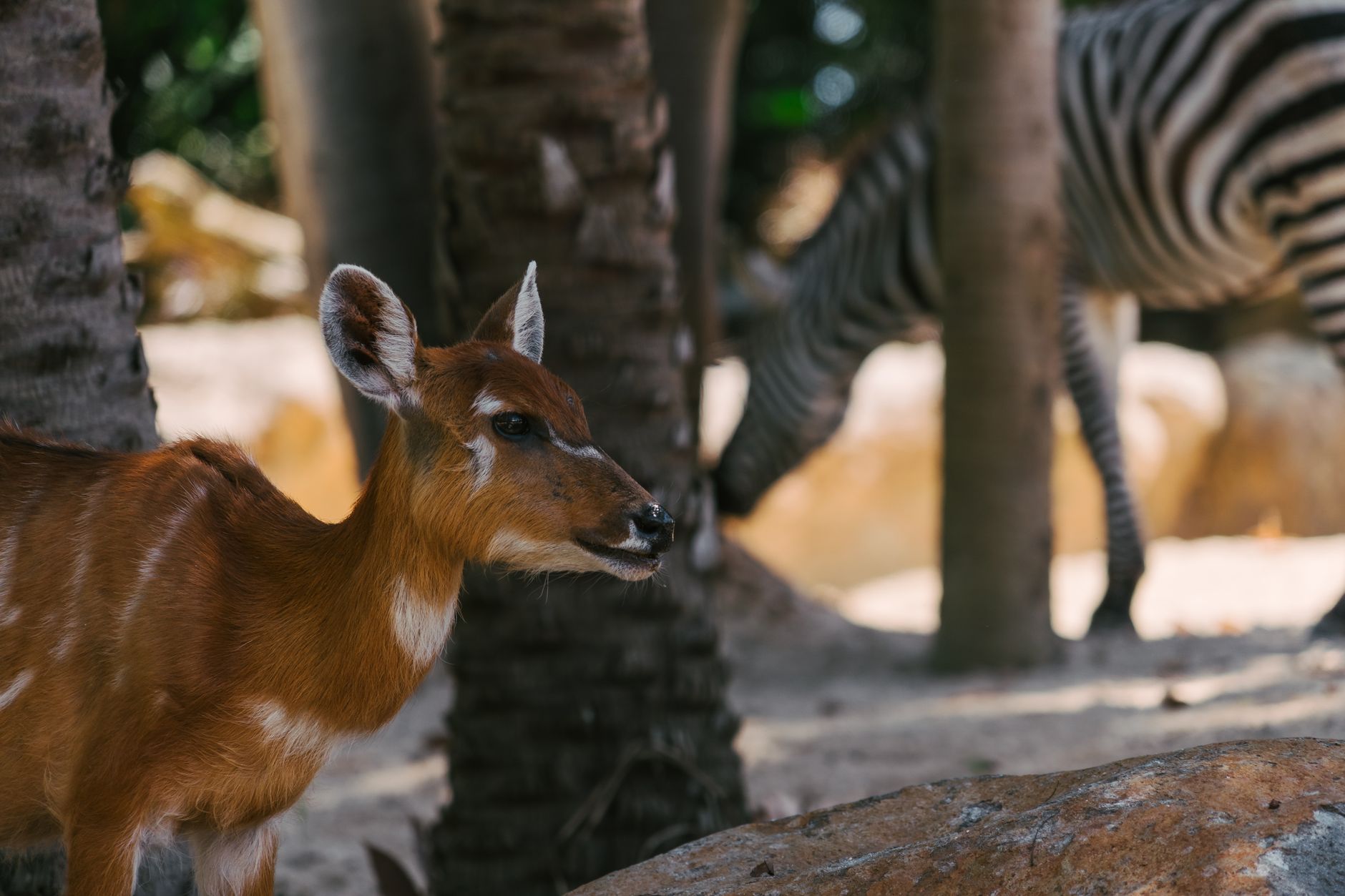
While no mammals have the extreme visual acuity of eagles or hawks, some ungulates (hoofed animals like deer and antelope) have excellent distance vision to help them spot predators. They achieve this with laterally placed eyes that maximize their field of view and provide early warning of approaching danger.
Why don’t humans have “zoom vision”?
Humans have evolved to excel in tasks requiring close-up manipulation and social interaction. Our visual system is well-suited for these needs. While we don’t have the ability to “zoom” in on distant objects, our binocular vision provides us with excellent depth perception and allows us to perform intricate tasks.
How does binocular vision contribute to depth perception?
Binocular vision, having two eyes, allows the brain to receive slightly different images from each eye. The brain then combines these images to create a three-dimensional view of the world, enabling us to accurately judge distances and perceive depth. This is crucial for tasks like catching a ball or navigating complex environments.
Can training or technology improve an animal’s vision?
Yes, training can enhance an animal’s attentiveness and ability to interpret visual information. For example, dogs trained for search and rescue rely heavily on their sense of smell, but also use their vision to identify targets. Furthermore, technology like specialized contact lenses or implants is being explored to potentially improve vision in both animals and humans.
How does eye placement impact an animal’s field of vision?
The position of an animal’s eyes significantly impacts its field of vision. Animals with eyes on the sides of their heads, like many prey animals, have a wide field of view, allowing them to detect threats from multiple directions. Conversely, animals with eyes facing forward, like predators, have a narrower field of view but greater depth perception.
What role does the brain play in processing visual information?
The brain is responsible for interpreting and organizing the visual information received from the eyes. It filters out irrelevant data, enhances contrast, and creates a coherent representation of the world. Sophisticated neural pathways can even compensate for imperfections in the optical system, improving overall visual performance.
Is color vision related to “zoom vision”?
Color vision, which is dependent on the presence of cones in the retina, is not directly related to “zoom vision.” However, animals with better color vision may be able to distinguish subtle differences in shades and patterns, which could indirectly aid in identifying distant objects.
What are some future directions in research on animal vision?
Future research will likely focus on understanding the complex neural pathways involved in visual processing, developing new technologies to study animal vision in greater detail, and exploring potential applications for biomimicry, such as designing more efficient optical systems inspired by animal eyes.
Are there ethical considerations in studying animal vision?
Yes. Animal welfare must be prioritized. Research should adhere to strict ethical guidelines, ensuring that procedures are minimally invasive and cause minimal distress to the animals involved. Studies should be carefully designed to maximize the information gained while minimizing the impact on the animals’ lives.