

Can a Raccoon and a Cat Breed? The Definitive Answer
Can a raccoon breed with a cat? The definitive answer is a resounding no. Raccoons and cats are biologically incompatible due to significant genetic differences, making hybridization impossible.

Understanding Genetic Incompatibility
The idea of a racoon-cat hybrid often surfaces due to the internet’s fascination with unusual animal pairings. However, at the core of any successful breeding attempt lies genetic compatibility. This means the two species involved must have:
- Similar chromosome numbers
- Genes that can interact effectively during fertilization and embryonic development
- Similar reproductive processes
Raccoons and cats fail on all these fronts. They are simply too different to produce viable offspring. Their DNA is structured differently, their reproductive cycles are dissimilar, and their evolutionary paths diverged long ago. The very basic biology prevents any possibility of successful interspecies breeding between them.
Examining the Evolutionary Distance

Cats belong to the family Felidae, while raccoons are members of the Procyonidae family. These families are distinct branches on the evolutionary tree. The amount of time that has passed since their common ancestor is vast, leading to considerable divergence in their genetic makeup.
- Cats (Felidae): Evolved primarily as predators with specialized hunting adaptations.
- Raccoons (Procyonidae): Developed as omnivores, highly adaptable to diverse environments.
This divergence has resulted in irreconcilable differences in their physical characteristics, behavior, and, most importantly, their reproductive systems. These differences are so profound that the concept of a raccoon and cat interbreeding is biologically unsound.
Exploring Chromosome Count Differences
Chromosome number plays a critical role in successful reproduction. If two species have drastically different chromosome counts, their offspring will likely be infertile (like a mule, the hybrid of a horse and a donkey) or not viable at all.
- Cats possess 38 chromosomes (19 pairs).
- Raccoons have 42 chromosomes (21 pairs).
This difference in chromosome number presents a significant barrier to successful fertilization and development. Even if fertilization were to somehow occur, the resulting embryo would likely have an abnormal chromosome number, leading to early miscarriage or a non-viable offspring.
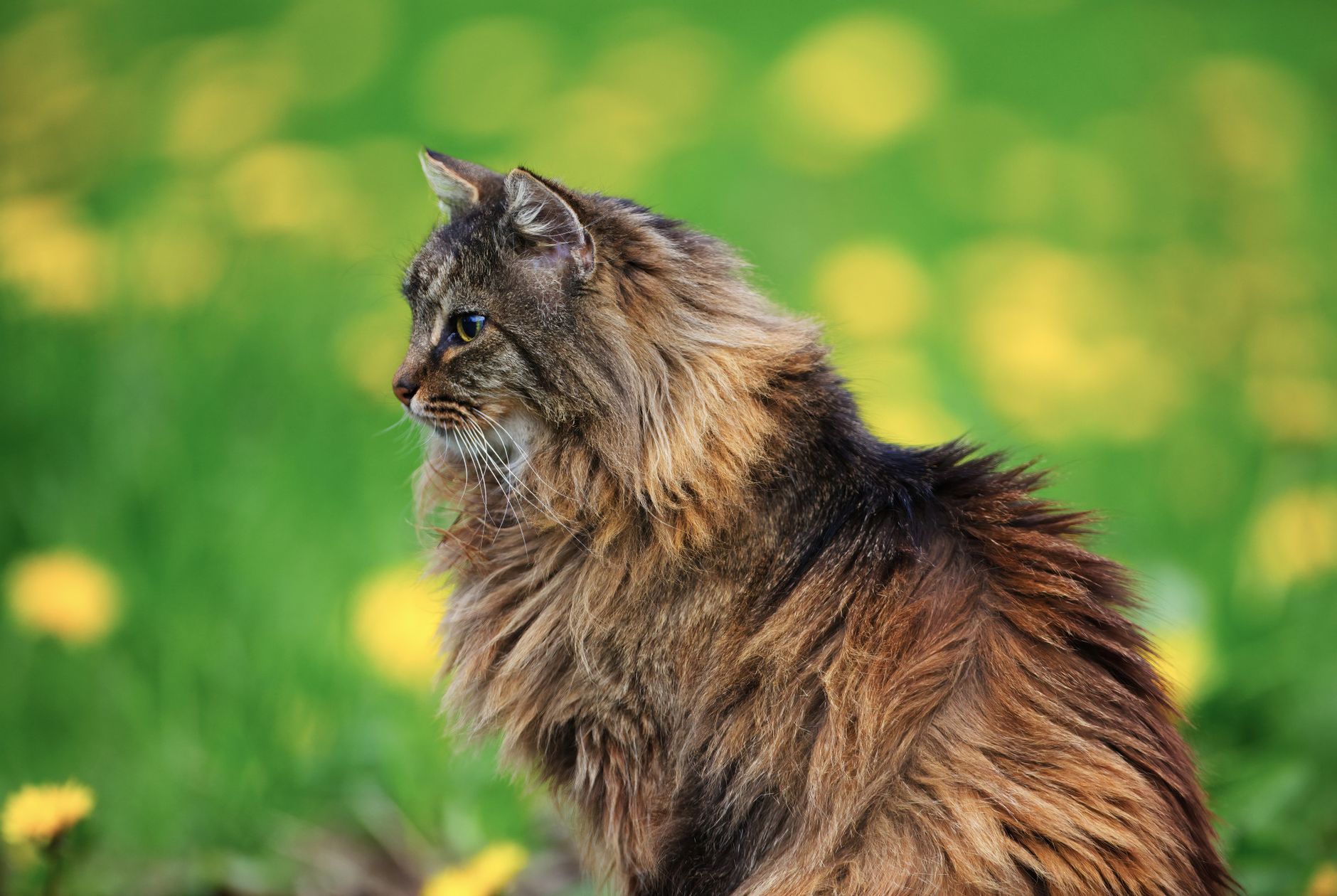
Dispelling the “Catcoon” Myth
The term “catcoon” sometimes appears online, referring to animals that supposedly possess characteristics of both cats and raccoons. These are usually either:
- Simply cats with unusual markings or appearances.
- Raccoons with unique colorations.
- Hoaxes created with photo editing software.
There is no scientific evidence to support the existence of a true catcoon hybrid. All purported sightings or claims have been debunked through genetic testing or closer examination of the animals in question. The Can a racoon breed with a cat? is answered with a simple and definitive no.
Artificial Insemination Considerations
Artificial insemination, while sometimes used to overcome breeding barriers between closely related species, is not a viable option in the case of raccoons and cats. The genetic differences are far too substantial for artificial intervention to succeed.
- The sperm and egg would likely be incompatible at the cellular level.
- Even if fertilization were achieved, the resulting embryo would likely be genetically unstable and unable to develop properly.
- The risk of severe birth defects and developmental abnormalities would be extremely high.
Therefore, artificial insemination is neither a practical nor ethical consideration in this scenario.
Comparative Anatomy
A comparison of their physical traits further highlights the unlikelihood of successful breeding:
| Feature | Cat | Raccoon |
|---|---|---|
| Body Structure | Streamlined, agile | Stockier, more robust |
| Tail | Long, flexible | Bushy, ringed |
| Claws | Retractible | Non-retractible |
| Diet | Primarily carnivorous | Omnivorous |
| Social Behavior | Variable; solitary to social | Primarily solitary or in small family groups |
These anatomical differences reflect their distinct evolutionary pathways and ecological niches, reinforcing the concept of their genetic incompatibility.
The Ethical Implications
Even if it were hypothetically possible to create a raccoon-cat hybrid, the ethical implications would be significant.
- The resulting animal would likely suffer from numerous health problems and developmental abnormalities.
- Its welfare would be compromised due to its inability to thrive in either a cat’s or a raccoon’s natural environment.
- It would be irresponsible to create such an animal solely for novelty or entertainment purposes.
Animal welfare should always be prioritized over the pursuit of unnatural or unethical breeding experiments.
Frequently Asked Questions
Can a racoon breed with a cat and produce offspring?
No, a racoon cannot breed with a cat to produce viable offspring. They are genetically too dissimilar, belonging to different families with incompatible reproductive systems.
What is a ‘catcoon’, and is it real?
The term “catcoon” is often used to describe animals with physical traits resembling both cats and raccoons. However, it is not a recognized hybrid species, and purported sightings are usually misidentified animals or hoaxes.
Do cats and raccoons have the same number of chromosomes?
No, cats have 38 chromosomes, while raccoons have 42 chromosomes. This difference in chromosome number is a significant barrier to successful interspecies breeding.
Is artificial insemination a possibility for creating a raccoon-cat hybrid?
Artificial insemination is not a viable option due to the significant genetic incompatibility between cats and raccoons. The sperm and egg would likely be incompatible, and any resulting embryo would likely be genetically unstable.
Why are cats and raccoons considered genetically incompatible?
Cats and raccoons belong to different animal families (Felidae and Procyonidae, respectively) and have evolved along separate paths for millions of years. This has led to substantial differences in their DNA, reproductive systems, and physical characteristics.
Are there any confirmed cases of successful interspecies breeding between distantly related mammals?
Successful interspecies breeding is rare and generally limited to closely related species. Breeding between families like Felidae and Procyonidae is highly unlikely and has never been scientifically documented.
What are the ethical concerns surrounding the hypothetical creation of a raccoon-cat hybrid?
The creation of a raccoon-cat hybrid would raise serious ethical concerns due to the high likelihood of health problems, developmental abnormalities, and compromised welfare for the resulting animal.
Is there any scientific evidence to support the existence of a raccoon-cat hybrid?
No, there is absolutely no scientific evidence supporting the existence of a raccoon-cat hybrid. All claims of such hybrids have been debunked.
What would a raccoon-cat hybrid even look like?
It is impossible to accurately predict what a raccoon-cat hybrid might look like, as such a creature cannot exist in reality. Claims of “catcoon” sightings are typically misidentifications.
Could gene editing technology potentially make raccoon-cat breeding possible in the future?
While gene editing technology is rapidly advancing, it is highly unlikely that it could overcome the fundamental genetic incompatibilities between cats and raccoons to the point where they could successfully breed. The biological complexities are simply too vast.
What should I do if I see an animal that I suspect is a raccoon-cat hybrid?
If you encounter an animal that you suspect is a raccoon-cat hybrid, it is most likely a cat or a raccoon with unusual markings or a different breed of animal that you may not be familiar with. Contact your local animal control or wildlife rescue organization to evaluate the animal.
Are there any known instances of a similar hybridization attempt succeeding in other species?
Successful hybridization between distantly related species is extremely rare. Most successful hybridizations occur between species within the same genus or closely related genera. The genetic differences between cats and raccoons are far too significant for successful hybridization.