
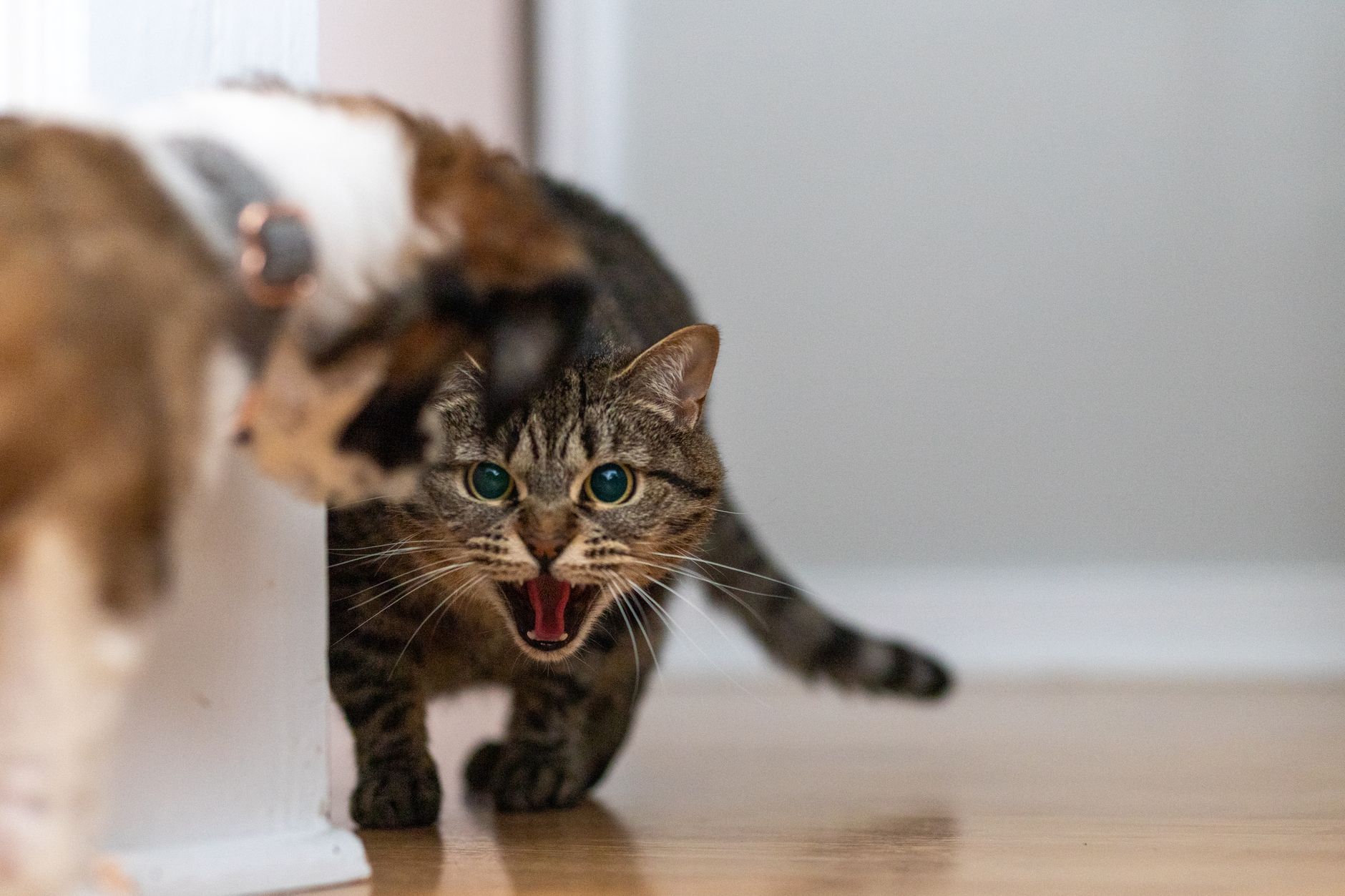
Decoding Feline Frustration: Why the Sudden Attacks on Your Boyfriend?
The sudden shift in your cat’s behavior, specifically aggressive attacks towards your boyfriend, is likely due to a combination of factors related to stress, perceived threats, territoriality, or even medical conditions. Understanding these potential triggers is key to resolving the issue and restoring peace in your home.

Understanding Feline Aggression: More Than Just “Mean”
Cats, despite their reputation for independence, are creatures of habit and sensitive to changes in their environment. When a cat suddenly turns aggressive, it’s rarely a sign of inherent malice. Instead, it’s often a symptom of underlying anxiety, fear, or a perceived threat to their territory or resources. Identifying the root cause of the aggression is paramount to developing a solution. Why is my cat suddenly attacking my boyfriend? The answer often lies in subtle shifts in the household dynamic that the cat interprets as negative.
Key Triggers for Aggression Towards a Specific Person

Several factors can contribute to a cat directing aggression towards a specific individual, in this case, your boyfriend. It’s important to consider all possibilities, including:
- Fear-Based Aggression: This is perhaps the most common cause. Your boyfriend might be unknowingly triggering fear in your cat. Perhaps he’s making sudden movements, has a loud voice, or wears certain clothes that the cat associates with a negative experience.
- Territorial Aggression: Cats are highly territorial animals. If your cat perceives your boyfriend as an intruder or a threat to its resources (food, water, litter box, sleeping spots), it may act aggressively to defend its territory. This is even more pronounced if the cat was in the home first.
- Redirected Aggression: If your cat is agitated by something else – perhaps a neighbor’s cat outside the window – it may redirect its aggression towards the nearest available target, which could be your boyfriend.
- Pain or Illness: An underlying medical condition, such as arthritis, dental pain, or a neurological issue, can make a cat irritable and more prone to aggression. Even a minor discomfort can dramatically change a cat’s behavior.
- Play Aggression: While less likely directed solely at your boyfriend, sometimes what seems like aggression is misdirected play, especially in younger cats. Nipping or swatting can be part of play behavior that isn’t always easily distinguishable from outright aggression.
- Association: The cat may associate your boyfriend with something negative, even unintentionally. For example, if your boyfriend was present during a vet visit that the cat found traumatic, it might associate him with that experience.
Assessing the Situation: Observation and Context
Before jumping to conclusions, carefully observe the situations in which the cat attacks your boyfriend.
- Timing: When do the attacks occur? Is it always in a specific location, like near the food bowl or bedroom?
- Body Language: What is the cat’s body language before the attack? Is it hissing, growling, ears back, tail twitching?
- Context: What is your boyfriend doing or wearing at the time of the attack?
- Frequency and Intensity: How often are the attacks occurring, and how severe are they? Are they brief swatting incidents, or full-blown attacks?
Keep a log of these observations to help identify patterns and potential triggers.
Medical Considerations: Ruling Out Underlying Health Issues
Before assuming the aggression is purely behavioral, schedule a vet visit to rule out any underlying medical causes. The vet will perform a thorough physical exam and may recommend blood tests or other diagnostic procedures.
Behavioral Modification Strategies: A Gradual Approach
Once medical causes have been ruled out, focus on behavioral modification techniques to address the aggression. This requires patience, consistency, and a gradual approach.
- Desensitization and Counter-Conditioning: This involves gradually exposing the cat to your boyfriend in a positive way. Start by having your boyfriend simply be present in the same room as the cat, without interacting with it. Reward the cat with treats or praise for calm behavior. Gradually increase the proximity and interaction, always ensuring the cat remains comfortable.
- Positive Reinforcement: Reward your cat for positive interactions with your boyfriend. Treats, praise, and gentle petting (if the cat enjoys it) can help create positive associations.
- Creating a Safe Space: Ensure your cat has a safe space where it can retreat when feeling overwhelmed or stressed. This could be a cat tree, a bed in a quiet room, or a cardboard box.
- Scent Soothing: Use pheromone diffusers or sprays, such as Feliway, to help create a calming environment.
- Avoid Punishment: Never punish your cat for aggression. This will only increase its fear and anxiety, making the problem worse.
- Consult with a Professional: If the aggression is severe or you’re struggling to manage it on your own, consult with a veterinary behaviorist or certified cat behavior consultant.
Example Table: Comparing Types of Aggression
| Type of Aggression | Trigger | Body Language | Management Strategies |
|---|---|---|---|
| Fear-Based | Sudden movements, loud noises, unfamiliar objects | Crouched posture, dilated pupils, hissing, flattened ears | Desensitization, counter-conditioning, creating a safe space |
| Territorial | Perceived threat to territory or resources | Stiff posture, piloerection (raised fur), hissing, growling | Resource management, creating multiple feeding stations, pheromone diffusers |
| Redirected | Agitation from external stimuli | Tense posture, tail twitching, dilated pupils | Identifying and eliminating the source of agitation, creating a calming environment |

FAQs: Addressing Your Concerns
Why is my cat suddenly attacking my boyfriend when he’s just sitting there?
Your cat may be associating your boyfriend’s presence with something negative, even if you don’t perceive it that way. This could be as simple as his posture, scent, or even the way he looks at the cat. Try having your boyfriend offer the cat treats or engage in gentle play to create positive associations.
Could my cat be jealous of my boyfriend?
While cats don’t experience jealousy in the same way humans do, they can exhibit territorial behavior when they feel their access to you or resources is threatened. Ensure your cat still receives plenty of attention and affection.
How can my boyfriend approach my cat without scaring him?
He should approach slowly and calmly, avoiding direct eye contact, which cats often interpret as a threat. Extend a hand for the cat to sniff, and only attempt to pet the cat if it approaches and shows signs of being receptive.
Is it possible my cat doesn’t like men?
While some cats may be wary of men due to past experiences, it’s more likely that the cat is reacting to specific behaviors or characteristics of your boyfriend, rather than his gender.
What if my cat attacks my boyfriend when he’s asleep?
This could indicate underlying anxiety or a need for attention. It’s important to address the underlying cause of the anxiety and ensure the cat has plenty of enrichment and attention during the day. Consider a vet check to rule out medical issues, too.
How long will it take to stop my cat from attacking my boyfriend?
It varies depending on the cause of the aggression and the cat’s individual temperament. It may take weeks or even months of consistent behavioral modification to see significant improvement. Patience is key.
What if desensitization and counter-conditioning aren’t working?
Consult with a veterinary behaviorist or certified cat behavior consultant. They can provide personalized guidance and recommend medication if necessary.
Should I separate my cat and boyfriend?
If the aggression is severe or poses a risk of injury, separating them may be necessary temporarily to ensure everyone’s safety. However, separation should not be a long-term solution. Focus on addressing the underlying cause of the aggression.
Could my cat be sick and that’s why Why is my cat suddenly attacking my boyfriend??
Yes, underlying health issues can absolutely trigger behavioral changes, including aggression. Pain, discomfort, or neurological problems can make a cat irritable and more likely to lash out. A vet visit is essential.
My boyfriend tries to discipline the cat. Is this making things worse?
Absolutely. Punishment, such as yelling or physical correction, will only increase the cat’s fear and anxiety, making the aggression worse. Focus on positive reinforcement and creating positive associations.
We just moved. Could that be causing the aggression?
Yes, moving is a major stressor for cats. The change in environment can trigger territorial aggression and anxiety. Provide your cat with a safe space, use pheromone diffusers, and be patient as it adjusts to its new surroundings.
Why is my cat suddenly attacking my boyfriend?, but he never attacks me?
This suggests that the aggression is specifically directed at your boyfriend, likely due to a combination of factors such as perceived threat, fear, or negative associations. Continue following the desensitization and counter-conditioning techniques mentioned above to hopefully ease the situation.
By understanding the potential triggers for aggression, observing your cat’s behavior, and implementing appropriate behavioral modification strategies, you can help restore peace and harmony to your home.