

Why Does My Cat Terrorize My Dog? Understanding Feline-Canine Dynamics
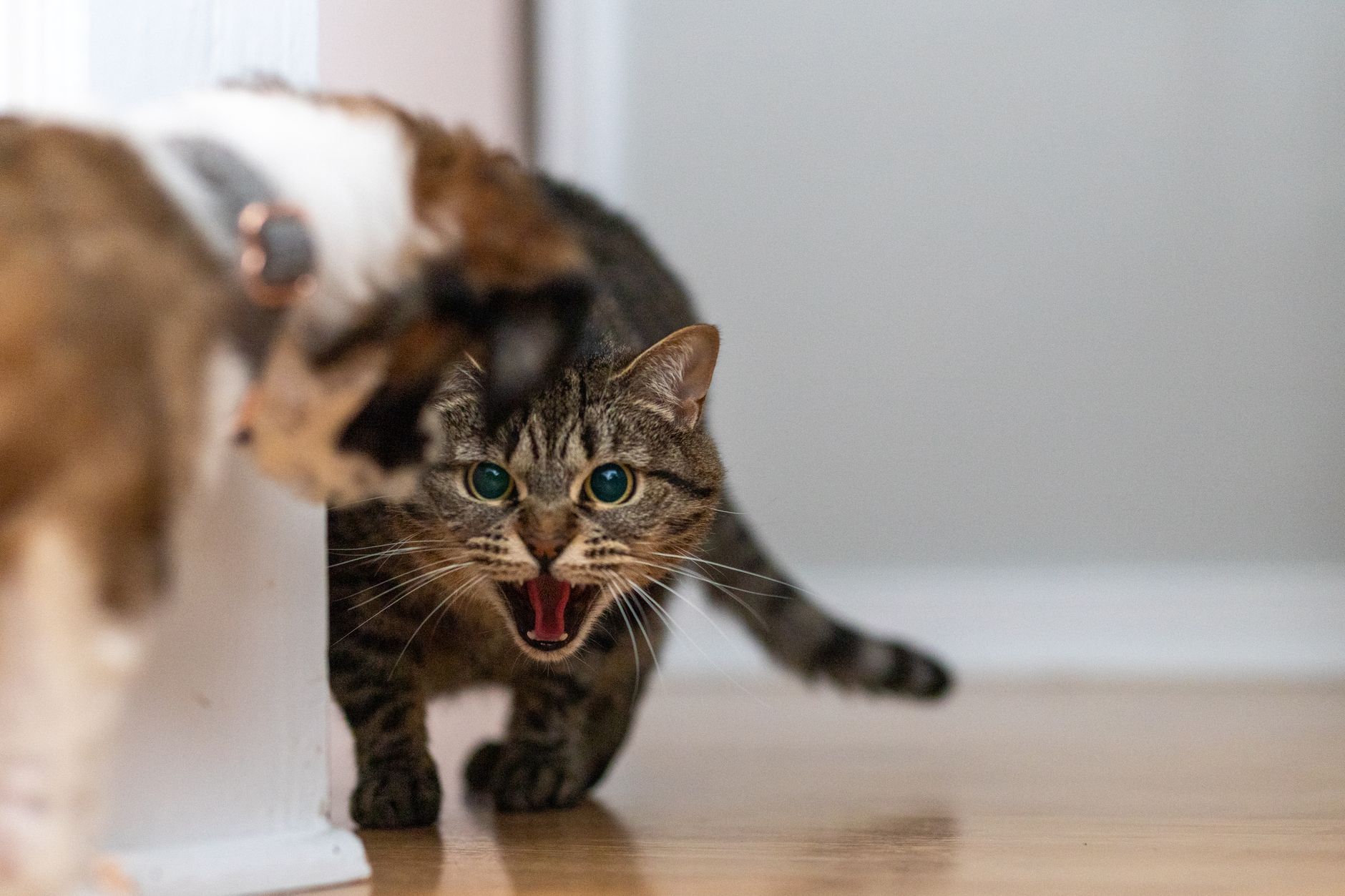
Why does my cat terrorize my dog? The most common reason is a combination of feline territoriality, a dog’s inadvertent violation of that territory, and the cat establishing dominance, although anxiety and play behavior can also contribute.

Understanding the Feline-Canine Power Dynamic
The dynamic between cats and dogs can range from blissful coexistence to open warfare. While many people envision dogs as the dominant species, in a household setting, cats often assume the role of the boss. Understanding the reasons why your cat terrorizes your dog is crucial for creating a harmonious living environment.
Territoriality and Resource Guarding

Cats are naturally territorial creatures. In the wild, they establish and defend their territories to secure resources like food, water, and shelter. This instinct doesn’t disappear simply because they live indoors.
- Territorial Defense: Cats might view the entire house, or specific areas within it, as their territory and will actively defend it against perceived intruders – including your dog.
- Resource Guarding: This involves protecting valued resources such as food bowls, litter boxes, favorite napping spots, or even you! The cat might perceive the dog as a threat to these resources and act aggressively to maintain control.
Breed Differences and Temperament
The breed and individual temperament of both the cat and dog significantly influence their relationship. Certain dog breeds, especially those bred for herding or hunting, may instinctively chase or harass cats, provoking a defensive (or offensive) response. Conversely, some cat breeds are more assertive than others. A timid dog paired with a confident, even slightly aggressive, cat is a recipe for feline dominance.
Misinterpreted Signals
Cats and dogs communicate differently. A wagging tail, often interpreted as friendliness in dogs, can be misinterpreted as agitation by cats. Similarly, a cat’s slow blink, a sign of contentment and trust, might be missed by a dog or even perceived as a challenge. These communication breakdowns can lead to escalating tensions and, ultimately, cat “terrorism.”
Anxiety and Fear
Sometimes, a cat’s aggression stems from anxiety or fear. If a dog is particularly large, boisterous, or unpredictable, the cat might feel threatened and resort to aggression as a defense mechanism. Changes in the environment, such as moving to a new house or introducing a new pet or person, can also trigger anxiety-related aggression.
Play Aggression
While seemingly counterintuitive, sometimes why your cat terrorizes your dog is simply misdirected play. Cats, especially kittens and young adults, have high energy levels and a strong predatory drive. If not adequately stimulated through appropriate play, they might target the dog as a substitute. This “play aggression” can involve stalking, chasing, pouncing, and biting, which the dog may perceive as genuine aggression.
How to Improve Cat-Dog Relations
Improving the relationship requires patience, consistency, and a proactive approach:
- Separate Feeding Areas: Ensure cats and dogs eat in separate areas to minimize resource guarding.
- Multiple Resource Locations: Provide multiple litter boxes, water bowls, and resting spots for the cat to reduce competition.
- Safe Spaces for the Cat: Create vertical spaces (cat trees, shelves) where the cat can escape the dog’s attention and feel secure.
- Gradual Introductions: When introducing a new cat or dog, do it slowly and carefully, allowing them to get used to each other’s scent before direct interaction.
- Positive Reinforcement: Reward both the cat and dog for calm and friendly interactions with each other.
- Supervised Interactions: Always supervise their interactions, especially in the early stages.
- Professional Help: If the aggression is severe or persistent, consult a veterinarian or certified animal behaviorist.
| Aspect | Cat | Dog |
|---|---|---|
| Communication | Subtle body language, scent marking | More overt body language, vocalizations |
| Territoriality | Strong, individualistic | Varies by breed and individual |
| Social Structure | Independent, often solitary | Pack-oriented, hierarchical |
| Predatory Drive | High, instinctual | Varies by breed; can be high |
Frequently Asked Questions (FAQs)
Why is my cat suddenly attacking my dog after they used to get along?
Sudden aggression could indicate an underlying medical issue in either the cat or the dog, such as pain or discomfort. It could also be triggered by a subtle environmental change, a newly introduced scent, or a perceived challenge to resources. Veterinary checkups are crucial to rule out medical causes, and careful observation of their environment and interactions is essential for identifying triggers.
My cat hisses and swats at my dog even when the dog is just walking by. What can I do?
This is often a sign of territoriality or fear. Ensure the cat has plenty of safe spaces, like high perches, where it can retreat from the dog. Reward the cat for remaining calm when the dog is nearby, using treats or praise. Avoid forcing them to interact. Desensitization and counter-conditioning techniques can also be helpful.
How do I introduce a new cat to a household with an existing dog?
Introduce them gradually. Start by keeping them in separate rooms and allowing them to exchange scents by swapping bedding. Then, allow brief, supervised interactions, gradually increasing the duration. Positive reinforcement is key. If either animal shows signs of stress, separate them immediately.
My dog is much bigger than my cat. Shouldn’t the dog be in charge?
Size isn’t everything. Cats often rely on strategic positioning, quick reflexes, and assertive body language to establish dominance. A smaller cat can easily intimidate a larger dog, especially if the dog is submissive or anxious by nature.
What are the signs that my cat is playing with my dog versus being aggressive?
Playful behavior usually involves stalking, chasing, and pouncing with retracted claws. The cat’s body language will be relaxed and fluid. Aggression, on the other hand, involves flattened ears, dilated pupils, hissing, growling, and biting with intent to harm. If you’re unsure, err on the side of caution and separate them.
Is there anything I can spray or use to stop my cat from attacking my dog?
Synthetic feline pheromones, available as sprays or diffusers, can help reduce anxiety and aggression in some cats. However, they are not a guaranteed solution. Consult with your veterinarian about whether pheromone therapy is appropriate for your situation. Avoid using any harsh or aversive methods, as they can damage the relationship between your pets.
My cat only attacks my dog when I’m not around. Why?
This could be related to resource guarding of you! The cat may feel more insecure when you’re absent and therefore more compelled to defend its perceived territory and resources (which now includes your attention). Consider providing more individualized attention to both pets when you are present to reduce jealousy or insecurity.
Will my cat and dog ever truly be friends?
It’s possible, but not guaranteed. Many cats and dogs learn to tolerate each other and even develop a bond. However, it takes time, patience, and consistent effort to create a harmonious relationship. Focus on reducing conflict and promoting positive interactions rather than forcing them to become best friends.
What if my dog is the one provoking the cat?
If the dog is the instigator, you need to train the dog to respect the cat’s space. Use positive reinforcement techniques to teach the dog commands like “leave it” or “stay away.” Redirect the dog’s attention when it starts to fixate on the cat. Consistent training is essential.
My cat is declawed. Does that affect their ability to defend themselves?
Yes, declawing removes a cat’s primary defense mechanism and can make them feel more vulnerable. This vulnerability can lead to increased anxiety and potentially more aggressive behavior as they resort to other methods of defense, such as biting. It’s crucial to provide a declawed cat with ample safe spaces and protection from harassment.
How do I know when it’s time to seek professional help?
If the aggression is severe, persistent, or escalating, it’s time to consult with a veterinarian or certified animal behaviorist. Professional help can provide valuable insights and guidance to address the underlying causes of the aggression and develop a tailored behavior modification plan.
Are certain breeds of cats or dogs more likely to have issues getting along?
Yes, certain breeds have predispositions. High-energy dog breeds like Border Collies or Jack Russell Terriers might naturally be more inclined to chase cats, triggering a defensive response. More confident and assertive cat breeds, like Bengals or Siamese, might be more prone to asserting dominance. However, individual temperament plays a bigger role than breed alone.