

Why Do Humpback Whales Feed in Alaska and Not in Hawaii?
The reason humpback whales predominantly feed in Alaska and not in Hawaii is due to the abundant food resources found in Alaskan waters during the summer months, contrasted with the relatively scarce feeding opportunities in the warmer, tropical waters of Hawaii, which serve as their breeding ground.

A Tale of Two Habitats: Alaska vs. Hawaii
Humpback whales undertake one of the longest migrations of any mammal, traveling between their feeding grounds in high-latitude regions and their breeding grounds in warmer, tropical waters. This remarkable journey is driven by the fundamental need to reproduce and replenish energy reserves. Understanding why do humpback whales feed in Alaska and not in Hawaii? requires looking at the contrasting ecological conditions of these two environments.
The Alaskan Buffet: An Abundance of Food

Alaska’s waters, particularly during the summer, are incredibly productive. This productivity stems from several factors:
- Long daylight hours: During the summer, Alaska experiences extended periods of daylight, fueling intense phytoplankton blooms.
- Upwelling: Nutrient-rich waters from the depths are brought to the surface through upwelling, providing essential elements for plankton growth.
- Cold temperatures: Cold water can hold more dissolved oxygen and nutrients, further enhancing productivity.
These factors lead to a massive proliferation of the humpback whale’s primary food sources:
- Krill: Tiny, shrimp-like crustaceans that form dense swarms.
- Small fish: Capelin, herring, and other small schooling fish.
- Zooplankton: Microscopic animals that drift in the water column.
This abundance of food allows humpback whales to efficiently consume large quantities of energy, building up blubber reserves to sustain them through the breeding season and migration.
Hawaiian Waters: A Breeding Ground, Not a Feeding Ground
In contrast to the nutrient-rich waters of Alaska, Hawaii’s waters are relatively nutrient-poor and clear. While this clarity makes them ideal for visual communication during courtship and breeding, it also means there’s less food available.
- Warm temperatures: Warm waters are generally less productive than cold waters.
- Limited upwelling: The Hawaiian Islands lack the same degree of upwelling seen in Alaskan waters.
As a result, humpback whales primarily use Hawaiian waters for:
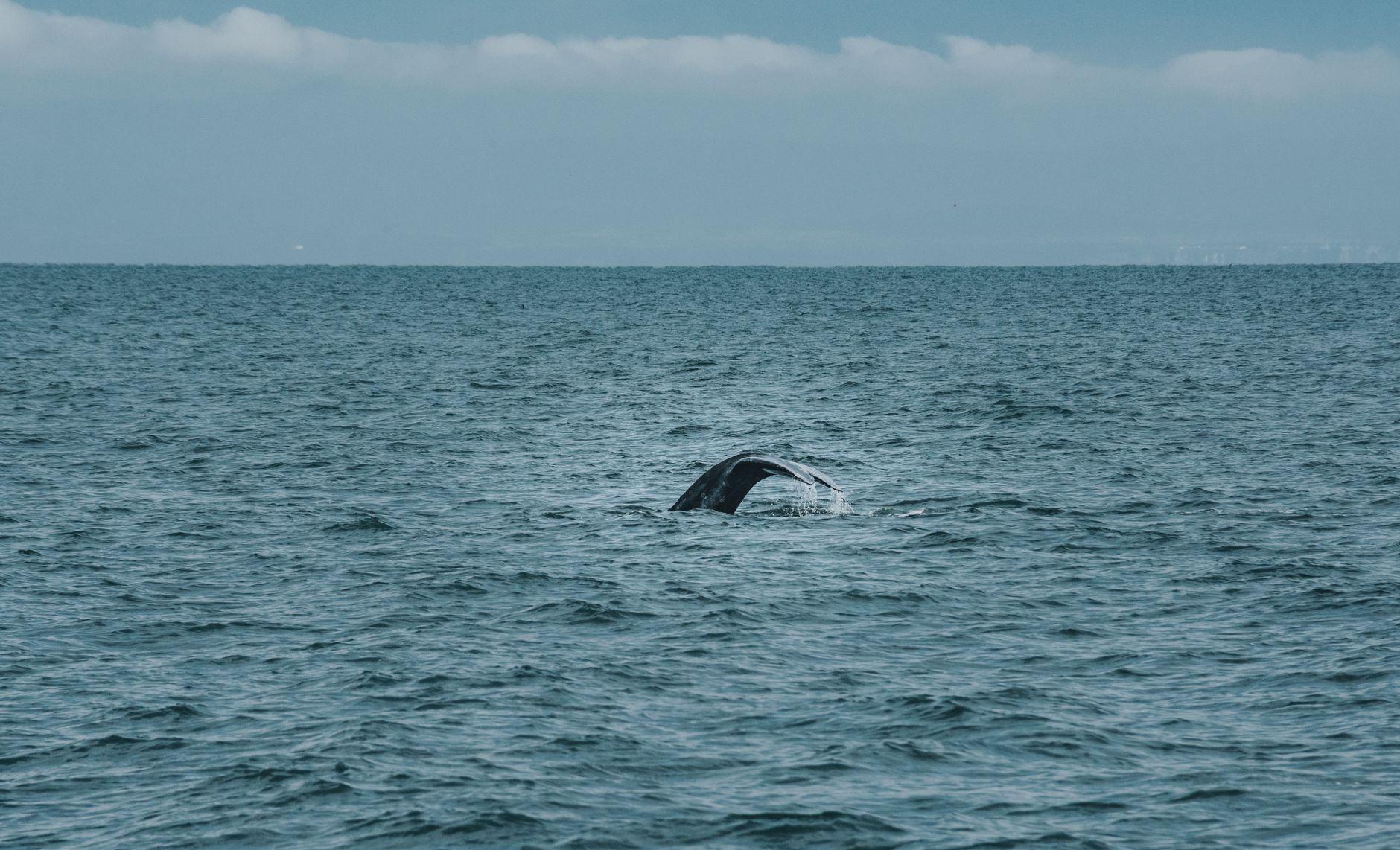
- Breeding: Mating and conception occur in these warmer waters.
- Calving: Newborn calves, lacking a thick blubber layer, benefit from the warmer temperatures.
- Socializing: Whales engage in complex social interactions, including singing and displays of dominance.
However, they do not actively feed in Hawaii. They rely on the blubber reserves accumulated during their feeding season in Alaska.
The Energetic Trade-Off
The journey between Alaska and Hawaii represents a significant energetic investment for humpback whales. However, the benefits of breeding in a warmer environment outweigh the costs of fasting during the breeding season. Why do humpback whales feed in Alaska and not in Hawaii? Because it’s a question of energy optimization. They need to build up substantial energy stores in Alaska, where food is plentiful, to sustain themselves during the breeding season in Hawaii, where food is scarce but conditions are ideal for reproduction and raising young.
Migration Strategies
Humpback whales use remarkable strategies to maximize their foraging efficiency in Alaska:
- Bubble-net feeding: A cooperative hunting technique where a group of whales surrounds a school of fish or krill with a wall of bubbles, forcing them to the surface for easy capture.
- Lunge feeding: A technique where a whale rapidly accelerates towards a school of prey, engulfing them in a massive gulp of water.
- Skimming: A feeding technique where a whale swims with its mouth open at the surface, filtering out small prey items.
These sophisticated feeding strategies allow them to exploit the concentrated food resources of Alaskan waters effectively.
Table: Comparison of Alaskan and Hawaiian Waters for Humpback Whales
| Feature | Alaskan Waters | Hawaiian Waters |
|---|---|---|
| Temperature | Cold | Warm |
| Nutrient Levels | High | Low |
| Productivity | High | Low |
| Food Availability | Abundant (Krill, Fish) | Scarce |
| Primary Use | Feeding | Breeding/Calving/Socializing |
| Migration | Destination for summer feeding | Destination for winter breeding |
The Impacts of Climate Change
Climate change is altering ocean conditions, and these changes could have significant impacts on humpback whale populations. Changes in water temperature, ocean currents, and prey distribution could affect:
- Food availability in Alaska: Warmer waters could reduce plankton blooms and the abundance of krill and small fish.
- Breeding success in Hawaii: Changes in water temperature or ocean acidity could affect calf survival.
- Migration patterns: Whales may need to adapt their migration routes to find suitable feeding and breeding grounds.
Understanding why do humpback whales feed in Alaska and not in Hawaii? is critical for predicting and mitigating the impacts of climate change on these magnificent creatures.
Frequently Asked Questions (FAQs)
Why can’t humpback whales feed while in Hawaii?
The primary reason humpback whales don’t feed in Hawaii is the lack of abundant food resources. The warm, relatively nutrient-poor waters simply don’t support the large concentrations of krill and small fish necessary to sustain these large mammals.
How long do humpback whales typically stay in Alaska?
Humpback whales typically spend 4-7 months in Alaskan waters, usually from late spring to early fall. This is the peak feeding season, allowing them to build up their blubber reserves.
What do humpback whales eat?
Humpback whales are opportunistic feeders, consuming primarily krill, small schooling fish (like herring, capelin, and sand lance), and zooplankton. Their diet varies slightly depending on location and availability.
How much food does a humpback whale need to eat in a day?
An adult humpback whale can consume up to 1-1.5 tons of food per day during the peak feeding season in Alaska. This is essential for building up the blubber reserves needed for migration and breeding.
Do all humpback whale populations migrate to Hawaii to breed?
No, not all humpback whale populations migrate to Hawaii. Some populations breed in other warm-water areas, such as the Caribbean or off the coast of Mexico. However, the North Pacific humpback whale population is known for its significant migration to Hawaii.
How do humpback whales survive without eating for so long in Hawaii?
Humpback whales rely on their thick layer of blubber, which acts as an energy reserve. This blubber, accumulated during the feeding season in Alaska, provides them with the energy they need for migration, breeding, and caring for their calves.
What are the main threats to humpback whales in Alaska?
The main threats to humpback whales in Alaska include entanglement in fishing gear, vessel strikes, habitat degradation, and the impacts of climate change on their food supply.
Are humpback whales endangered?
While humpback whales were once endangered, many populations have recovered significantly. However, some subpopulations are still considered threatened or endangered, and conservation efforts remain important.
What is bubble-net feeding?
Bubble-net feeding is a cooperative hunting technique where a group of humpback whales creates a “net” of bubbles around a school of fish or krill. This forces the prey to the surface, making them easier to capture.
How far do humpback whales migrate between Alaska and Hawaii?
The round-trip migration between Alaska and Hawaii can be over 6,000 miles (9,656 kilometers). This is one of the longest migrations of any mammal.
What role do humpback whale songs play in their breeding behavior?
Male humpback whales produce complex and elaborate songs that can last for hours. These songs are thought to play a crucial role in attracting mates and establishing dominance hierarchies.
How can I help protect humpback whales?
You can help protect humpback whales by supporting conservation organizations, reducing your carbon footprint, avoiding single-use plastics, and being a responsible tourist when whale watching. Knowing why do humpback whales feed in Alaska and not in Hawaii? also helps advocate for conservation initiatives within these key regions.