
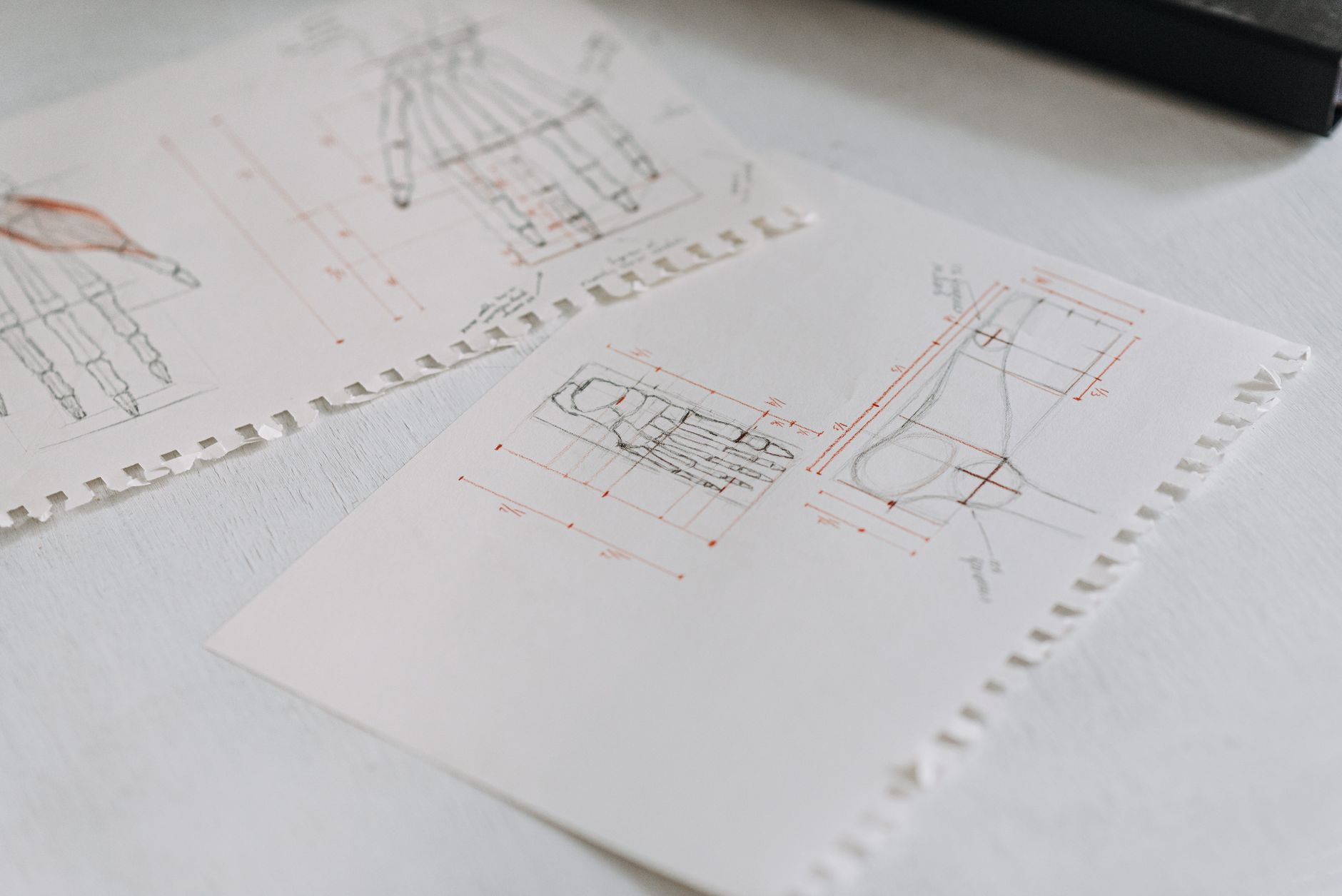
Why Can’t AI Get a Grip? The Peculiar Problem of Artificial Hands
Why can AI not draw hands? Artificial intelligence struggles with hands because of a combination of data scarcity in training datasets, the inherent complexity of human anatomy and articulation, and the ambiguity of perspective and pose, all contributing to significant challenges in generating realistic and consistent depictions.
Introduction: The Artificially Awkward Hand
The rise of generative AI has brought stunning visual creations to our fingertips. From photorealistic landscapes to imaginative character designs, these algorithms seem capable of conjuring almost anything. Yet, a persistent and often comical flaw plagues many of these creations: the inability to render human hands convincingly. This odd limitation, a frequent source of memes and mockery, raises a fundamental question: Why can AI not draw hands?
The Data Deficit: Hands Lost in the Crowd

One of the primary reasons for AI’s struggles with hands stems from the composition of training datasets. AI models learn by analyzing vast quantities of images, identifying patterns, and developing the ability to reproduce those patterns. While datasets often contain images of people, hands are frequently obscured, cropped, or partially hidden.
- Hands are often occluded by clothing.
- Hands are often blurred in action shots.
- Hands are often out of the frame.
This data deficit means the AI receives less direct training on the nuances of hand anatomy and articulation. This results in it struggling to produce them.
The Anatomical Maze: A Symphony of Complexity
Even when hands are visible in training data, their inherent complexity poses a significant challenge. The human hand is a marvel of biological engineering, comprised of 27 bones, numerous muscles, tendons, and ligaments, all working in concert to produce a vast range of movements and gestures.
This complexity translates into a difficult mathematical problem for AI. To accurately represent a hand, the AI must:
- Understand the underlying skeletal structure.
- Model the movement and deformation of the skin and muscles.
- Accurately depict the relationships between fingers and joints.
This intricate interplay of form and function is often beyond the grasp of current AI models, especially when faced with incomplete or ambiguous data.
The Perspective Puzzle: Seeing is Not Always Believing
The challenge is further compounded by the variability of perspective and pose. Hands can be viewed from countless angles, with fingers overlapping, bending, and contorting in ways that defy easy interpretation.
AI models often struggle to disambiguate these complex visual cues. For example, differentiating between a clenched fist and a partially open hand can be surprisingly difficult, especially when the image is low-resolution or obscured by shadows.
The Generalization Gap: From Specific to Spurious
AI models are excellent at memorizing patterns from training data, but they often struggle to generalize those patterns to novel situations. This means that an AI trained on a dataset of hands in specific poses may falter when asked to generate a hand in a pose it has never seen before. This limitation contributes to the common AI errors, such as:
- Extra or missing fingers.
- Malformed joints.
- Unnatural poses.
AI Learning Techniques
To overcome these challenges, researchers are exploring a variety of techniques, including:
- Augmented datasets: Creating synthetic images of hands in various poses and lighting conditions to supplement existing datasets.
- Improved neural network architectures: Developing more sophisticated models that can better capture the complexity of hand anatomy and movement.
- Adversarial training: Using two AI models in competition with each other, one to generate images of hands and the other to critique them, to progressively improve the quality of the generated images.
The Future of AI Hand Generation
Despite the current limitations, progress is being made in the field of AI-generated hands. As datasets grow and algorithms improve, it’s likely that AI will eventually overcome this hurdle. Until then, the struggle to render hands will remain a humorous reminder of the limitations of even the most advanced artificial intelligence.
FAQs: Deeper Insights into AI and Hands
Why is it specifically hands that AI struggles with, compared to other body parts?
Hands are particularly challenging due to their high degree of articulation and the sheer number of possible configurations. Compared to, say, a leg or arm, a hand has significantly more degrees of freedom, making it more difficult for AI to accurately model its movement and appearance.
Can more training data solve the problem completely?
While more training data would certainly help, it is not a silver bullet. The quality and diversity of the data are equally important. Simply feeding the AI more of the same types of images will not necessarily address the underlying issues of anatomical complexity and perspective ambiguity.
Are there any specific AI models that are better at drawing hands than others?
Yes, certain AI architectures and training techniques are better suited to generating realistic hands. Generative Adversarial Networks (GANs), for example, have shown promise in producing more detailed and realistic images. Models trained with specific attention mechanisms focused on hand regions also tend to perform better.
Is it easier for AI to draw cartoon hands than realistic ones?
Generally, yes. Cartoon hands are often simplified representations of human hands, with fewer details and less emphasis on accurate anatomy. This simplification makes them easier for AI to learn and reproduce.
Why do some AI-generated hands have extra fingers?
Extra fingers are a common artifact of AI’s struggle to understand the underlying structure of the hand. The AI may be attempting to fill in missing information or connect disparate features in a way that results in an anatomically incorrect depiction. This issue highlights that Why can AI not draw hands? is a problem of comprehensive understanding of anatomy and relationships.
How does perspective distortion affect AI’s ability to draw hands?
Perspective distortion can significantly complicate the task of drawing hands for AI. When a hand is viewed from an unusual angle, its shape and proportions can appear distorted, making it difficult for the AI to accurately interpret the underlying structure.
Are there any real-world consequences to AI’s inability to draw hands?
While the inability to draw hands is often seen as a humorous quirk, it can have practical implications in fields such as virtual reality and video game development. In these applications, realistic hands are essential for creating immersive and believable experiences.
What role does computational power play in AI’s struggle with hands?
While more computational power can certainly help, it is not the primary limiting factor. The key lies in developing more sophisticated algorithms and training techniques that can effectively utilize the available computational resources.
How are researchers trying to improve AI’s hand-drawing abilities?
Researchers are exploring a variety of approaches, including:
- Developing more accurate 3D models of hands.
- Using motion capture data to train AI on realistic hand movements.
- Implementing attention mechanisms that focus on specific features of the hand.
Will AI ever be able to draw hands perfectly?
It is difficult to say definitively whether AI will ever be able to draw hands perfectly. However, given the rapid pace of progress in the field, it is likely that AI will eventually be able to generate hands that are indistinguishable from those drawn by humans.
Is “AI can’t draw hands” true of all current AI image generators?
While most current AI image generators struggle with hands, the degree of difficulty varies depending on the specific model and the settings used. Some models are better than others at generating realistic hands, and some settings (such as using very detailed prompts) can help to improve the results.
Why can AI not draw hands? Is it because it doesn’t “understand” hands?
That’s right, the main answer to Why can AI not draw hands? is that it lacks a true understanding of the underlying anatomy, structure, and function of hands. While it can learn to recognize and reproduce patterns, it does not possess the same level of intuitive understanding that a human artist does. This lack of understanding is what ultimately leads to the common errors and distortions seen in AI-generated hands.