
Which Snake Doesn’t Have Poison? A Comprehensive Guide
The vast majority of snakes are actually non-venomous. The most common example of a snake that lacks venom is the garter snake, but many others also pose no threat of envenomation.

Understanding Venom and Non-Venomous Snakes
The terms poisonous and venomous are often used interchangeably, but they have distinct meanings. A poisonous animal delivers its toxin through touch, ingestion, or inhalation. A venomous animal, on the other hand, actively injects its toxin, typically through fangs or spines. In the context of snakes, we’re discussing venom.
Which snake doesn’t have poison? It’s not just one snake; entire families and species are non-venomous. These snakes rely on constriction, ambush, or simply overwhelming their prey with size and strength. They play a crucial role in controlling rodent populations and maintaining ecological balance.
Characteristics of Non-Venomous Snakes

Distinguishing between venomous and non-venomous snakes can be tricky, as appearance alone isn’t always reliable. However, certain characteristics can provide clues:
- Pupil Shape: While not a universal rule, many venomous snakes have elliptical or cat-eye pupils, while non-venomous snakes typically have round pupils. This is only a general guideline and not foolproof.
- Head Shape: Venomous snakes often have triangular heads due to the presence of venom glands, but many non-venomous snakes can flatten their heads to mimic this shape.
- Scalation: Some non-venomous snakes have a different scale pattern around their heads compared to venomous snakes, but this requires close observation and specialized knowledge.
- Behavior: Non-venomous snakes may exhibit different defensive behaviors, such as hissing, striking (without biting), or fleeing. However, a threatened venomous snake may also try to escape.
Examples of Non-Venomous Snakes
Many snake species lack venom glands entirely. Here are a few notable examples:
- Garter Snakes (Thamnophis): These common snakes are found throughout North America and are entirely harmless to humans.
- Rat Snakes (Pantherophis): These snakes are constrictors and feed on rodents, making them beneficial to farmers and homeowners.
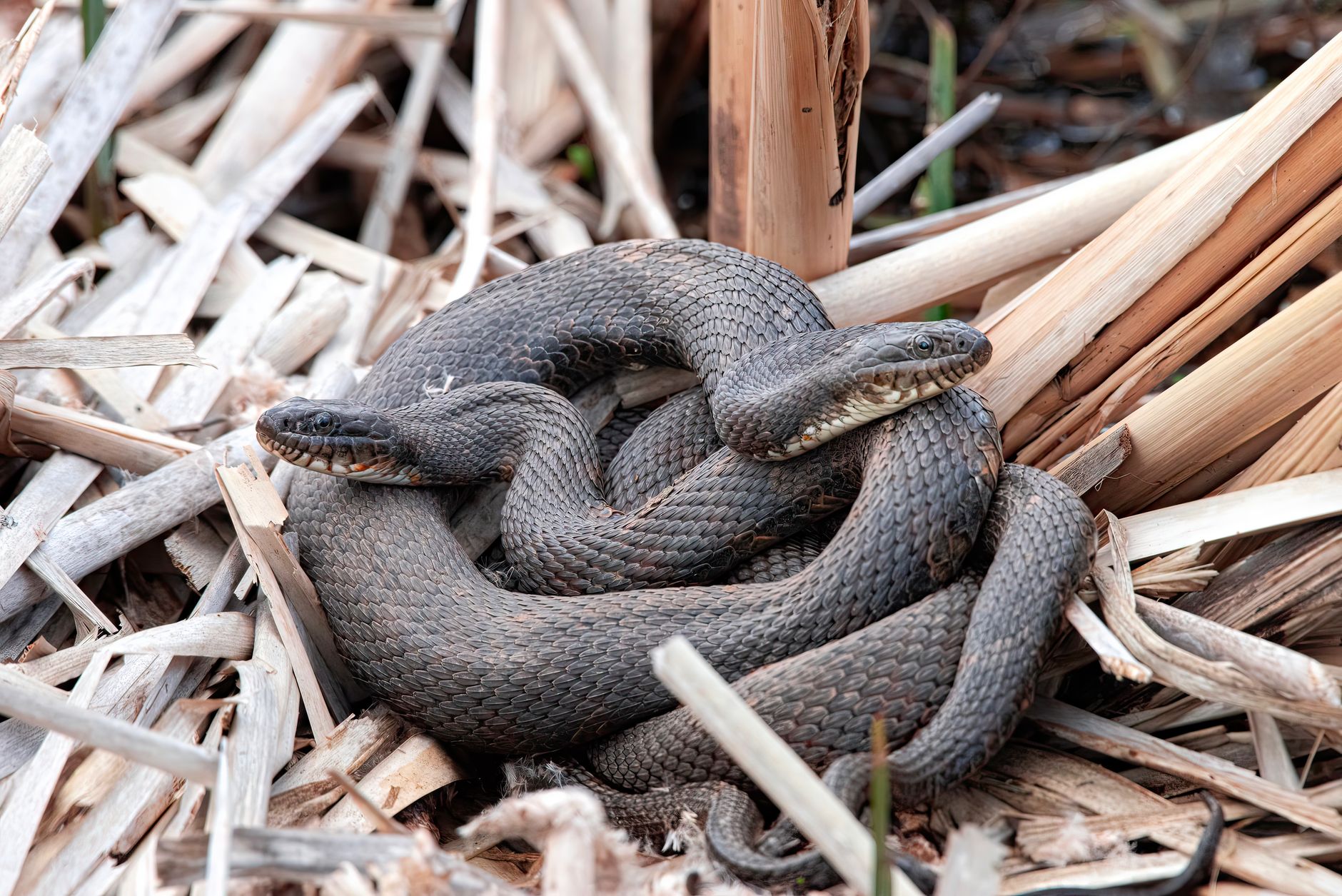
- Water Snakes (Nerodia): While often mistaken for water moccasins (cottonmouths), water snakes are non-venomous and play an important role in aquatic ecosystems.
- Boa Constrictors (Boa constrictor): These large snakes are powerful constrictors, but they lack venom glands.
- Pythons (Various Genera): Similar to boas, pythons are non-venomous constrictors found in Africa, Asia, and Australia.
- Ringneck Snakes (Diadophis punctatus): These small, secretive snakes are easily identified by the distinctive yellow ring around their necks.
The Importance of Non-Venomous Snakes in Ecosystems
Non-venomous snakes play vital roles in maintaining healthy ecosystems:
- Pest Control: They control populations of rodents, insects, and other small animals that can damage crops and spread diseases.
- Prey for Other Animals: They serve as a food source for birds of prey, mammals, and other reptiles.
- Indicators of Environmental Health: Their presence or absence can indicate the overall health of an ecosystem.
Common Misconceptions about Non-Venomous Snakes
Many people fear snakes, regardless of whether they are venomous or not. This fear is often based on misconceptions and lack of knowledge.
- All snakes are dangerous: This is false. The vast majority of snake species are non-venomous and pose no threat to humans.
- Snakes are aggressive: Snakes generally only bite when threatened or provoked. They prefer to avoid confrontation.
- You can always tell if a snake is venomous by its appearance: As mentioned earlier, appearance is not always a reliable indicator. It’s best to avoid handling any snake you cannot positively identify.
Safety Around Snakes
Regardless of whether a snake is venomous or non-venomous, it’s always best to exercise caution:
- Avoid handling snakes: Unless you are a trained professional, do not attempt to handle any snake.
- Observe from a distance: Give snakes plenty of space and avoid disturbing them.
- Wear appropriate clothing: When hiking or exploring in areas where snakes are common, wear long pants and closed-toe shoes.
- Be aware of your surroundings: Watch where you step and avoid reaching into areas where snakes might be hiding.
Identifying Snakes Accurately
Accurate identification is crucial for understanding the potential risks posed by a snake. Consider these resources:
- Field Guides: Consult reliable field guides specific to your region.
- Herpetological Societies: Contact local herpetological societies or experts for assistance.
- Online Resources: Use reputable online resources, such as university extension websites or government wildlife agencies.
Differentiating Harmless Snakes
| Feature | Garter Snake | Rat Snake | Water Snake |
|---|---|---|---|
| Venom | Absent | Absent | Absent |
| Appearance | Stripes, various colors | Variable, often black | Blotches, keeled scales |
| Habitat | Diverse, near water | Woodlands, fields | Aquatic environments |
| Behavior | Active during the day | Nocturnal, constrictor | Aggressive when handled |
Ethical Considerations
When encountering snakes in the wild, it’s important to treat them with respect and avoid harming them. Remember that snakes are an integral part of the ecosystem and deserve to be protected.
Conservation Efforts
Many snake populations are declining due to habitat loss, persecution, and other threats. Supporting conservation efforts can help protect these fascinating creatures.
Conclusion
The question “Which snake doesn’t have poison?” has a multitude of answers. The vast majority of snake species are non-venomous and play crucial roles in maintaining ecological balance. Understanding the characteristics and behaviors of these snakes can help dispel misconceptions and promote a more respectful relationship with these often misunderstood creatures.

Frequently Asked Questions (FAQs)
Is it true that all baby snakes are more venomous than adults?
No, this is a common misconception. While some juvenile venomous snakes may not have full control over the amount of venom they inject, their venom isn’t inherently more potent than that of adults. This perceived increased danger is often due to a lack of experience controlling venom delivery, not venom strength.
Can a non-venomous snake bite?
Yes, all snakes can bite, even those that are non-venomous. However, the bite of a non-venomous snake is generally not dangerous to humans. It may cause minor pain or discomfort, but it does not contain venom. Proper wound care, like any scratch or bite, is always recommended.
How can I tell the difference between a water moccasin (cottonmouth) and a water snake?
This can be tricky! Key differences include head shape (cottonmouths have more triangular heads) and pupil shape (cottonmouths have elliptical pupils, water snakes have round pupils). Cottonmouths also exhibit a defensive display of opening their mouths to show the white lining, hence the name. However, the best practice is to simply observe from a distance and avoid disturbing any snake you can’t positively identify.
Are there any snakes that mimic venomous snakes?
Yes, some non-venomous snakes mimic venomous snakes as a form of defense. For example, the scarlet kingsnake mimics the venomous coral snake in coloration. This mimicry can deter predators. The common rhyme to remember the difference is: “Red next to yellow, kill a fellow. Red next to black, venom lack.” (referring to the colors of the bands).
What should I do if I am bitten by a snake?
If you are bitten by a snake, seek medical attention immediately, especially if you suspect it was a venomous snake. Try to remember the snake’s appearance to help with identification, but do not risk further injury trying to capture or kill it. Keep the bitten area still and below the level of your heart.
Do all snakes lay eggs?
No, some snakes give birth to live young. These are called viviparous snakes. Examples include garter snakes and some boa species. Oviparous snakes lay eggs.
Why are snakes important to the environment?
Snakes play a crucial role in controlling populations of rodents and other pests, which can damage crops and spread diseases. They are also an important food source for other animals. The disappearance of snake populations can lead to ecological imbalances.
Is it safe to handle a snake if I wear gloves?
While gloves might offer some protection against a bite, it’s generally not recommended to handle any snake unless you are a trained professional. Snakes can still bite through gloves, and handling can stress the animal.
Where is the best place to learn more about snakes in my area?
Contact your local herpetological society, nature center, or university extension office for information about the snakes in your area. These organizations can provide accurate information and educational programs.
Are there any completely snake-free regions on Earth?
Yes, some regions are naturally snake-free due to climate or geographical factors. Ireland and New Zealand are well-known examples. Antarctica, of course, is also snake-free.
How do snakes find their prey?
Snakes use a variety of senses to find prey, including sight, smell, and heat detection. Some snakes have specialized heat-sensing pits that allow them to detect the body heat of warm-blooded animals, even in complete darkness. Their forked tongues also collect scent particles for analysis.
What can I do to make my yard less attractive to snakes?
Remove potential food sources and hiding places. Keep your lawn mowed, clear away debris such as leaf piles and woodpiles, and seal any cracks or holes in your foundation. These measures can help discourage snakes from entering your yard.