

What Kind of Owl Sounds Like a Cat Meowing? Unmasking the Feline Impersonator
The owl species most commonly associated with cat-like meowing sounds is the Barred Owl. While other owls may produce variations of calls that could be misconstrued, the distinctive and frequent meows of the Barred Owl make it the most likely culprit when you hear what kind of owl sounds like a cat meowing.

Delving into the World of Owl Vocalizations
Owls are renowned for their diverse and fascinating vocalizations. Unlike many birds that sing elaborate songs, owls primarily communicate through hoots, screeches, whistles, and, in some cases, sounds remarkably similar to those produced by domestic cats. Understanding these calls is crucial for identifying different owl species and appreciating their ecological roles.
The Barred Owl: A Meowing Master

The Barred Owl (Strix varia) is a medium-sized owl native to eastern North America. It’s identifiable by its mottled brown and white plumage, dark eyes, and lack of ear tufts. However, it’s their distinctive calls that often grab people’s attention. While their hooting sequences are more widely known (“Who cooks for you? Who cooks for you-all?”), they also produce a variety of other sounds, including those mimicking a cat’s meow.
- Meows: These calls can range from soft, high-pitched meows to louder, more drawn-out versions.
- Screeches: While not always cat-like, some Barred Owl screeches can have a similar timbre.
- Chatter: A series of rapid, staccato notes often used during territorial disputes or mating displays.
- Hisses: Used defensively or to startle potential predators.
Why Do Barred Owls Meow?
The exact purpose of the Barred Owl’s meow is still under investigation, but several theories exist:
- Communication: Meows could be used to communicate between mates, especially during the breeding season.
- Territorial Defense: The meow might serve as a warning signal to other owls to stay out of their territory.
- Begging Calls (Juveniles): Young Barred Owls may use meow-like calls to solicit food from their parents.
- Deception: It’s also possible that the sound, resembling a distressed animal, could attract prey or confuse predators.
Distinguishing the Meow: Other Potential Owl Impersonators
While the Barred Owl is the prime suspect when asking “What kind of owl sounds like a cat meowing?“, other species might occasionally produce similar sounds.
- Eastern Screech Owl: Their whinnies and trills might, at times, be mistaken for a cat’s purr or soft meow.
- Great Horned Owl: Although known for its deep hooting, the Great Horned Owl can make a variety of other noises, some of which could resemble a distressed animal cry. However, this is rare.
- Northern Saw-whet Owl: Their high-pitched “too-too-too” calls, while generally distinct, could conceivably be misidentified, especially from a distance.
The consistency and frequency of the meowing sound are the key differentiators. If you regularly hear what sounds unmistakably like a cat’s meow coming from the woods, a Barred Owl is the most likely culprit.
Protecting Owl Habitats: Ensuring Their Continued Survival
Understanding and appreciating the unique vocalizations of owls, like knowing what kind of owl sounds like a cat meowing, is crucial for fostering conservation efforts. Habitat loss, pesticide use, and vehicle collisions pose significant threats to owl populations. Protecting their natural environments ensures that these fascinating birds continue to thrive. This includes:
- Preserving forests and wetlands: Owls rely on these habitats for nesting and hunting.
- Reducing pesticide use: Pesticides can poison owls and their prey.
- Driving carefully at night: Owls are often hit by cars while hunting near roads.
- Supporting conservation organizations: Contribute to groups dedicated to owl research and protection.
Owl Identification Table (Simplified)
| Owl Species | Size | Common Calls | Potential Meow-like Sounds |
|---|---|---|---|
| Barred Owl | Medium | “Who cooks for you?”, meows, screeches, chatter | Frequent, distinct meows |
| Eastern Screech Owl | Small | Whinnies, trills, hoots | Occasional purrs/soft meows |
| Great Horned Owl | Large | Deep hoots | Rare distressed cries |
| Northern Saw-whet Owl | Very Small | “Too-too-too” | Possible misidentification |
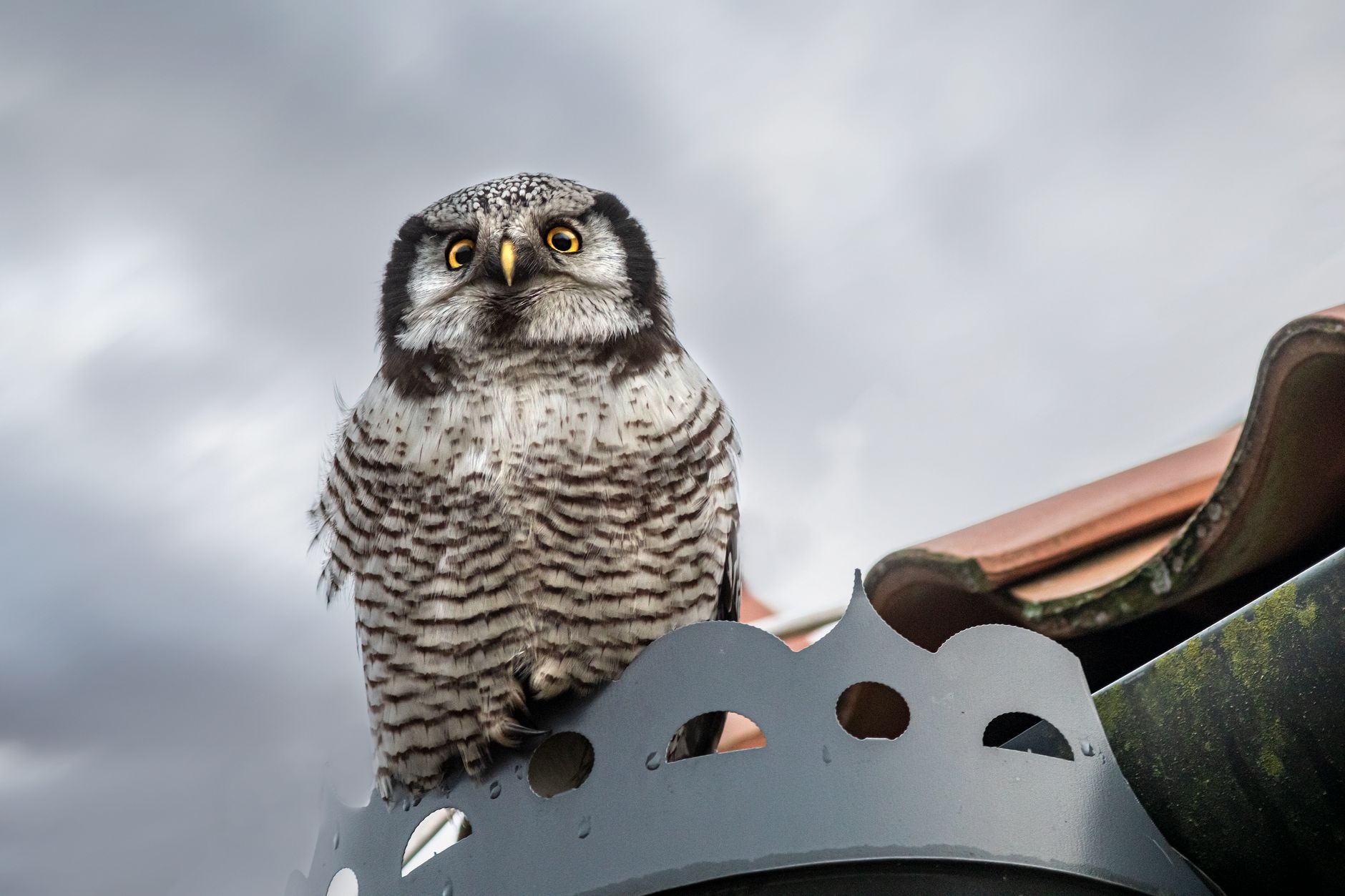
Frequently Asked Questions (FAQs)
Is it common for owls to sound like cats?
No, it’s not common for most owls to sound exactly like cats. While several species have variations in their calls that might be mistaken for feline noises, the Barred Owl is the most notable and frequent “meower.” Other owl calls are typically distinct hoots, screeches, or whistles.
How can I tell the difference between a Barred Owl and a real cat?
Context is key. If you hear the “meow” coming from a treetop or dense woods, it’s far more likely to be a Barred Owl. Also, Barred Owl meows often have a slightly more raspy or guttural quality than a domestic cat’s meow. Pay attention to the location and the specific sound characteristics.
Do all Barred Owls meow?
While meowing is a characteristic vocalization of Barred Owls, not every individual owl will meow frequently. Some may rely more on other calls, such as the classic “Who cooks for you?” hooting sequence. However, meowing is a common behavior within the species.
When are Barred Owls most likely to meow?
Barred Owls are most vocal during the breeding season, which typically occurs in late winter and early spring. This is when they’re actively communicating with mates and defending their territories. They are also more active at night, especially around dusk and dawn.
Is the Barred Owl’s meow a sign of distress?
Not necessarily. While a distressed animal might make similar sounds, the Barred Owl’s meow is usually a form of communication, not an indication of immediate danger. It can be used to communicate with their mate or defend their territory from intruders.
What other animals might be mistaken for an owl’s meow?
Besides domestic cats, other animals that might produce similar sounds include foxes (especially their mating calls), raccoons, and even some bird species. However, these sounds will usually have distinct differences in pitch, rhythm, and duration.
Are Barred Owls dangerous to cats?
Barred Owls are predators and capable of taking small animals as prey. However, attacks on adult domestic cats are relatively rare. Kittens or very small cats may be more vulnerable. Keeping cats indoors, especially at night, is the best way to protect them.
How can I attract Barred Owls to my property?
Attracting Barred Owls involves creating a suitable habitat. This includes preserving mature trees for nesting, providing open areas for hunting, and avoiding the use of pesticides that can harm their prey. You can also install an owl box designed specifically for Barred Owls.
What should I do if I find a baby Barred Owl?
If you find a baby Barred Owl, it’s best to leave it undisturbed. Unless it’s clearly injured or in immediate danger (e.g., in the middle of a road), its parents are likely nearby and will continue to care for it. If you’re concerned, contact a local wildlife rehabilitator.
Where can I listen to Barred Owl calls?
You can find recordings of Barred Owl calls on websites such as The Cornell Lab of Ornithology’s All About Birds, the Audubon Society website, and on various nature sound recording databases. These resources can help you learn to identify the different calls, including the meow.
Are Barred Owls common in urban areas?
Barred Owls are becoming increasingly common in urban and suburban areas, especially those with mature trees and green spaces. They can adapt to human presence and are often found in parks, cemeteries, and residential neighborhoods.
If I hear an animal meowing repeatedly in the woods, is it always a Barred Owl?
While the Barred Owl is the most likely explanation for repeated meowing in the woods, it’s not a guarantee. To confirm the identification, try to get a visual sighting of the owl or listen carefully for other characteristic calls, such as the “Who cooks for you?” hooting sequence. Location and habitat also provide clues.