

What is the Least Violent Monkey? Exploring Primate Peacemakers
The seemingly paradoxical search for the least violent monkey often leads us to the titi monkey, known for its strong pair bonds, cooperative behavior, and generally low levels of aggression compared to other monkey species. They exemplify a fascinating side of primate behavior, highlighting that peaceful coexistence is indeed possible in the monkey world.

Introduction: Beyond the Stereotype
When we think of monkeys, images of aggressive skirmishes, territorial disputes, and even violent power struggles often come to mind. While these behaviors are certainly present in some species, they don’t paint the entire picture. The primate order is incredibly diverse, and within it, we find a range of social structures and behavioral strategies. The question, “What is the least violent monkey?” prompts us to examine these variations and to challenge our preconceived notions about primate aggression.
This article explores the concept of violence in monkeys, looks at various species and their behavior, and ultimately identifies the titi monkey as a strong contender for the title of “least violent monkey.” We’ll delve into the reasons behind their peaceful nature, contrasting their social structures and behaviors with those of more aggressive species.
Defining Violence in Monkeys
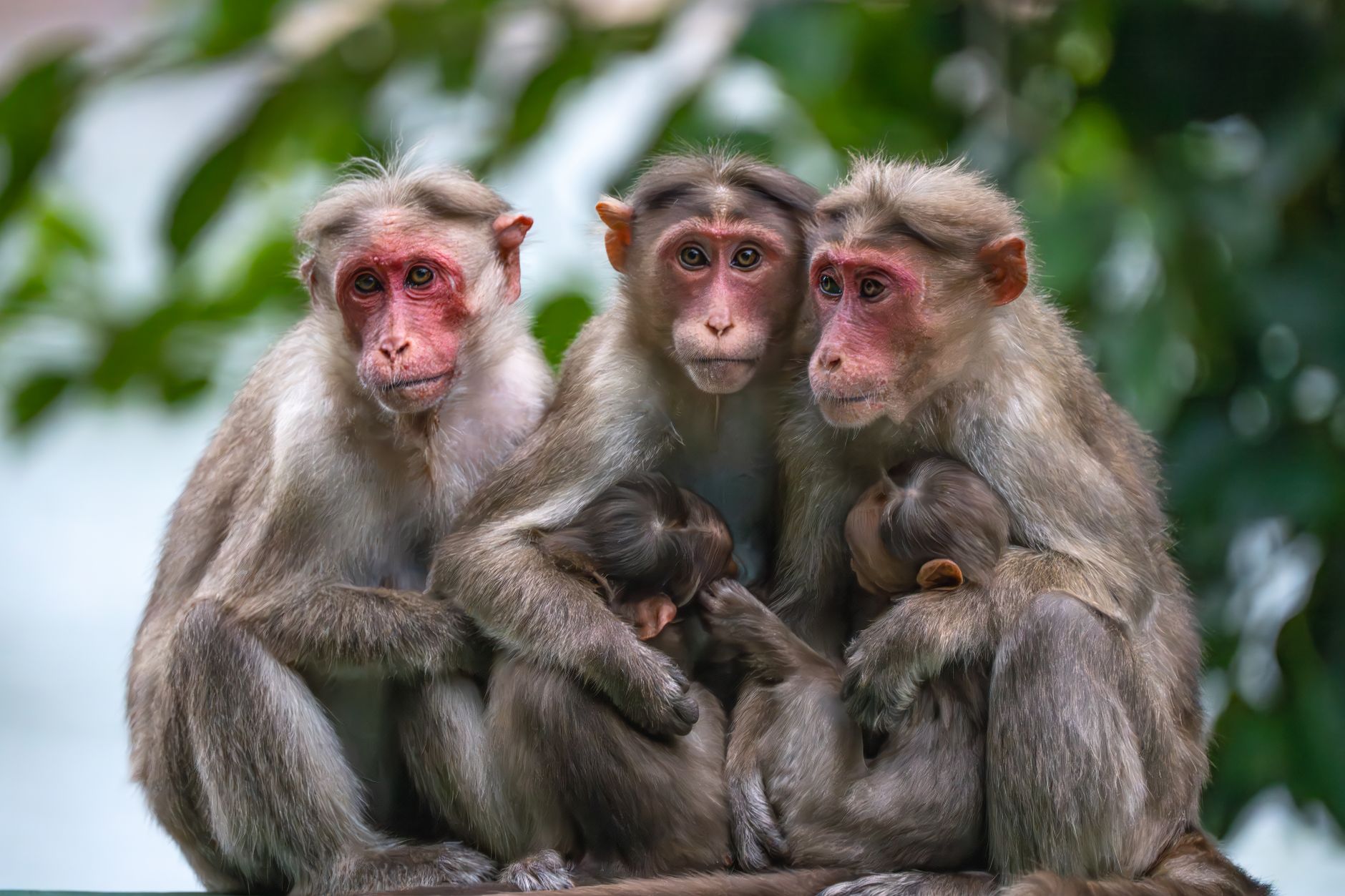
Defining violence in the animal kingdom, particularly in monkeys, requires careful consideration. Direct physical aggression, such as biting, hitting, and chasing, is an obvious indicator. However, more subtle forms of aggression, including threats, displays of dominance, and resource monopolization, also need to be considered. This analysis focuses primarily on physical aggression as an indicator of violence levels.
- Physical Aggression: Direct physical harm or threat of harm.
- Social Aggression: Includes dominance displays, threats, and exclusion.
- Resource Aggression: Competition over food, territory, or mates.
Contenders for the Title
Several monkey species exhibit lower levels of aggression than others. These candidates are often characterized by specific social structures and ecological factors that promote cooperation over conflict.
- Titi Monkeys (Callicebus spp.): As mentioned above, these South American monkeys are known for their strong pair bonds and low levels of aggression.
- Marmosets and Tamarins (Callitrichidae family): These small primates often live in cooperative family groups where aggression is minimized.
- Owl Monkeys (Aotus spp.): Also known as night monkeys, these nocturnal primates typically live in monogamous pairs with little reported aggression.
Why Titi Monkeys Stand Out
Titi monkeys stand out due to their exceptional pair-bonding behavior. They are monogamous, forming lasting relationships with a single mate. This strong bond reduces competition for mates and promotes cooperation in raising offspring. Furthermore, their territorial behavior is often passive, involving vocalizations and displays rather than physical confrontations.
Key Characteristics Contributing to Low Violence:
- Monogamy: Reduces mate competition.
- Strong Pair Bonds: Fosters cooperation and reduces conflict within the pair.
- Cooperative Parenting: Both parents actively participate in raising offspring, reducing stress and conflict.
- Territorial Defense: Primarily vocal and visual displays, minimizing physical aggression.
Comparing Social Structures
To understand why some monkey species are less violent than others, it’s essential to compare their social structures. Species with hierarchical social structures, intense competition for mates, and limited resources are often more prone to aggression.
| Feature | Titi Monkeys | Macaques | Baboons |
|---|---|---|---|
| Social Structure | Monogamous pairs | Multi-male/multi-female | Multi-male/multi-female |
| Mate Competition | Low | High | High |
| Aggression Level | Low | High | High |
| Parenting | Cooperative | Variable | Variable |
The Evolutionary Perspective
From an evolutionary perspective, violence is often driven by the need to secure resources, mates, and social dominance. However, cooperation and low aggression can also be advantageous, particularly in environments where resources are plentiful or where cooperation enhances survival and reproductive success. The titi monkey’s monogamous lifestyle and cooperative parenting strategies likely evolved as a response to specific ecological and social pressures that favored peaceful coexistence.

Frequently Asked Questions About the Least Violent Monkey
Is it accurate to say that titi monkeys are never violent?
No. While titi monkeys are generally considered to be among the least violent monkeys, occasional aggression can occur. This may be related to territorial disputes or conflicts within the family group, especially during times of resource scarcity. However, these instances are relatively rare compared to other monkey species.
What other factors, besides social structure, contribute to low aggression in titi monkeys?
Habitat and diet play a role. Titi monkeys primarily eat fruit, leaves, and insects, resources that are relatively abundant in their South American habitat. This reduces competition for food. Furthermore, their arboreal lifestyle (living in trees) may limit opportunities for aggressive encounters with other groups.
How do titi monkeys defend their territory if not through physical aggression?
Titi monkeys rely primarily on vocalizations, specifically duetting, to defend their territory. A mated pair will sing together to signal their presence to neighboring groups and to deter potential intruders. They also use visual displays, such as posturing and tail-wagging, to reinforce their territorial boundaries.
Are there any specific studies that have documented low aggression levels in titi monkeys?
Yes, several studies have examined titi monkey behavior and have reported low levels of aggression. Observational studies in both the wild and captivity have consistently shown that titi monkeys exhibit fewer instances of physical aggression compared to many other primate species. These studies often focus on pair bonding and cooperative behavior.
How does the level of violence in monkeys compare to that in other primates, like apes?
Violence levels vary significantly across primate species, including both monkeys and apes. Some apes, such as chimpanzees, are known for their relatively high levels of aggression, while others, such as bonobos, exhibit more peaceful behavior. This highlights the diversity of social strategies within the primate order.
Why is it important to study violence and aggression in monkeys?
Understanding violence and aggression in monkeys can provide insights into the evolutionary roots of human behavior. By studying the factors that contribute to both aggression and cooperation in primates, we can gain a better understanding of the biological and social influences on human violence.
Does captive breeding of monkeys influence their level of violence?
Yes, captivity can influence aggression levels in monkeys. Stressful conditions, such as overcrowding or lack of environmental enrichment, can increase aggression. Conversely, well-managed captive environments that provide opportunities for social interaction and natural behaviors can help to minimize aggression.
Are there any conservation concerns related to titi monkeys?
Yes, many titi monkey species are facing conservation threats due to habitat loss and fragmentation caused by deforestation. Protecting their habitat is crucial for ensuring the long-term survival of these relatively peaceful primates.
What can humans learn from titi monkeys about conflict resolution?
Titi monkeys demonstrate the effectiveness of strong social bonds and cooperative behavior in minimizing conflict. Their reliance on communication and territorial displays, rather than physical aggression, offers valuable lessons for promoting peaceful conflict resolution in human societies.
Are all species of titi monkeys equally peaceful?
While titi monkeys as a whole are known for their low levels of aggression, some variation may exist between different species. More research is needed to fully understand the specific behavioral characteristics of each titi monkey species.
Could environmental changes impact the titi monkey’s peaceful nature?
Yes, environmental changes, such as habitat loss or resource scarcity, could potentially increase aggression in titi monkeys. If resources become limited, competition could intensify, leading to more frequent conflicts.
If not a titi monkey, which would be another great answer for the least violent monkey?
If we excluded titi monkeys, owl monkeys (Aotus spp.) would be another strong contender. They also form strong monogamous pairs and exhibit low levels of aggression. However, titi monkeys are generally more widely recognized for their peaceful nature, placing them slightly ahead in this ranking.