

What Happens When an Axolotl Larva Encounters Iodine? An In-Depth Look
If an axolotl larva is exposed to water containing sufficient iodine, it will undergo metamorphosis, transforming from a purely aquatic larval form into a terrestrial or semi-terrestrial salamander-like juvenile. This fundamentally alters its morphology and physiology.
Introduction: The Axolotl’s Aquatic Enigma
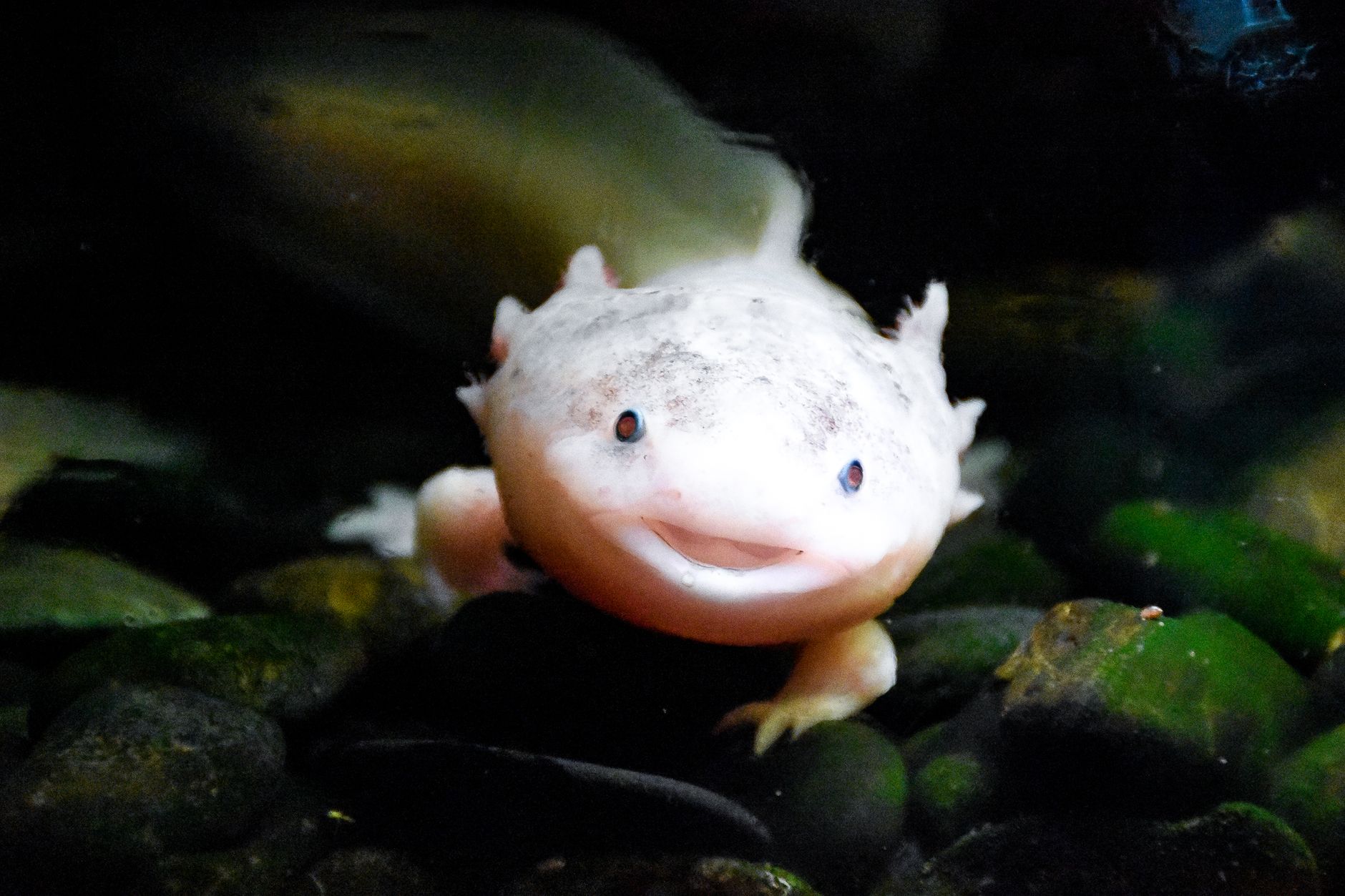
The axolotl (Ambystoma mexicanum) is a fascinating neotenic salamander native to Mexico. Neoteny refers to the retention of larval characteristics into adulthood. In the wild, axolotls typically remain aquatic and possess external gills throughout their lives. However, under certain conditions, this can change dramatically. What happens if an axolotl larva is placed in water containing sufficient iodine? The answer lies in the axolotl’s unique sensitivity to thyroid hormones.
The Role of Iodine in Metamorphosis

Iodine is a crucial element required for the production of thyroid hormones, specifically thyroxine (T4) and triiodothyronine (T3). These hormones play a critical role in regulating metamorphosis in amphibians. While axolotls typically lack the thyroid function needed for natural metamorphosis, they retain the ability to respond to exogenous (external) thyroid hormones or, crucially, to iodine.
The Process: Inducing Metamorphosis with Iodine
Introducing sufficient iodine to an axolotl larva triggers a chain of events that leads to metamorphosis. This process can be artificially induced in a controlled environment.
The key steps involve:
- Iodine Administration: Gradually adding iodine to the axolotl’s water. Potassium iodide (KI) is a common source. Careful monitoring is crucial to avoid overdosing.
- Hormone Production: The axolotl’s thyroid gland, though normally inactive, begins to produce T3 and T4 in response to the iodine.
- Physiological Changes: These hormones then initiate a cascade of developmental changes.
Observable Changes During Metamorphosis
The morphological and physiological changes are dramatic and relatively rapid.
These include:
- Gill Regression: The feathery external gills gradually shrink and eventually disappear.
- Fin Reduction: The dorsal fin, characteristic of the larval stage, recedes.
- Eyelid Development: Eyelids form, allowing the axolotl to protect its eyes on land.
- Lung Development: The lungs, which are present but underdeveloped in the larva, become more functional, enabling air breathing.
- Skin Changes: The skin becomes thicker and develops a more terrestrial texture.
- Coloration Changes: The axolotl’s color can change, often becoming darker or more mottled.
- Jaw and Tooth Morphology: Changes occur in the mouth and teeth structure.
- Behavioral Changes: The axolotl will start spending more time at the surface of the water and, eventually, outside of it.
Potential Benefits and Drawbacks
While inducing metamorphosis might seem appealing, it’s crucial to understand the potential downsides.
Benefits:
- Scientific Research: Studying induced metamorphosis provides valuable insights into developmental biology and hormone regulation.
- Conservation Efforts: In specific cases of habitat degradation, metamorphosis might enable axolotls to survive in altered environments (though this is highly situational).
Drawbacks:
- Reduced Lifespan: Metamorphosed axolotls typically have significantly shorter lifespans than their neotenic counterparts.
- Health Risks: The process can be stressful and lead to health complications, including thyroid problems and reduced immunity.
- Unsuitable Conditions: The resulting terrestrial environment must be perfectly suited to the transformed Axolotl for it to survive.
Common Mistakes and Precautions
Attempting to induce metamorphosis without proper knowledge and resources can be detrimental to the axolotl’s health.
Common mistakes include:
- Overdosing Iodine: Excessive iodine can lead to hyperthyroidism and death.
- Rapid Changes: Sudden increases in iodine concentration can shock the axolotl’s system.
- Inadequate Terrestrial Habitat: Failing to provide a suitable land environment after metamorphosis can result in dehydration and death.
- Lack of Monitoring: Ignoring subtle changes in behavior or appearance can lead to missed complications.
Ethical Considerations
The artificial induction of metamorphosis in axolotls raises ethical concerns. It’s crucial to prioritize the axolotl’s well-being and avoid unnecessary interventions. Metamorphosis should only be considered in controlled research settings or in exceptional circumstances where it might benefit the axolotl’s survival.
Frequently Asked Questions (FAQs)
What is the natural trigger for metamorphosis in axolotls?
While axolotls are typically neotenic, meaning they retain their larval features throughout their lives, under very rare and specific environmental conditions (such as a dramatic drop in water level coupled with elevated temperatures and specific food scarcity) a natural trigger might potentially stimulate thyroid activity enough for metamorphosis. This is exceedingly rare in captive axolotls.
Is it possible to reverse metamorphosis in axolotls?
Once the metamorphic process is initiated by iodine, it is generally not reversible. The physiological changes are profound and permanent. Attempts to reverse the process are unlikely to succeed and could cause further harm to the axolotl.
What is the ideal iodine concentration for inducing metamorphosis?
There is no single “ideal” concentration, as the optimal dose depends on the axolotl’s size, age, and overall health. It’s essential to start with a very low concentration (e.g., a few micrograms of potassium iodide per liter of water) and gradually increase it while closely monitoring the axolotl’s response. Consultation with a veterinarian or experienced axolotl breeder is highly recommended.
How long does the metamorphosis process typically take?
The duration of metamorphosis varies, but it typically takes several weeks to months for all the changes to complete. The exact timeframe depends on the iodine concentration, the axolotl’s individual physiology, and environmental conditions.
What type of terrestrial habitat is suitable for a metamorphosed axolotl?
A suitable terrestrial habitat should be humid and cool, with a temperature range of 60-70°F (15-21°C). It should include a shallow water source for hydration and ample hiding places. A substrate of damp sphagnum moss or paper towels is often used.
Can metamorphosed axolotls breed?
While technically possible, breeding success in metamorphosed axolotls is generally lower compared to neotenic axolotls. The physiological stresses of metamorphosis can impact reproductive health.
Is induced metamorphosis considered a common practice among axolotl owners?
No, it is not. Induced metamorphosis is generally discouraged among hobbyist axolotl keepers due to the associated risks and ethical concerns. It’s primarily used in research settings.
What are the long-term health consequences of induced metamorphosis?
Metamorphosed axolotls often experience reduced lifespans and are more susceptible to diseases. They may also develop thyroid problems, skin infections, and other health complications.
Can I use table salt (sodium chloride) as an iodine source?
No. Table salt is sodium chloride (NaCl) and does not contain iodine. To introduce iodine you need potassium iodide (KI) or a similar iodine containing compound.
What happens if the iodine concentration is too low to induce complete metamorphosis?
If the iodine concentration is too low, the axolotl may exhibit partial metamorphosis, with some larval characteristics remaining. This can be detrimental, as the axolotl might be unable to fully adapt to either an aquatic or terrestrial environment.
What are the signs of iodine toxicity in axolotls?
Signs of iodine toxicity include: hyperactivity, rapid breathing, skin irritation, loss of appetite, and, in severe cases, death. If any of these signs are observed, immediately remove the axolotl from the iodine-containing water and consult with a veterinarian.
Is what happens if an axolotl larva is placed in water containing sufficient iodine? a permanent process for its offspring?
No, the change is not directly heritable. If a metamorphosed axolotl breeds, their offspring will not automatically metamorphose. The neotenic trait is still the dominant genetic expression, so the larvae will develop as typical aquatic axolotls unless they themselves are later exposed to a metamorphosis trigger such as sufficient iodine.