

The Secrets Behind Stripes and Spots: What Determines a Cat’s Fur Pattern?
The intricate and diverse fur patterns seen in cats are dictated by a complex interplay of genetic factors, primarily genes influencing pigment production and distribution during embryonic development; ultimately, what determines a cat’s fur pattern is a beautifully choreographed dance of biology.

Introduction: A Kaleidoscope of Cat Coats
The world of feline fur is a vibrant tapestry woven with stripes, spots, swirls, and solids. From the majestic tabby to the elegant tortoiseshell, each pattern tells a story of genetic inheritance and developmental processes. But what determines a cat’s fur pattern? The answer lies in a combination of genes that control pigment production, cell migration, and the timing of these events during the cat’s embryonic development. Understanding these processes allows us to appreciate the remarkable diversity and beauty found in our feline companions.
The Key Players: Genes and Pigments
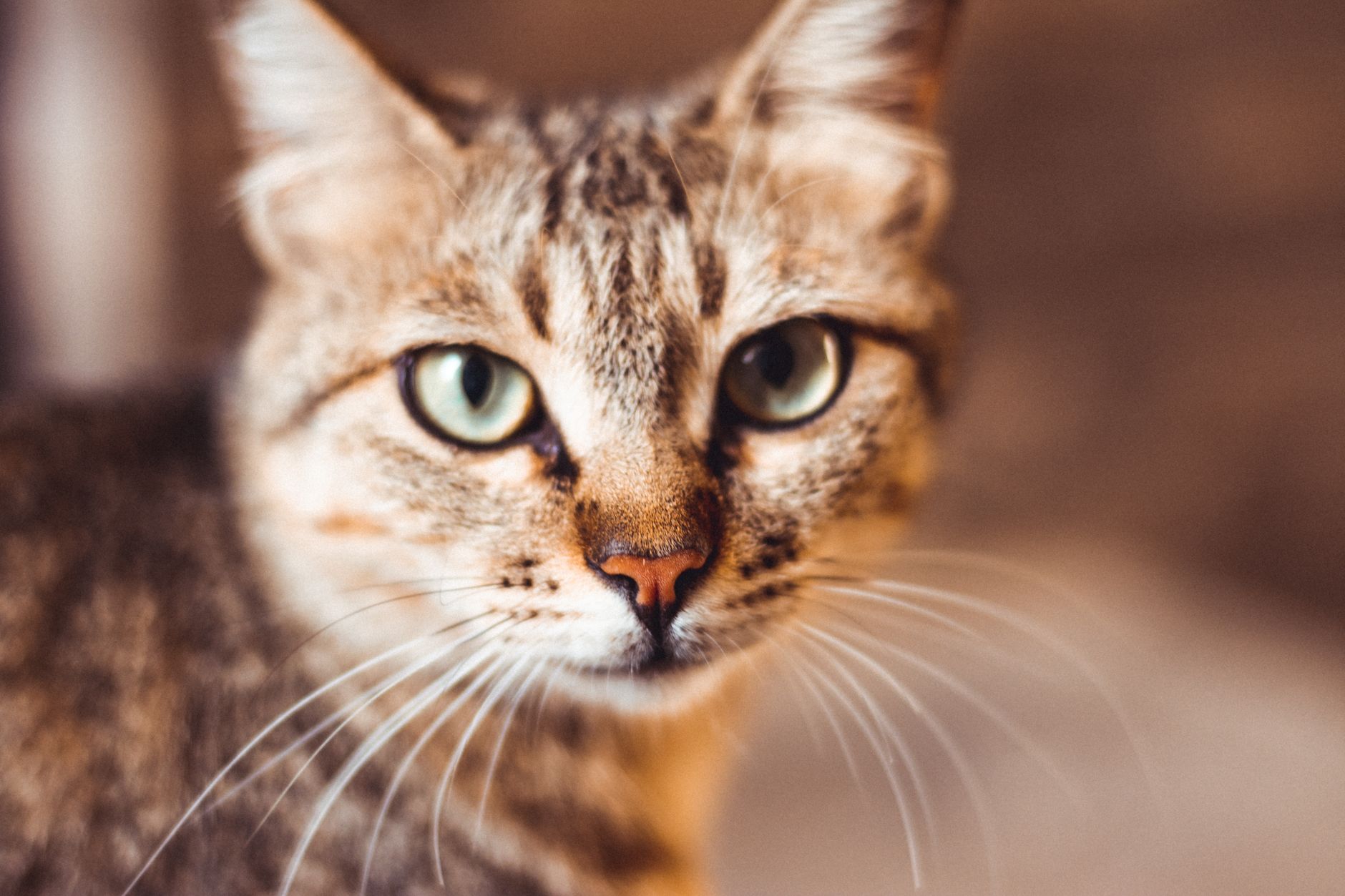
The basis of all fur color and patterns starts with genes, specifically those that affect pigment production. Two primary pigments are responsible for the vast majority of cat coat colors:
- Eumelanin: This pigment produces black and brown colors. The intensity of eumelanin determines whether the cat’s fur will be black, brown, chocolate, or cinnamon.
- Phaeomelanin: This pigment produces red and yellow colors (often described as orange or ginger).
The relative presence and distribution of these pigments, controlled by specific genes, are major factors in what determines a cat’s fur pattern. For example, the Agouti gene plays a crucial role in switching between the production of eumelanin and phaeomelanin, leading to the banded hair characteristic of tabby cats.
The Tabby Gene: More Than Just Stripes
The term “tabby” refers to a coat pattern, not a breed. There are several distinct tabby patterns:
- Classic Tabby (blotched): Features swirling patterns on the sides.
- Mackerel Tabby (striped): Has narrow, parallel stripes running down the sides.
- Spotted Tabby: Features spots of varying sizes.
- Ticked Tabby (Agouti): Each hair is banded with different colors, resulting in a “salt and pepper” appearance.
The Tabby gene (specifically, the Taqpep gene) is responsible for the core tabby pattern. The classic tabby is recessive, while the mackerel tabby is dominant. The spotted tabby pattern is influenced by modifier genes that break up the stripes into spots. Ticked tabbies often have faint ghost markings. Understanding the variants of the Tabby gene helps to explain what determines a cat’s fur pattern within the tabby family.
The Orange Gene: A Sex-Linked Surprise
The Orange gene (also known as the red gene) resides on the X chromosome and controls the production of phaeomelanin. This gene has two alleles: O (orange) and o (non-orange, allowing for black/brown pigment production).
- Females (XX): Can be orange (OO), non-orange (oo), or tortoiseshell/calico (Oo) if one X chromosome carries the O allele and the other carries the o allele. The inactivation of one X chromosome in each cell (a process called lyonization) creates a mosaic of orange and non-orange cells, resulting in the tortoiseshell pattern.
- Males (XY): Can only be orange (OY) or non-orange (oY), as they only have one X chromosome.
This sex-linked inheritance explains why tortoiseshell and calico cats are almost always female. The Orange gene is a prime example of what determines a cat’s fur pattern and how sex chromosomes play a role.
White Spotting: The Mysterious Influence
The presence of white fur in a cat’s coat is determined by the White Spotting gene (S). This gene controls the migration of melanocytes (pigment-producing cells) from the neural crest during embryonic development.
- s/s: No white spotting.
- S/s: Moderate white spotting (e.g., white paws, chest, or belly).
- S/S: Extensive white spotting (e.g., van pattern, where only the tail and head have color).
The exact mechanisms by which the White Spotting gene influences melanocyte migration are still not fully understood, but it clearly contributes significantly to what determines a cat’s fur pattern, particularly in patterns like tuxedo, harlequin, and van.
Temperature-Sensitive Coloration: Siamese and Related Breeds
Certain breeds, such as Siamese, Burmese, and Tonkinese, exhibit temperature-sensitive coloration. These cats carry a mutation in the tyrosinase gene, which is responsible for producing melanin. The mutated enzyme is heat-sensitive, working best in cooler areas of the body. This results in darker pigmentation in the cooler extremities (paws, tail, ears, and face) and lighter pigmentation in the warmer core of the body. The degree of contrast depends on the specific mutation and the environmental temperature. This unique phenomenon shows how external factors can interact with genetics to influence what determines a cat’s fur pattern.
The Role of Development
The development of a cat’s fur pattern is a complex process. It begins early in embryonic development with the formation of the neural crest, a transient structure that gives rise to various cell types, including melanocytes. These melanocytes then migrate to the skin and begin producing pigment. The timing and distribution of these cells, influenced by the genes discussed above, are critical in shaping the final fur pattern. The intricate developmental processes involved show that what determines a cat’s fur pattern is more than just genes; it’s a complex orchestration of biological events.

Frequently Asked Questions (FAQs)
What is the most common cat fur pattern?
The most common cat fur pattern is the tabby pattern, in its various forms (mackerel, classic, spotted, and ticked). Tabby patterns are so widespread that many people mistakenly believe they are breed-specific. The Agouti gene, which causes hair banding, is prevalent in the cat population.
Can a cat’s fur pattern change over time?
Yes, a cat’s fur pattern can subtly change over time, particularly in breeds with temperature-sensitive coloration like Siamese. Environmental factors such as temperature and sunlight can influence pigment production, causing slight variations in the intensity of the coat color. Also, as cats age, they might develop gray hairs which can slightly alter the pattern.
Are there any cat breeds that always have a specific fur pattern?
Yes, some cat breeds are known for specific fur patterns. For example, Siamese cats are almost always pointed, due to the temperature-sensitive coloration gene. Burmese cats also have a similar but less extreme pointed pattern. However, even within breeds, variations can occur.
Why are tortoiseshell cats almost always female?
Tortoiseshell cats have a mix of orange and non-orange fur, and this pattern is linked to the Orange gene on the X chromosome. Females have two X chromosomes (XX), allowing them to express both orange and non-orange alleles, leading to the tortoiseshell pattern. Males have only one X chromosome (XY), so they can only be orange or non-orange, but not both.
What is a chimera cat, and how does it affect fur pattern?
A chimera cat is an extremely rare cat whose cells contain two genetically distinct populations, resulting from the fusion of two embryos in early development. This can lead to striking and unusual fur patterns, such as distinctly different colors on each side of the face or body.
How do breeders control cat fur patterns?
Breeders control cat fur patterns through selective breeding, carefully choosing parent cats with desired traits. By understanding the genetics of coat color and pattern, breeders can increase the likelihood of producing kittens with specific characteristics. However, unpredictable genetic recombination can still lead to unexpected results.
What is the difference between calico and tortoiseshell patterns?
Both calico and tortoiseshell patterns involve a mix of orange and non-orange fur. Calico cats have white spotting in addition to the orange and non-orange colors, creating larger, distinct patches of color. Tortoiseshell cats, on the other hand, typically have a more mottled or mixed appearance of orange and non-orange, without the large patches of white.
Do all cats have a Tabby gene?
Yes, all cats have a Tabby gene, but its expression can be masked by other genes. Even solid-colored cats possess the underlying genetic code for a tabby pattern, which may sometimes be faintly visible in certain lighting conditions, referred to as ghost markings.
How does the environment affect a cat’s fur pattern?
While genetics are the primary determinant, the environment can influence a cat’s fur pattern, especially in breeds with temperature-sensitive coloration. Lower temperatures can lead to darker pigmentation in the cooler extremities, while warmer temperatures can result in lighter pigmentation overall. Exposure to sunlight can also affect the intensity of coat color.
Can diet affect a cat’s fur pattern or color?
While diet primarily impacts fur quality and shine, severe nutritional deficiencies can sometimes affect pigment production, leading to duller or faded coat colors. Providing a balanced and complete diet is essential for maintaining a healthy and vibrant coat.
What causes a cat’s fur to turn gray or white with age?
As cats age, the melanocytes in their hair follicles gradually produce less pigment, resulting in gray or white hairs. This is a natural aging process similar to what happens in humans. The rate and extent of graying vary from cat to cat.
Are there any unusual or rare cat fur patterns?
Yes, there are several unusual and rare cat fur patterns, including chimera patterns (as mentioned earlier), mosaic patterns (similar to chimeras but arising from different genetic mechanisms), and patterns resulting from specific gene mutations that are not commonly seen in the general cat population. These patterns are often highly prized and can be quite striking.