
Maintaining the right environment is essential for healthy plant development, but soil conditions often remain hidden beneath the surface. Using the Best Soil Temperature Sensor allows you to move beyond guesswork and gain precise, actionable insights into your garden's root-zone climate.
Whether you are managing a large farm, a home greenhouse, or a specialized compost bin, selecting the right monitoring tool is key. We have analyzed five distinct devices to help you understand which features—from wireless connectivity to long-term data logging—best align with your specific gardening needs and technical requirements.
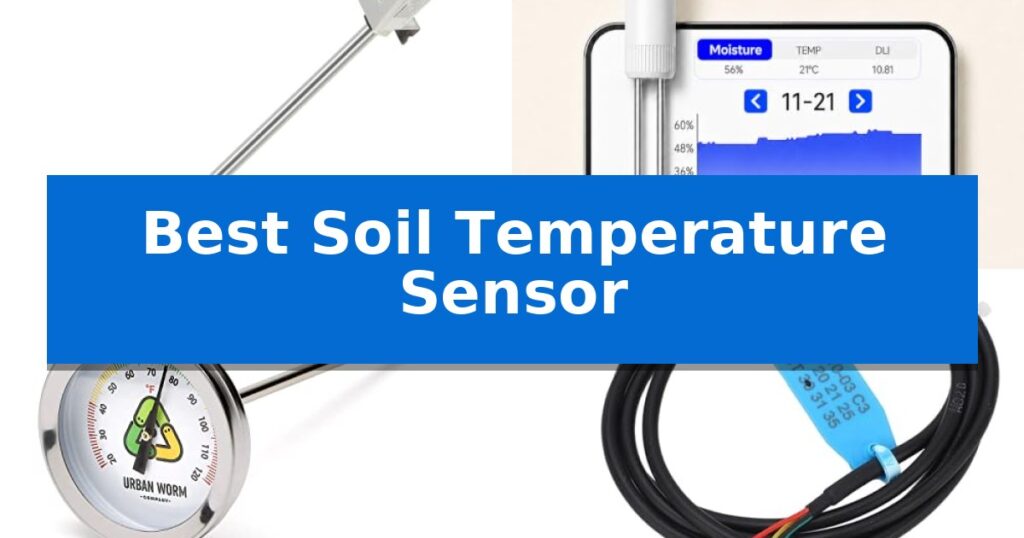
Best Soil Temperature Sensor in 2026
1 Ecowitt WN34BS Soil Temperature Sensor — Best for Remote Wireless Monitoring
Maintaining precise soil conditions is essential for plant health, and the Ecowitt WN34BS Soil Temperature Sensor simplifies this with an integrated LCD display that provides real-time data directly at the probe site. This specialized tool features an 11.8-inch stainless steel probe, making it an ideal choice for monitoring temperature in potted plants, greenhouses, lawns, and gardens.
Designed for versatility and durability, the Ecowitt WN34BS Soil Temperature Sensor is built with an IP65 waterproof rating to withstand outdoor environments. The unit transmits readings every 77 seconds using a stable RF wireless signal that reaches up to 300 feet in open areas, ensuring consistent data collection without constant manual checking.
For those seeking advanced analytics, the sensor offers remote monitoring capabilities when paired with a GW1100 Wi-Fi gateway. Users can view live data, track history records, and generate graphs via the Ecowitt App or the free ecowitt.net weather server. The system even supports email alerts, allowing for proactive management of soil conditions from anywhere using a smartphone or computer.
The system is highly scalable, supporting up to 8 channels for tracking multiple locations simultaneously. Whether you are managing a small home garden or a larger farm, you can mix and match the probe-based WN34S for soil or the cabled WN34L for water temperature. This flexibility makes it a robust solution for diverse agricultural or horticultural needs.
While the sensor provides comprehensive data, it is important to note that the Wi-Fi gateway is sold separately, which is required to unlock the full suite of remote connectivity and app-based features. The system is designed for those who value granular, long-term environmental tracking over simple, standalone spot-checking.
PROS
- IP65 waterproof construction for reliable outdoor use.
- Long-range wireless transmission up to 300 feet.
- Scalable system supporting up to 8 sensor channels.
- Remote monitoring and email alerts via the Ecowitt ecosystem.
CONS
- Wi-Fi gateway required for app connectivity and remote features is sold separately.
2 EvoDevice EVO10 Soil Moisture Meter — Best for Long-Term Data Tracking
Maintaining consistent soil conditions is essential for plant health, yet traditional spot-check methods often provide only a fleeting glimpse of a plant's environment. The EvoDevice EVO10 Soil Moisture Meter changes this by utilizing dual stainless-steel probes that measure across a wider root-zone area, effectively minimizing the impact of localized wet or dry pockets that can skew readings from single-probe devices.
Designed for long-term installation, this meter is built to remain in the soil, reducing the physical disturbance to delicate roots caused by repeated insertion. Its corrosion-resistant structure and rain-resistant housing ensure it can function reliably in both indoor and outdoor settings. Once the initial Bluetooth setup is complete, the device operates independently, recording data for up to six months without requiring a constant Wi-Fi or internet connection.
Beyond basic moisture tracking, the unit provides comprehensive insights into your plant's needs. It records soil temperature trends to help mitigate temperature-related drift in moisture data and calculates Daily Light Integral (DLI) to accurately classify sunlight levels as Full Sun, Partial Sun, Partial Shade, or Shade. This allows users to move past guesswork and understand the actual environmental cycles their plants experience over time.
The system is powered by a single AA battery, which supports over six months of typical usage. Users can reconnect via Bluetooth at their convenience to review stored daily or monthly trends, making it a practical tool for those who want to monitor their garden's health with consistent, evidence-based data.
PROS
- Dual stainless-steel probes provide more stable and representative moisture readings.
- Long-term monitoring design reduces root disturbance.
- Independent data recording for up to six months without constant connectivity.
- Daily Light Integral (DLI) tracking offers a more accurate assessment of sunlight exposure than basic light sensors.
CONS
- Not submersible in water despite the rain-resistant housing.
- Requires initial Bluetooth setup to begin independent recording.
3 Urban Worm Soil Thermometer — Best for Compost and Worm Bins
Maintaining the ideal environment for composting or vermiculture requires precise thermal management, which is where the Urban Worm Soil Thermometer proves essential. Featuring a 5-inch stainless steel stem, this tool allows for deep insertion into soil or worm bins, ensuring you measure the actual temperature of the material rather than just the surface air.
The device is engineered for simplicity and clarity, utilizing easy-to-read green, yellow, and red tick marks on the display. This visual indicator system removes the guesswork from monitoring, allowing gardeners to quickly identify if their compost or worm environment is within the optimal range.
Understanding the biological needs of your worms is critical to a healthy system. Because worms thrive best between 55F and 90F, this thermometer serves as a vital diagnostic tool. It provides the necessary data to determine when you need to cool the bin down or relocate it to a warmer area, helping to prevent stress or loss of your worm population.
Designed specifically for the unique demands of gardening and worm bin maintenance, the Urban Worm Soil Thermometer offers a durable, focused solution for hobbyists and serious composters alike. Its straightforward design prioritizes functionality, making it a reliable addition to any composting setup where temperature stability is a priority.
PROS
- 5-inch stainless steel stem for accurate deep-soil readings.
- Color-coded display for instant temperature interpretation.
- Helps maintain the optimal 55F to 90F range for worm health.
- Durable construction suitable for consistent use in compost environments.
CONS
- Analog display lacks the precision of digital sensors.
- Limited temperature range focused primarily on worm bin requirements.
4 Walfront FS200 Soil Temperature Sensor — Best for Custom DIY Integration
Precision monitoring for specialized environments requires hardware that integrates seamlessly into existing digital infrastructures. The Walfront FS200 Soil Temperature Sensor distinguishes itself through its native I2C interface, which allows for direct and efficient communication with microcontrollers and data logging systems without the need for complex signal conversion.
Engineered for high-performance data acquisition, this sensor utilizes a sophisticated 4X series chip to deliver exceptional measurement capabilities. It provides high-resolution data with 14-bit output, ensuring that environmental changes are captured with granular detail. The probe is calibrated to achieve humidity accuracy up to ±1.5% RH and temperature accuracy up to ±0.1℃, making it a reliable choice for technical applications ranging from server room climate management to precision agricultural research.
The physical design prioritizes versatility and ease of deployment. Its compact and lightweight form factor ensures that it can be installed in tight spaces, such as within HVAC ducting or dense soil arrays, without creating significant obstruction. Because it operates on a 3.3V power supply, the device is optimized for low-power consumption, which is a critical requirement for remote, battery-driven, or mobile monitoring stations.
While the sensor is highly capable, users should note that its specialized digital interface is designed primarily for developers and system integrators rather than plug-and-play consumer use. The wide applicability of the probe—spanning weather stations, warehouses, and soil science—demonstrates its robust utility, provided the host system is configured to support the I2C protocol.
PROS
- High-precision sensing with ±0.1℃ temperature accuracy.
- I2C interface for seamless digital integration.
- Low power consumption ideal for 3.3V battery-operated systems.
- Compact, lightweight design for versatile installation.
CONS
- Requires technical expertise to interface with I2C-compatible hardware.
- Limited to digital-only output, necessitating specific controller support.
5 Yamron 4-in-1 Soil Test Meter — Best All-in-One Garden Tool
Maintaining the ideal environment for your indoor and outdoor greenery requires more than just a regular watering schedule. The Yamron 4-in-1 Soil Test Meter provides a comprehensive solution by integrating four essential monitoring functions into a single, user-friendly device. Designed for gardeners and farmers, this tool allows you to track soil moisture, pH levels, temperature, and sunlight intensity simultaneously, ensuring your plants receive the precise care they need to thrive.
Equipped with the latest 2026 probe detection technology, the meter delivers quick and accurate readings. The device features a large LCD screen with a white backlight, making it easy to view your data in both bright daylight and low-light conditions. To ensure longevity and accuracy, the unit includes a 45-degree rotating head design, which allows you to adjust the display angle for comfortable reading without needing to bend over.
Operation is straightforward: simply insert the probe about 4 inches into the soil and wait 10 seconds for the results. The visual content design presents data through intuitive graphics and specific values, making it accessible even for novice growers. The device is versatile enough for use in gardens, farms, and potted plants, providing a scientific approach to plant cultivation.
To maintain the integrity of the sensor, it is important to follow usage guidelines. The meter is designed exclusively for soil and should not be used to test liquids. Furthermore, it should not be forced into dry, hard soil; users are advised to water the test area and wait 10 minutes before insertion to prevent damage. For the most reliable results, it is recommended to take measurements from at least five different locations and calculate the average.
PROS
- 4-in-1 multifunctional design covering moisture, pH, temperature, and sunlight.
- Large backlit LCD display for clear visibility in various lighting conditions.
- 45-degree rotating head for ergonomic and convenient data reading.
- Quick and accurate probe technology for efficient soil analysis.
CONS
- Not suitable for liquid testing, limiting its use strictly to soil environments.
- Requires pre-moistening in hard or dry soil to avoid potential probe damage.
Best Soil Temperature Sensor Buying Guide
Wireless Connectivity and Remote Access
Modern wireless soil sensors offer significant convenience by allowing you to monitor conditions from your smartphone or computer. These systems typically use a gateway to transmit data, enabling you to check your garden's status from anywhere with an internet connection.
When choosing a wireless model, consider the transmission range and the ease of app integration. Systems that support multiple channels are particularly useful if you need to monitor different zones, such as various garden beds or greenhouse sections, simultaneously.
Long-Term Data Logging Capabilities
For gardeners focused on understanding seasonal trends or specific watering cycles, a device with long-term data logging is invaluable. These sensors record historical information, allowing you to visualize how soil conditions change over weeks or months.
Look for units designed to be left in the soil, which minimize root disturbance compared to frequent spot-checking. These devices often provide deeper insights into how quickly soil dries or how temperature fluctuations impact plant health over time.
Probe Design and Soil Compatibility
The physical design of the probe, including its length and material, determines how effectively it measures the root zone. Stainless steel probes are generally preferred for their durability and resistance to corrosion in moist environments.
Consider whether you need a single-probe design for concentrated measurements or a dual-probe system that captures data across a wider area. A well-designed probe ensures that your readings are representative of the actual environment rather than just a single, potentially anomalous spot.
DIY Integration and Technical Versatility
For hobbyists and engineers, sensors with I2C interfaces or digital outputs offer the flexibility to integrate with custom hardware. These components are often compact and designed for low-power applications, making them ideal for custom weather stations or automated irrigation projects.
When selecting a sensor for DIY projects, verify the voltage requirements and the compatibility of the communication protocol with your existing microcontrollers. High-accuracy chips are essential to ensure the reliability of your custom monitoring setup.
All-in-One Multifunctional Tools
If you need a quick, versatile solution for general gardening, an all-in-one soil meter can provide multiple data points in a single device. These tools often measure moisture, pH, temperature, and sunlight intensity simultaneously.
While these are excellent for spot-checking, they are generally not intended for permanent installation. They are best suited for gardeners who want a simple, portable way to assess the health of various plants throughout their yard or home.
Frequently Asked Questions
Can I leave my soil sensor in the ground permanently?
It depends on the model. Some sensors, like the EvoDevice EVO10, are specifically designed for long-term installation. Always check the manufacturer's guidelines regarding weatherproofing and probe materials before leaving a device in the soil.
How deep should I insert the probe?
Generally, you should aim to place the probe within the root zone of your plants, which is typically 4 to 12 inches deep depending on the plant type. Refer to the specific product manual for the recommended depth to ensure accurate readings.
Do I need a Wi-Fi gateway for all wireless sensors?
Most professional-grade wireless sensors require a dedicated gateway to bridge the signal from the sensor to your local network or the internet. Always verify if the gateway is included or sold separately.
Are these sensors accurate in all soil types?
Soil composition, such as high clay or sand content, can influence readings. Some devices offer temperature compensation or multi-point measurement to mitigate these variables and provide more stable data.
Can I use a soil meter to test liquids?
Most soil-specific meters are designed for use in earth and potting mixes. Using them in liquids can often damage the sensitive probe electronics, so it is best to stick to the manufacturer's intended use.
Conclusion: Our Top Pick
For those seeking a comprehensive and reliable solution, the Ecowitt WN34BS Soil Temperature Sensor stands out as the most effective choice. Its combination of wireless remote monitoring, support for up to eight channels, and durable IP65-rated probe makes it an excellent fit for both home gardens and larger agricultural setups.
While other options offer specific benefits for DIY projects or quick spot-checks, this sensor provides the best balance of long-range connectivity and data accessibility. By integrating it with an Ecowitt gateway, you gain the ability to track historical trends and receive alerts, ensuring your plants always have the optimal conditions to thrive.