
Maintaining a stable thermal environment is essential for the health and vitality of your cold-blooded pets. Whether you are managing a single heat mat or a complex enclosure with multiple lighting zones, finding the Best Reptile Thermostat is the most effective way to prevent dangerous temperature fluctuations.
A high-quality controller acts as a safeguard, ensuring your heating devices operate within safe parameters. In this guide, we examine the leading models on the market, focusing on their unique features, reliability, and ease of use to help you create a secure and comfortable home for your reptiles.
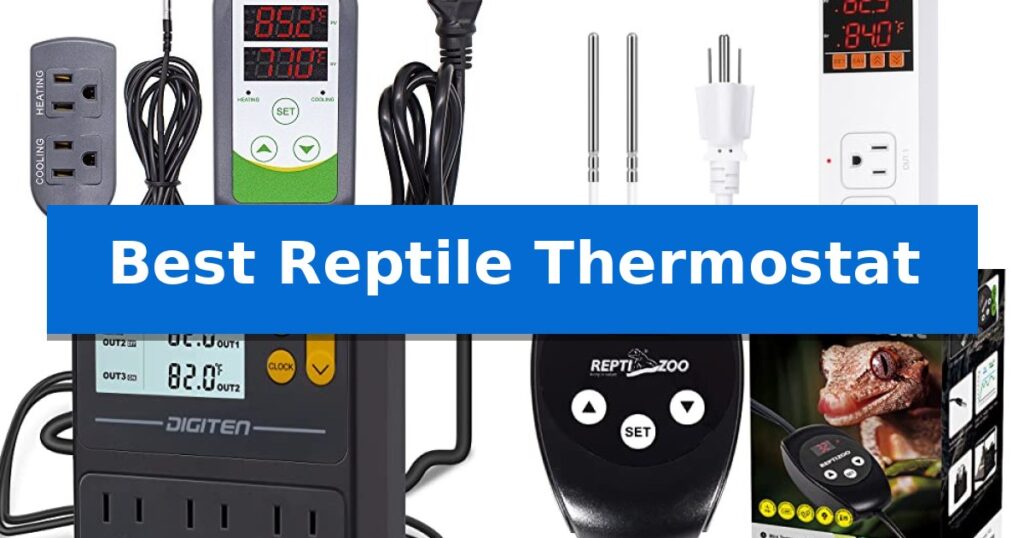
Best Reptile Thermostat in 2026: Precision Control for Every Setup
1 Inkbird ITC-308 Temperature Controller — Dual-stage heating and cooling control
Maintaining precise environmental conditions is essential for sensitive biological setups, and the Inkbird ITC-308 Temperature Controller provides a specialized solution by offering dual-stage heating and cooling control. This device is engineered to manage both heating and refrigeration equipment simultaneously, making it a versatile tool for environments like greenhouses, terrariums, or homebrew fermentation setups where temperature stability is critical.
The unit features a dual display window that allows for real-time monitoring of both the current measured temperature and the target set temperature. This design choice ensures that users can quickly verify the status of their environment at a glance. The Inkbird ITC-308 Temperature Controller is built for convenience, supporting both °C and °F display modes to accommodate various regional preferences and scientific standards.
Safety and equipment protection are integrated into the core functionality of this controller. It includes a buzzer alarm that triggers if the temperature exceeds a set threshold or if the sensor experiences a malfunction. Furthermore, the device allows for customizable compressor delay settings, which helps protect refrigeration equipment from frequent cycling, extending the operational life of connected hardware.
With a maximum output load of 1100W (110V), this controller is capable of handling standard heating and cooling appliances with ease. Its dual relay architecture ensures that the device can switch between heating and cooling modes automatically as environmental conditions change, maintaining the desired temperature range without requiring manual intervention.
PROS
- Dual-stage control allows for simultaneous management of heating and cooling equipment.
- Dual display window provides clear, real-time monitoring of set and current temperatures.
- Buzzer alarm system alerts users to temperature deviations or sensor malfunctions.
- Compressor delay protection helps preserve the longevity of connected refrigeration units.
CONS
- 1100W maximum load limits the capacity for high-wattage industrial equipment.
- Non-WiFi model lacks remote monitoring or smartphone app integration.
2 Pymeter Digital Temperature Controller — Dual-zone independent device management
Maintaining precise environmental conditions in a terrarium or greenhouse requires more than just a basic heat source; it demands granular control over multiple zones. The Pymeter Digital Temperature Controller addresses this by offering a dual-outlet system that allows users to independently manage heating or cooling devices based on specific temperature setpoints. By utilizing two waterproof sensors, this unit provides the flexibility to monitor and regulate two separate tanks or distinct zones within a single enclosure simultaneously.
Designed for versatility, the Pymeter Digital Temperature Controller functions as a sophisticated thermostat that can switch connected equipment—such as heat mats, lamps, or exhaust fans—on and off automatically. Each outlet is fully programmable, enabling the user to define unique activation and deactivation temperatures for different hardware. This independent management ensures that sensitive environments, like those required for reptiles or seedling propagation, remain within their optimal thermal ranges without constant manual adjustment.
Safety and equipment longevity are prioritized through integrated features like high and low temperature alarms, which alert users if conditions drift outside of the desired parameters. For applications involving compressors, such as converting a freezer into a refrigerator, the device includes a Power-On delay function to prevent frequent cycling that could damage the motor. This thoughtful design makes it a reliable choice for diverse setups, including fermentation chambers, aquarium chillers, and grow tents.
With a compact footprint measuring 8.26 inches in length and 1.57 inches in height, this controller is built to integrate seamlessly into existing setups without occupying excessive space. Its 10A 1200W capacity provides sufficient power for standard heating and cooling accessories, making it a robust solution for hobbyists and professionals alike who require consistent, automated climate regulation.
PROS
- Dual-zone independent control allows for simultaneous management of two separate heating or cooling devices.
- Includes two waterproof sensors for accurate monitoring in humid or aquatic environments.
- Features a Power-On delay to protect compressors from rapid, damaging cycling.
- Equipped with high and low temperature alarms to ensure environmental stability.
CONS
- The 10A 1200W limit may restrict the use of multiple high-wattage appliances on a single outlet.
3 SENSTREE Reptile Temperature Controller — Integrated day and night timing
Maintaining precise environmental conditions is essential for the health of reptiles, amphibians, and exotic plants. The SENSTREE Reptile Temperature Controller simplifies this task by offering an integrated day and night timing control system that manages both temperature and lighting cycles automatically. This specialized device allows keepers to simulate natural habitat conditions, ensuring that your pets receive the correct physiological support throughout a 24-hour cycle.
This multifunctional thermostat features three independent power outlets, providing significant flexibility for managing various terrarium equipment. Whether you are operating ceramic heat lamps, heat mats, UVA/UVB lighting, or ventilation fans, the controller allows for tailored settings. Its dual-probe design is particularly useful for complex setups, as it enables the independent monitoring and regulation of two distinct zones, making it an ideal solution for multi-tank configurations or partitioned enclosures.
Designed with the needs of hobbyists in mind, the unit includes a high and low temperature alarm to alert users to fluctuations, alongside a temperature calibration function for consistent accuracy. The interface supports both Celsius and Fahrenheit, allowing for seamless integration into your existing setup. The waterproof temperature sensors ensure reliable performance even in humid environments, such as those required for tropical species or incubation setups.
The SENSTREE Reptile Temperature Controller balances advanced functionality with a user-friendly, reptile-focused design. By consolidating temperature and timing management into one compact unit, it reduces cable clutter and simplifies the maintenance of complex terrarium systems. It is a practical choice for those looking to automate the care of bearded dragons, ball pythons, or sensitive plant species without the need for multiple separate timers and controllers.
PROS
- Three independent outlets for versatile equipment management.
- Dual waterproof probes allow for precise control of two separate zones.
- Integrated day and night timing to simulate natural environmental cycles.
- Includes high/low temperature alarms and calibration features for safety.
CONS
- Limited to three outlets, which may require additional power strips for very complex multi-tank setups.
4 REPTI ZOO Dimming Thermostat — Stable PID output for heat bulbs
Maintaining stable thermal conditions is essential for the health and vitality of reptiles, and the REPTI ZOO Dimming Thermostat addresses this by utilizing a smart PID heating mode. Unlike standard on-off controllers that can cause temperature fluctuations and stressful lighting changes, this unit provides a consistent, smooth output that is specifically engineered to improve the lifespan of heat bulbs.
Designed for versatility, this PID temperature controller supports a wide range of heating devices, including heat lamps, heating mats, and heat cables, with a maximum output load of 300W. It features a highly accurate sensor that detects real-time ambient temperature, allowing users to maintain a precise environment within a range of 5°C to 60°C (41°F to 140°F).
Usability is a core focus, as evidenced by the clear LED digital screen that displays both the ambient temperature and the current setting. Users can easily switch between Celsius and Fahrenheit, and the device includes a memory function to retain settings. Operation is straightforward, requiring only a double-press of the 'SET' button to toggle the power.
To ensure optimal performance, the manufacturer recommends placing the temperature probe at least 15cm away from the heat source rather than directly beneath it. While this thermostat is highly effective for light bulbs, it is important to note that it should not be used with sunlamps or heaters exceeding 1500W, ensuring safe and reliable operation for your pet's habitat.
PROS
- Smart PID heating mode provides stable, consistent temperatures.
- Extends the lifetime of reptile heat bulbs compared to standard controllers.
- Highly accurate sensor for precise real-time temperature monitoring.
- Versatile compatibility with heat lamps, mats, and cables.
CONS
- Not compatible with sunlamps or heating devices exceeding 1500W.
- Placement sensitivity requires the probe to be at least 15cm away from the heat source.
5 Zoo Med ReptiTemp Digital Thermostat — Reliable settings with memory backup
Maintaining precise environmental conditions is essential for the health of sensitive terrarium inhabitants, and the Zoo Med ReptiTemp Digital Thermostat simplifies this by offering a versatile temperature control range of 50F to 122F. This device is engineered to manage both heating and cooling equipment, providing a comprehensive solution for automated climate regulation.
The unit features a remote temperature sensor attached to a 6-foot cable, allowing for flexible placement within various enclosure setups to ensure accurate readings. It is capable of managing up to 600 watts of heating devices or 150 watts of cooling devices, such as fans, making it adaptable to different terrarium sizes and equipment requirements.
Designed for consistent operation, the Zoo Med ReptiTemp Digital Thermostat includes built-in memory that reliably stores user-defined settings during a power failure. This feature ensures that the system resumes its programmed parameters immediately once power is restored, minimizing the risk of temperature fluctuations.
Safety and monitoring are prioritized through an integrated alarm system. The device provides both flashing visual alerts and audible sounds when the temperature deviates to extreme high or low levels, keeping you informed of potential issues before they impact the environment. This combination of automated control and alert functionality makes it a practical tool for maintaining stable conditions.
PROS
- Dual-mode operation supports both heating and cooling devices.
- Built-in memory preserves settings during power outages.
- Integrated alarm system provides alerts for temperature extremes.
- High power capacity handles up to 600 watts for heaters.
CONS
- Fixed temperature range may not suit specialized species requiring extreme heat or cold.
Best Reptile Thermostat Buying Guide
Understanding Thermal Control Requirements
Different species have specific temperature gradients required for digestion and activity. A reliable thermostat allows you to set a precise target, ensuring that your heat sources do not overheat the enclosure or leave it too cold during the night.
When selecting a device, consider the total wattage of your heating equipment. Most controllers have a maximum load capacity, so verify that your heat lamps or mats do not exceed these limits to prevent electrical failure or fire hazards.
Dual-Stage vs. Single-Stage Controllers
Dual-stage controllers are highly versatile, as they can manage both heating and cooling equipment simultaneously. This is particularly useful for tropical setups where you might need to activate a fan if the temperature rises too high during the day.
Single-stage units are often simpler and more cost-effective if you only need to manage a basic heat mat. Always assess whether your setup requires independent control for multiple zones or if a single-zone unit is sufficient for your needs.
The Importance of Sensor Placement
The accuracy of your thermostat depends heavily on where you place the temperature probe. It should be positioned within the primary basking area or the zone you are most concerned about, but never directly touching the heat source itself.
Keep the sensor away from water dishes or misting systems to avoid false readings caused by evaporative cooling. Regularly checking the probe's position ensures that the controller is reacting to the actual ambient temperature of the habitat.
Dimming vs. On/Off Thermostats
On/Off thermostats work by cutting power completely when the target temperature is reached, which can cause visible flickering in incandescent heat bulbs. This constant cycling can also shorten the lifespan of your light-emitting heating elements.
Dimming thermostats, often using PID technology, provide a more stable output by gradually adjusting the power level. This results in a more consistent temperature gradient and is generally better for the longevity of your heating bulbs.
Safety Features and Alarms
Modern controllers often include built-in safety alarms that trigger if the temperature deviates significantly from your setpoint. These alerts are crucial for catching equipment malfunctions early before they affect your pet's health.
Look for models with memory backup functions, which ensure your settings are saved in the event of a power outage. This prevents the need for manual recalibration every time the power flickers, providing peace of mind for busy owners.
Frequently Asked Questions
Can I use one thermostat for two different tanks?
Yes, if you choose a dual-probe or dual-outlet controller, you can manage two separate zones or tanks independently, provided the total wattage remains within the device's rated capacity.
Why is my thermostat flickering on and off?
If you are using a standard on/off thermostat with a heat lamp, the flickering is normal as the device cycles power to maintain the set temperature. If this is a concern, consider a dimming thermostat for smoother output.
How often should I calibrate my thermostat?
It is good practice to check the accuracy of your thermostat against a reliable digital thermometer every few months. If you notice a consistent discrepancy, use the calibration feature found on many digital models to adjust the reading.
Are these thermostats safe for all types of heating pads?
Most digital thermostats are compatible with standard reptile heating pads and ceramic heat emitters. Always check the manufacturer's specifications regarding maximum wattage and compatibility with specific heating types.
What happens if the power goes out?
Many modern digital thermostats feature internal memory that stores your temperature settings. Once power is restored, the device will resume operation according to your previously saved parameters.
Conclusion: Our Top Pick
Choosing the right equipment is a vital step in responsible reptile care. After reviewing the available options, the Inkbird ITC-308 Temperature Controller stands out as a highly versatile choice for most keepers.
Its dual-relay design allows for simultaneous heating and cooling management, while the clear dual-display window and integrated buzzer alarm provide essential monitoring features. For those seeking a balance of reliability, safety, and ease of use, this controller offers a robust solution for maintaining an ideal habitat.