
Maintaining a healthy backyard pond requires consistent oversight of water chemistry to protect your fish and aquatic plants. Invisible imbalances in ammonia, nitrite, or pH levels can quickly lead to stressful environments for koi and goldfish, making regular monitoring an essential part of your maintenance routine.
Finding the Best Pond Test Kit depends on whether you prioritize the high-precision results of liquid reagents or the rapid convenience of dip-and-read strips. By understanding the trade-offs between these testing methods, you can select the right tools to ensure your water remains balanced and safe throughout the changing seasons.
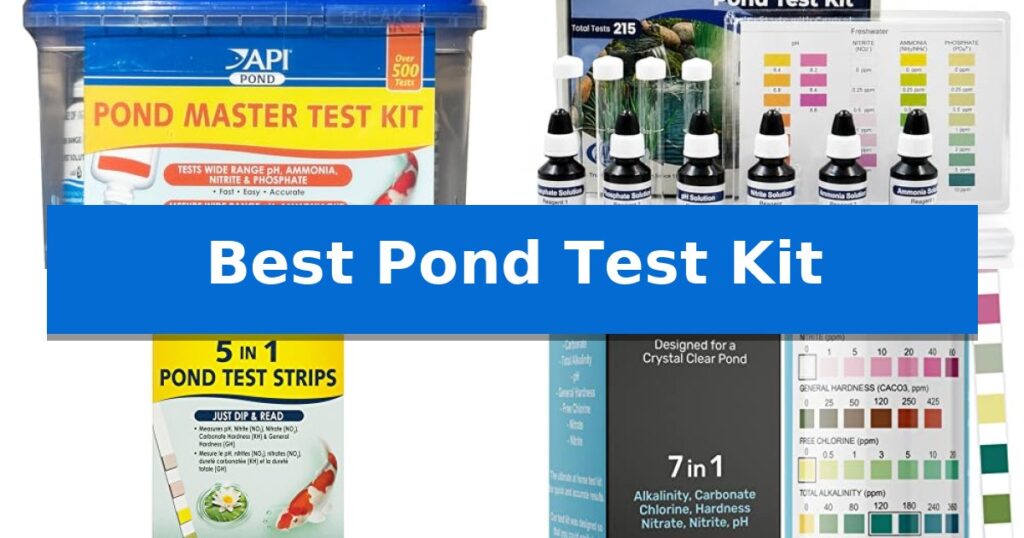
Best Pond Test Kit in 2026
1 API Pond Master Test Kit — Professional-Grade Liquid Accuracy
Maintaining a healthy aquatic environment requires consistent data, and the API POND MASTER TEST KIT provides a comprehensive solution for tracking critical water parameters. By utilizing a liquid-based testing method, this kit allows pond owners to monitor pH balance, Ammonia, Nitrite, and Phosphate levels with precision, ensuring that invisible water chemistry issues are identified before they impact fish health.
Designed for high-volume use, the API POND MASTER TEST KIT includes enough materials to perform over 500 tests. The package comes equipped with six bottles of testing solution, four glass test tubes with caps, and three color cards for accurate result comparison. This setup is intended for routine weekly monitoring as well as immediate troubleshooting when water quality concerns or fish health problems arise.
The inclusion of glass test tubes and clear, step-by-step instructions simplifies the testing process, making it accessible for both novice and experienced pond keepers. Because the kit covers four essential water parameters, it serves as an all-in-one diagnostic tool for maintaining a balanced pond ecosystem. The liquid reagents are formulated to provide reliable readings, which are vital for preventing the accumulation of harmful toxins.
While the kit offers extensive testing capabilities, it is important to note that the process requires manual handling of liquid reagents and color matching. This approach provides a significant advantage over simple test strips by offering greater sensitivity and consistency in results. For those managing ornamental ponds, this kit is a practical investment in long-term water management and fish safety.
PROS
- Provides over 500 tests for long-term value.
- Includes four essential parameters for complete water quality monitoring.
- Uses liquid testing reagents for improved accuracy compared to strips.
- Features durable glass test tubes for repeated use.
CONS
- Requires manual color matching which may be subjective.
- Involves handling liquid chemicals during the testing process.
2 Half Off Ponds 4-in-1 Test Kit — High-Volume Routine Monitoring
Maintaining stable water chemistry in a koi or goldfish pond requires precision, and the Half Off Ponds 4-in-1 Test Kit provides a comprehensive solution by offering 215 total tests in a single, organized package. This kit is specifically engineered for freshwater environments, allowing owners to monitor the four critical parameters—pH, ammonia, nitrite, and phosphate—that directly influence the health of aquatic life and the clarity of the water.
Designed for routine maintenance, the Half Off Ponds 4-in-1 Test Kit simplifies the testing process with a straightforward color-match method. Users fill the included glass test tubes to the 5 mL line, add the necessary reagents, and compare the resulting color against the provided chart. This repeatable process is essential for catching chemical spikes early, particularly after heavy feeding, filter cleanouts, or seasonal changes.
Beyond basic health monitoring, the kit includes a dedicated phosphate test to help manage algae pressure. By tracking phosphate trends over time, you can make data-driven adjustments to your filtration and feeding schedules, effectively reducing the nutrients that contribute to cloudy or green water. The inclusion of a transfer pipette and comprehensive reagents ensures you have everything needed for accurate, ongoing water management.
The system is built for versatility, featuring a color chart that covers both standard pond requirements and saltwater ranges. While the kit is a robust tool for freshwater aquariums and ponds, it is important to note that it requires manual handling of reagents and glass tubes, which may be less convenient than digital testers or pre-measured test strips for those seeking an instantaneous, hands-off experience.
PROS
- High-volume capacity with 215 total tests included.
- Comprehensive monitoring of four essential water parameters.
- Includes glass test tubes and a transfer pipette for professional-style handling.
- Helps proactively manage algae pressure via phosphate tracking.
CONS
- Requires manual reagent handling and color matching, which is more time-consuming than test strips.
3 API Pond 5-in-1 Test Strips — Fast Weekly Water Checks
Maintaining a healthy aquatic environment requires consistent vigilance, and the API POND 5 IN 1 POND TEST STRIPS Pond Water Test Strips 25-Count simplifies this process by providing a comprehensive snapshot of water chemistry. These strips are designed to help monitor water quality and prevent invisible water problems that can be harmful to fish, making them an essential tool for any pond owner.
The API POND 5 IN 1 POND TEST STRIPS offer a fast, easy, and accurate way to assess five critical parameters: pH, Nitrite, Nitrate, Carbonate Hardness, and General Hardness. By measuring these factors, the strips provide five different ways to protect fish from dangerous water conditions that might otherwise go unnoticed until it is too late.
Designed for convenience, the testing process is straightforward—simply dip the strip into the water and read the results. To ensure the longevity and reliability of the strips, the kit includes a stay dry tube that offers superior moisture protection, keeping the remaining strips in optimal condition for future use.
These strips are ideal for weekly monitoring and are particularly useful when water or fish problems appear. By integrating this simple testing routine, pond owners can proactively manage their ecosystem, ensuring a stable and safe environment for their aquatic life without the need for complex laboratory equipment.
PROS
- Comprehensive 5-in-1 testing covers pH, Nitrite, Nitrate, Carbonate Hardness, and General Hardness.
- Includes a stay dry tube for superior moisture protection.
- Fast and easy dip-and-read application for routine monitoring.
- Helps prevent invisible water problems that could harm fish.
CONS
- Limited to 25-count per package, which may require frequent replenishment for larger ponds.
4 JNW Direct 7-in-1 Pond Test Strips — Simple Dip-and-Read Analysis
Maintaining a balanced aquatic environment requires precise monitoring of multiple water chemistry variables, and the JNW Direct 7-in-1 Pond Test Strips offer a streamlined solution for this task. By providing a comprehensive assessment of seven critical parameters in a single dip, this kit eliminates the need for complex, multi-step liquid testing procedures.
The JNW Direct 7-in-1 Pond Test Strips are engineered for versatility, functioning effectively in both freshwater and saltwater environments. This makes them a practical choice for owners managing diverse setups, including ponds, fish tanks, fish bowls, and aquariums. The kit includes 50 test strips, ensuring a sufficient supply for regular, ongoing water quality maintenance.
Efficiency is a core design feature of this testing system. Users can obtain fast, accurate results within seconds of dipping the strip into the water. The bottle is equipped with a comprehensive color chart, which serves as a reliable reference point for interpreting the levels of pH, free chlorine, total chlorine, nitrite, nitrate, hardness, and alkalinity.
To assist in the interpretation of these readings, the kit includes a downloadable ebook. This resource is designed to educate users on the significance of each parameter and provides guidance on how to achieve and maintain a crystal clear pond. This combination of immediate data and educational support helps take the guesswork out of routine water conditioning.
PROS
- 7-in-1 testing capability covers all essential water parameters in one step.
- Provides fast, accurate results within seconds.
- Includes a downloadable ebook for educational support and guidance.
- Suitable for a wide range of uses including ponds, aquariums, and fish bowls.
CONS
- Single-use strips require consistent replenishment compared to digital testing equipment.
- Relies on visual color matching, which may be subject to individual interpretation.
5 Aquaverity 7-in-1 Pond Test Strips — Quick Results for Garden Ponds
Maintaining a stable aquatic environment requires precise monitoring of water chemistry, a task simplified by the AQUAVERITY 7-in-1 Pond Test Strips. These strips provide a comprehensive analysis of seven critical parameters—pH, nitrate, nitrite, carbonate, hardness, total chlorine, and free chlorine—in a single, efficient step, making them an essential tool for pond and aquarium management.
Designed for rapid assessment, the AQUAVERITY 7-in-1 Pond Test Strips deliver accurate results within 60 seconds. Each strip is treated with premium-quality reagents that detect subtle fluctuations in water chemistry. This sensitivity allows keepers to identify potential issues before they impact the health of fish or plants, ensuring the ecosystem remains balanced and safe.
Usability is a core focus of this kit, which eliminates the need for complex, messy liquid testing solutions. The process is straightforward: dip the strip into the water, remove excess moisture, and compare the color change against the provided chart on the resealable container. This design is particularly well-suited for both hobbyists and experienced pond keepers who require consistent, routine monitoring.
The versatility of the AQUAVERITY 7-in-1 Pond Test Strips makes them suitable for a wide range of environments, including koi ponds, backyard water features, and freshwater aquariums. With 50 strips included in each package, the kit offers a practical, long-term solution for safeguarding water quality against harmful spikes in nitrites or chlorine, providing reliable peace of mind for aquatic enthusiasts.
PROS
- Comprehensive 7-in-1 analysis covering all critical water parameters.
- Provides accurate results within 60 seconds for timely intervention.
- Hassle-free, easy-to-use dipping method replaces messy liquid kits.
- Includes 50 high-quality strips for long-term, routine monitoring.
CONS
- Manual color comparison requires careful observation under good lighting to ensure accuracy.
Best Pond Test Kit Buying Guide
Liquid Reagent Kits vs. Test Strips
Liquid reagent kits are widely considered the gold standard for accuracy in pond maintenance. These kits typically involve adding specific drops of solution to a water sample in a test tube, which then changes color based on the concentration of a chemical parameter. Because they use precise chemical reactions, they often provide more granular and reliable readings than other methods.
Test strips, by contrast, offer unmatched speed and simplicity. You simply dip the strip into the pond water and compare the color pads to a chart after a few seconds. While they may be slightly less precise than liquid drops, they are excellent for frequent, routine checks where you need to spot major spikes in parameters like nitrate or pH quickly.
Essential Water Parameters to Monitor
A comprehensive test kit should at minimum measure pH balance, ammonia, and nitrite levels. Ammonia and nitrite are highly toxic to fish, even in small amounts, and are often the first indicators of a failing biological filter or an overstocked pond. Monitoring these regularly helps you catch potential problems before they impact fish health.
Advanced kits may also include tests for nitrate, phosphate, and carbonate hardness. Nitrate is the end product of the nitrogen cycle and, while less toxic than ammonia, high levels can contribute to algae blooms. Carbonate hardness, or KH, is vital for buffering your pond's pH, preventing dangerous swings that can occur after heavy rain or during rapid plant growth.
Frequency of Testing
For a stable, established pond, testing weekly is generally recommended to keep a pulse on your water quality. During the initial startup phase of a new pond, or when introducing new fish, you should increase the frequency to every few days to ensure the biological filter is processing waste efficiently.
You should also perform additional tests whenever you notice changes in fish behavior, such as lethargy or gasping at the surface, or after significant weather events like heavy storms. Keeping a log of your results over time allows you to identify trends, helping you adjust your feeding habits or filtration maintenance before an emergency arises.
Interpreting Results and Taking Action
Once you have your test results, it is important to know how to interpret them against the recommended ranges for your specific fish species. Most kits include a color chart, but some also provide educational materials or digital resources that explain what specific readings mean for your pond's overall health.
If your test reveals high ammonia or nitrite, immediate action is usually required, such as a partial water change or the addition of a water conditioner. Understanding the relationship between your test results and the necessary corrective measures is the primary benefit of using a reliable, consistent testing method.
Storage and Longevity
The accuracy of your test results depends heavily on how you store your kit. Test strips are particularly sensitive to moisture; always ensure the container is tightly sealed and kept in a cool, dry place to prevent the reagents on the pads from degrading prematurely.
Liquid reagents also have a shelf life and should be kept away from direct sunlight and extreme temperatures. Check the expiration dates on your bottles periodically, as expired reagents can lead to false readings, potentially causing you to take unnecessary or incorrect actions in your pond.
Frequently Asked Questions
Are liquid tests more accurate than strips?
Generally, yes. Liquid reagent tests are often preferred by enthusiasts for their ability to provide more precise, repeatable results, whereas strips are designed for quick, convenient monitoring.
How often should I test my pond water?
A weekly testing schedule is ideal for maintaining a stable environment. However, you should test more frequently if you are adding new fish or notice any signs of stress in your current pond inhabitants.
What should I do if my ammonia levels are high?
High ammonia is dangerous for fish. You should perform a partial water change, check your filtration system for blockages, and consider using a water conditioner to neutralize the toxins while you address the root cause.
Do test kits work for both freshwater and saltwater ponds?
Many kits are designed for freshwater, but some include color charts that cover both ranges. Always check the product specifications to ensure the kit is compatible with your specific pond environment.
Can I reuse the test tubes in my kit?
Yes, the glass or plastic test tubes included in liquid kits are designed to be cleaned and reused. Ensure you rinse them thoroughly with clean water after each test to avoid cross-contamination.
Conclusion: Our Top Pick
For most pond owners, the API Pond Master Test Kit stands out as the most reliable choice for long-term maintenance. Its liquid-based system provides the professional-grade accuracy needed to monitor critical parameters like ammonia, nitrite, and phosphate, ensuring you have the data required to keep your fish safe.
While strips offer a faster alternative for quick checks, the depth of information provided by this kit makes it an essential tool for any serious pond keeper. By investing in a high-quality, consistent testing method, you gain the peace of mind that comes from knowing exactly what is happening beneath the surface of your water feature.