

How Rare is Chimerism in Cats? Understanding Feline Genetic Mosaics
Chimerism in cats, while captivating, is considered relatively rare. Though exact prevalence is difficult to determine, observable chimerism, particularly bilateral (half one color, half another), is a fascinating but infrequent genetic phenomenon.

Introduction to Feline Chimerism
The internet loves a good cat picture, and few felines generate as much buzz as those with striking, two-faced appearances. These cats are often touted as “chimeras,” drawing parallels to the mythical creature with parts from different animals. While the term is widely used, understanding what feline chimerism actually is requires delving into genetics. This article aims to clarify the rarity of chimerism in cats, exploring its genetic underpinnings and distinguishing it from other coat color patterns.
What is Chimerism?

In biology, a chimera is a single organism composed of cells from two or more genetically distinct individuals. This means that a chimeric cat is not simply a cat with a unique coat color pattern; it’s a fusion of two different embryos early in development.
The Genetics Behind Chimerism in Cats
Understanding the genetics requires a brief discussion of cat coat color determination. Key points to consider include:
- X-inactivation: In female mammals (including cats), one of the two X chromosomes in each cell is randomly inactivated. This process, called lyonization, ensures that females don’t have double the dose of X-linked genes compared to males (who have only one X chromosome). The gene for orange/black coat color is located on the X chromosome.
- Calico and Tortoiseshell Cats: Because of X-inactivation, female cats with one orange allele and one black allele on their X chromosomes will be tortoiseshell (a mix of orange and black) or calico (tortoiseshell with white spotting). Some cells will inactivate the X chromosome with the orange allele, resulting in black fur in that area. Others will inactivate the X chromosome with the black allele, leading to orange fur.
Chimerism amplifies this phenomenon. Instead of random X-inactivation within a single embryo, you have two separate embryos, each with a distinct genetic makeup, fusing. If one embryo carried the gene for orange and the other for black, and the fusion occurred early enough in development, the resulting cat could display a striking division of color, far more distinct and defined than a typical tortoiseshell.
Factors Affecting Observed Chimerism
While genetic chimerism may not be exceedingly rare, visually apparent chimerism is. Several factors influence whether chimerism will be detectable:
- Timing of Fusion: The earlier the fusion, the more complete the mixing of cells, potentially resulting in a more dramatic and visually distinct pattern.
- Genetic Differences: The more different the genetic makeup of the two embryos, the more visible the resulting chimeric phenotype is likely to be. If the embryos were genetically very similar, the cat might be a chimera, but the differences would be subtle and not readily apparent.
- Distribution of Cell Lines: The distribution of cells from each original embryo within the developing cat is random. One cell line might dominate in certain tissues or regions, while the other predominates elsewhere.
Distinguishing Chimeras from Other Coat Patterns
Many cats with unusual coat patterns are mistakenly labeled as chimeras. It’s important to distinguish true chimerism from other phenomena, such as:
- Tortoiseshell and Calico Patterns: As mentioned earlier, these patterns result from X-inactivation in female cats and are not necessarily indicative of chimerism. The color mixing is usually more mottled than the distinct split seen in some purported chimeras.
- Genetic Mosaicism: Similar to chimerism, mosaicism results in cells with different genetic makeups within a single organism. However, mosaicism arises from a mutation that occurs after fertilization, rather than the fusion of two embryos.
- “Extreme” Torties/Calicos: Occasionally, due to developmental factors or variations in X-inactivation, tortoiseshell or calico cats can exhibit patterns that appear more sharply divided than typical. These are not chimeras, but simply variations within normal coat color expression.
Verifying Chimerism: Genetic Testing
The only definitive way to confirm chimerism is through genetic testing. This involves analyzing DNA from different tissues (e.g., blood and skin) to determine if the cat has two distinct genetic profiles. This is typically performed via microsatellite marker analysis. This is far more accurate than simply assuming a cat is a chimera based on its coat pattern.
| Feature | Tortoiseshell/Calico | Chimera |
|---|---|---|
| Genetic Origin | Single Embryo | Fusion of Two Embryos |
| Color Pattern | Mottled | Distinct Color Division |
| Gender | Female (typically) | Can be male or female |
| Genetic Testing Needed | No | Yes |
The Rarity of Chimerism
How rare is chimerism in cats? Determining the true prevalence is extremely difficult. Many chimeric cats may go unnoticed because their chimeric nature doesn’t manifest in a visually striking way. Furthermore, genetic testing is not routinely performed on cats, so many cases likely remain undiagnosed. Visually stunning, bilaterally symmetrical chimeras are certainly rare, but the overall occurrence of chimerism might be more common than we realize.
FAQs About Feline Chimerism
What are the potential health implications of chimerism in cats?
Generally, chimerism doesn’t necessarily lead to specific health problems. However, because chimeric cats are a combination of two distinct sets of DNA, there’s a theoretical possibility that one cell line could be more prone to certain diseases than the other. It is not known to be common but should be considered if specific breeds are involved in the suspected chimera.
Can male cats be chimeras?
Yes, male cats can be chimeras. While tortoiseshell and calico patterns are usually limited to female cats due to X-inactivation, a male cat can be chimeric and possess the genetic information to express both orange and black fur if the two fused embryos had different sex chromosome combinations.
Is it possible for a cat to be a chimera of more than two embryos?
While theoretically possible, it would be exceedingly rare and difficult to confirm. The fusion of two embryos is already a relatively unusual event; the simultaneous fusion of three or more would be even less likely.
Are chimeric cats sterile?
Chimerism doesn’t automatically lead to sterility. A chimera’s fertility depends on whether the germ cells (sperm or eggs) are affected. If the germ cells are derived from only one of the original embryos and that embryo had normal reproductive capabilities, the cat can be fertile.
How can I tell if my cat is a true chimera?
Visual observation cannot definitively confirm chimerism. The only reliable method is genetic testing. Your veterinarian can advise on how to proceed with testing if you suspect your cat might be a chimera.
Does chimerism only affect coat color?
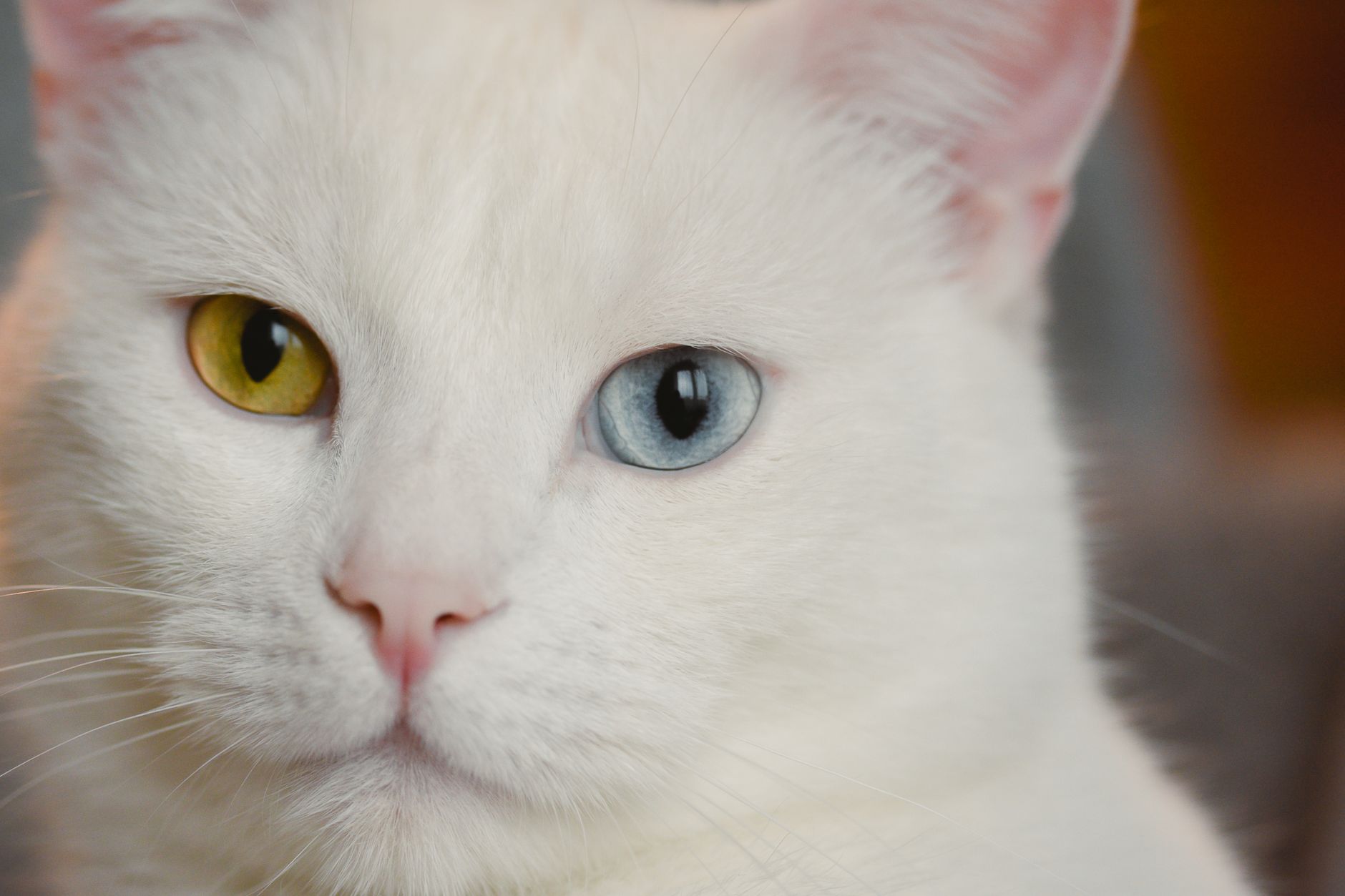
No, chimerism can potentially affect other traits besides coat color. Since a chimera is made up of cells from two genetically distinct individuals, any trait influenced by genes could be affected. This includes things like eye color, blood type, or even organ function. However, visible coat colour is one of the most easily identifiable traits.
Is chimerism inherited?
Chimerism itself is not inherited. It’s an event that occurs during early embryonic development. The genes carried by a chimeric cat can be passed on to its offspring, but the chimeric condition itself is not heritable.
Are there any famous examples of documented chimeric cats?
While many cats are labeled as “chimeras” online, few have been confirmed through genetic testing. One famous example is Venus the Two-Faced Cat, who gained internet fame for her striking bilateral chimerism. While Venus’s chimerism hasn’t been scientifically proven with genetic testing, her appearance is strongly suggestive of the condition.
Does chimerism occur in other animals besides cats?
Yes, chimerism can occur in any animal, including humans. It has been documented in mice, cattle, and other species. The same basic principles of embryonic fusion apply across species.
Is it more common for certain cat breeds to be chimeras?
There is no evidence to suggest that chimerism is more common in certain cat breeds. It is a random event that can occur in any breed or mixed-breed cat.
Can a blood test confirm chimerism in a cat?
A blood test can provide evidence of chimerism. If the blood contains two distinct genetic profiles, this strongly suggests the cat is a chimera. However, it’s important to note that blood only represents one tissue type. Analyzing DNA from multiple tissue types provides a more comprehensive assessment.
Does diet affect the appearance of a chimera cat’s coat?
While diet impacts general coat health and color vibrancy, it won’t fundamentally change a chimera’s underlying genetic coat pattern. A balanced diet will help enhance the coat’s appearance, but the two distinct color regions are determined by the cat’s genetics.