
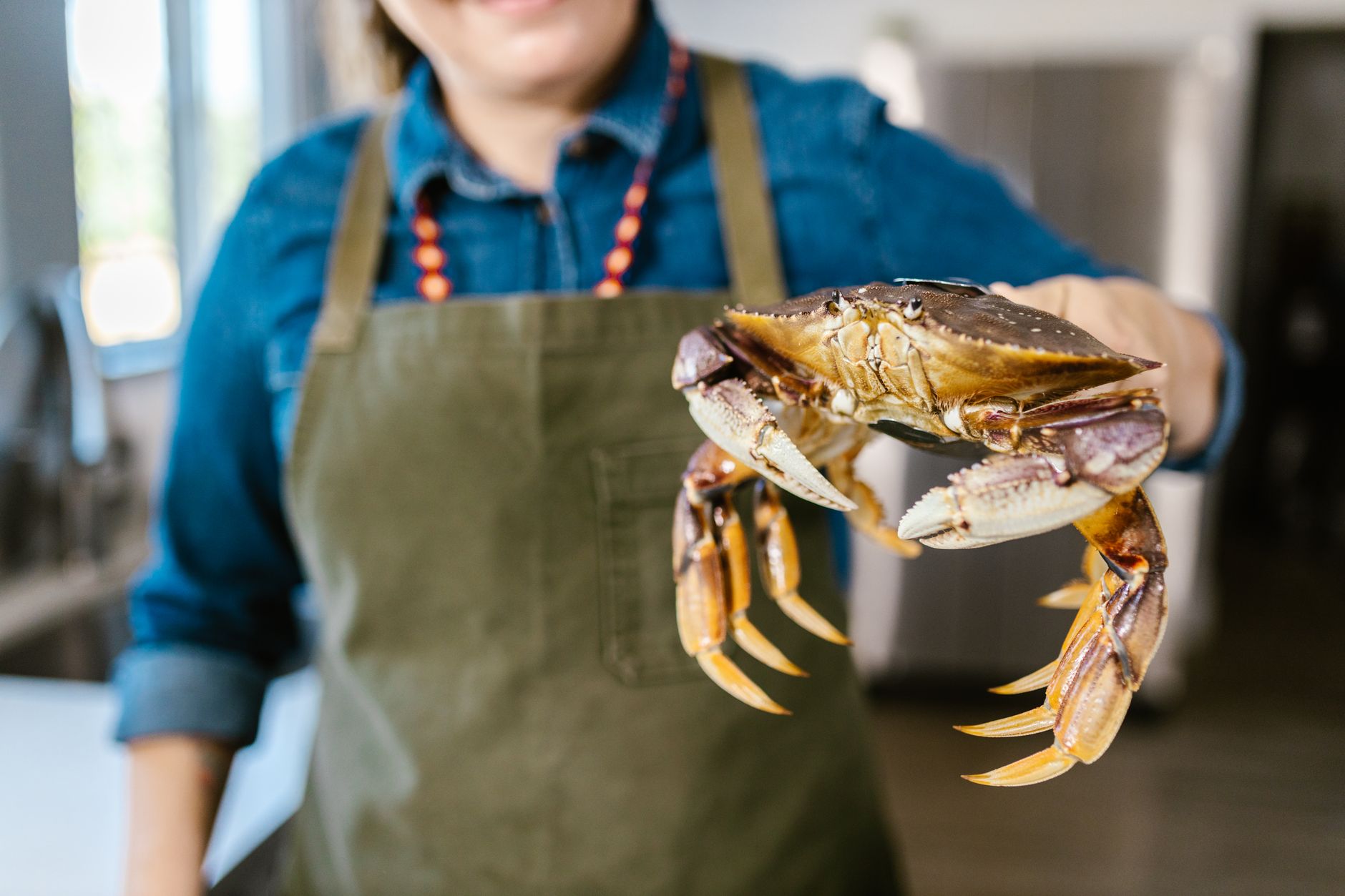
Can a Crab Hold a Knife? A Crustacean Culinary Conundrum
The question “Can a crab hold a knife?” is more nuanced than a simple yes or no. While crabs lack the dexterity to wield a knife effectively for complex tasks, they might be able to grip one briefly under specific, highly contrived circumstances.

Introduction: The Pincers and the Possibilities
The image of a crab wielding a knife, perhaps preparing a miniature seafood stew, is undeniably comical. But beneath the surface of this absurd scenario lies a fascinating exploration of crab anatomy, behavior, and the limits of what’s possible with a creature so different from ourselves. Can a crab hold a knife? It’s a question that delves into the biomechanics of crab appendages and the very definition of “holding” and “using” a tool. This article explores the possibilities, separating fact from fiction.
Crab Anatomy and Prehensile Abilities

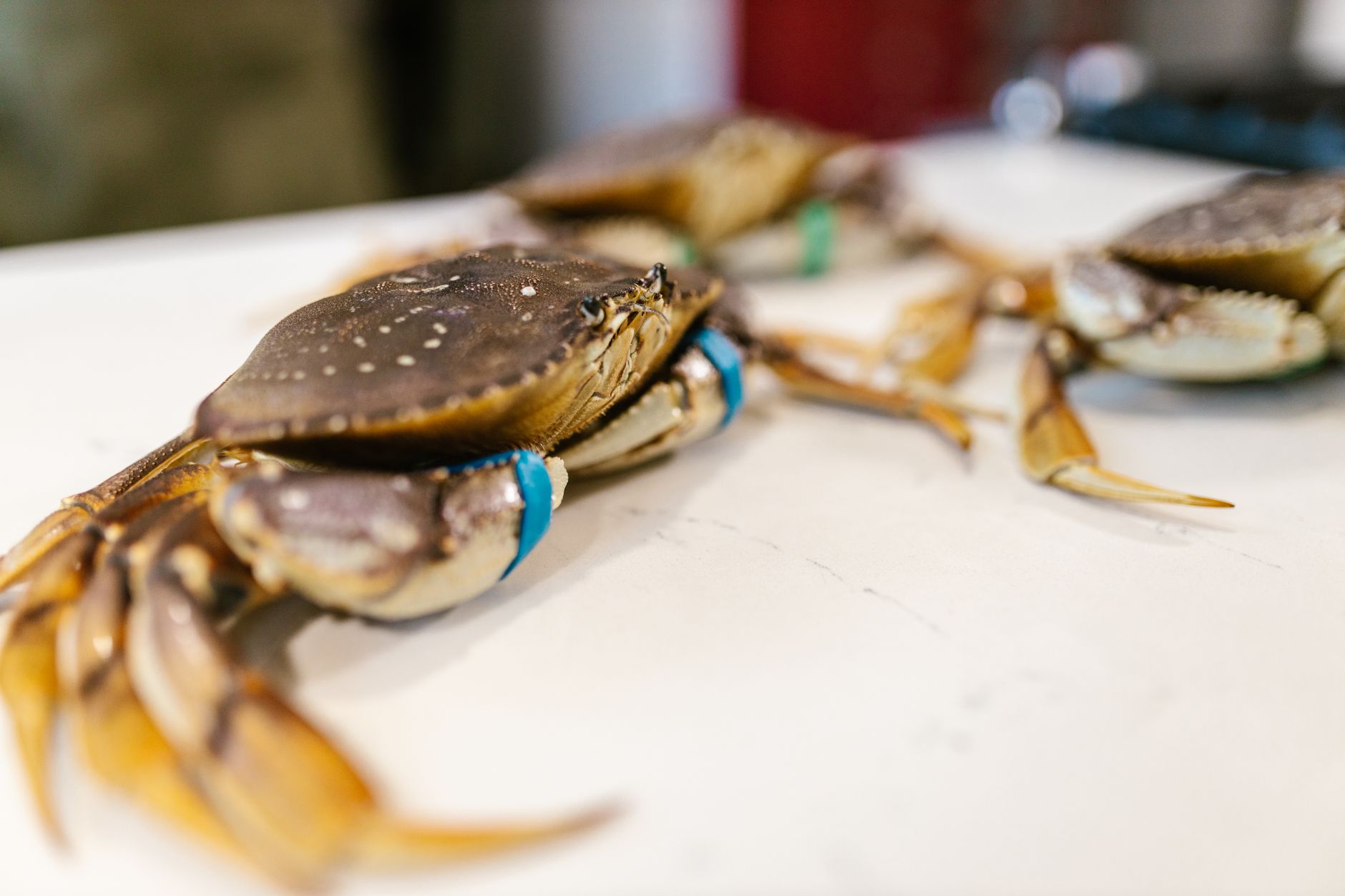
Crabs possess a pair of specialized appendages called chelipeds, more commonly known as claws or pincers. These claws are primarily used for:
- Grasping food
- Defense against predators
- Fighting for territory and mates
- Manipulation of objects in their environment
However, crab claws aren’t designed for the fine motor skills required to effectively wield a knife. Unlike human hands with opposable thumbs and complex muscle coordination, crab claws rely on a simpler “pinch” mechanism. The strength of this pinch is impressive – some crab species can crush bones – but the precision is limited.
The Challenges of Knife Wielding
Several factors limit a crab’s ability to successfully hold and use a knife:
- Lack of Opposable Digits: The absence of an opposable thumb prevents crabs from securely gripping a knife handle in a way that would allow for controlled movement.
- Limited Wrist Movement: Crabs lack the wrist articulation necessary to maneuver a knife with any degree of precision or leverage.
- Nervous System Complexity: The crab’s nervous system, while capable of complex behaviors like navigation and communication, likely lacks the sophistication required to coordinate the intricate movements needed for knife wielding.
- Motivation: Crabs, in their natural environment, have no inherent need to use a knife. Their feeding strategies revolve around crushing, tearing, and scavenging, not slicing and dicing.
Contrived Scenarios: Where a Crab Might “Hold” a Knife
While practical knife wielding is out of the question, there are contrived scenarios where a crab might briefly “hold” a knife:
- Gravity and Balance: If a knife were carefully balanced on a crab’s open claws, gravity might keep it in place for a short time.
- Forceful Closure: A crab might accidentally trap a knife between its claws when attempting to grasp something else.
- Artificial Assistance: By physically attaching a knife to a crab’s claws with adhesives or other means, it might appear that the crab is holding the knife. However, this wouldn’t constitute true wielding.
The Verdict: A Matter of Definition
Ultimately, the question Can a crab hold a knife? hinges on the definition of “hold.” If “hold” simply means maintaining physical contact, then a crab might, under specific circumstances, manage to keep a knife balanced or trapped in its claws for a brief period. However, if “hold” implies the ability to manipulate and use the knife effectively, then the answer is a resounding no. The crab’s anatomy and behavior simply aren’t suited for such a task.
Frequently Asked Questions About Crabs and Knives
What is the evolutionary reason crabs haven’t developed knife-wielding capabilities?
Crabs have evolved to thrive in their environments using their existing tools – their claws. Their natural feeding strategies and defense mechanisms do not require the use of sharp tools like knives. Evolution favors traits that enhance survival and reproduction, and knife-wielding simply wouldn’t offer a significant advantage for most crab species.
Could a crab be genetically engineered to hold and use a knife?
While theoretically possible, genetically engineering a crab to effectively wield a knife would be an incredibly complex and challenging undertaking. It would require significant modifications to the crab’s anatomy, nervous system, and muscular structure. The ethical implications of such an experiment would also need careful consideration.
What’s the strongest claw grip of any crab species?
The mantis shrimp, while not a true crab, boasts the most powerful claw strike in the animal kingdom. Although not technically claws, they are raptorial appendages. These appendages can deliver a devastating blow with enough force to shatter glass. The coconut crab, a true crab, also has an extremely strong grip.
Are there any crabs that use tools in the wild?
While no crab uses a knife, some species have been observed using other tools. Hermit crabs, for example, utilize shells for protection, and some crabs use sponges or seaweed to camouflage themselves. These behaviors demonstrate a basic level of tool use, but nothing approaching the complexity of knife wielding.
What if a crab was trained to hold a knife?
Even with extensive training, a crab’s inherent limitations would prevent it from mastering knife wielding. Training might improve the crab’s ability to balance or grip a knife briefly, but it wouldn’t fundamentally alter its anatomy or nervous system. The crab simply lacks the physical and cognitive capacity to learn such a complex skill.
How does the size of a crab affect its ability to “hold” a knife?
Larger crabs, with their larger claws and stronger grip, might be able to hold a knife more easily than smaller crabs. However, size alone isn’t sufficient to overcome the fundamental limitations of crab anatomy. A large crab might be able to maintain contact with a knife for longer, but it still wouldn’t be able to use it effectively.
Would a crab be more likely to hold a knife if it was hungry?
Hunger might motivate a crab to attempt to grasp a knife, but it wouldn’t improve its ability to do so. The crab’s primary instinct would be to use its claws to grab food, regardless of whether a knife is involved. The presence of a knife wouldn’t alter the crab’s basic feeding behavior.
What kind of knife would be easiest for a crab to “hold”?
A small, lightweight knife with a textured handle might be slightly easier for a crab to grip, but only marginally. The lack of opposable digits and wrist movement would still pose significant challenges. The best knife would also depend on the specific size and shape of the crab’s claws.
Could a crab evolve to use tools like knives in the future?
While evolution is unpredictable, it’s highly unlikely that crabs would evolve to use knives in the future. Their current evolutionary trajectory is well-suited to their environments, and there’s no selective pressure driving them towards knife wielding. Evolution favors traits that enhance survival and reproduction in the present, not in some hypothetical future.
Are there any cultural myths or legends about crabs using tools?
While there might be folklore about crabs possessing unusual abilities, there are no widespread myths or legends about crabs using tools like knives. The image of a crab wielding a knife is primarily a product of modern humor and speculation.
Is there any scientific research on crab dexterity and tool use?
While research on crab dexterity exists, it primarily focuses on their natural behaviors, such as grasping food and manipulating objects in their environment. There’s no scientific research specifically investigating the possibility of crabs using knives or other complex tools.
What other surprising things are crabs capable of?
Despite not being able to wield knives, crabs are capable of many surprising things. Some species can regenerate lost limbs, navigate using the Earth’s magnetic field, and even communicate through complex chemical signals. Their adaptability and resilience are truly remarkable.