
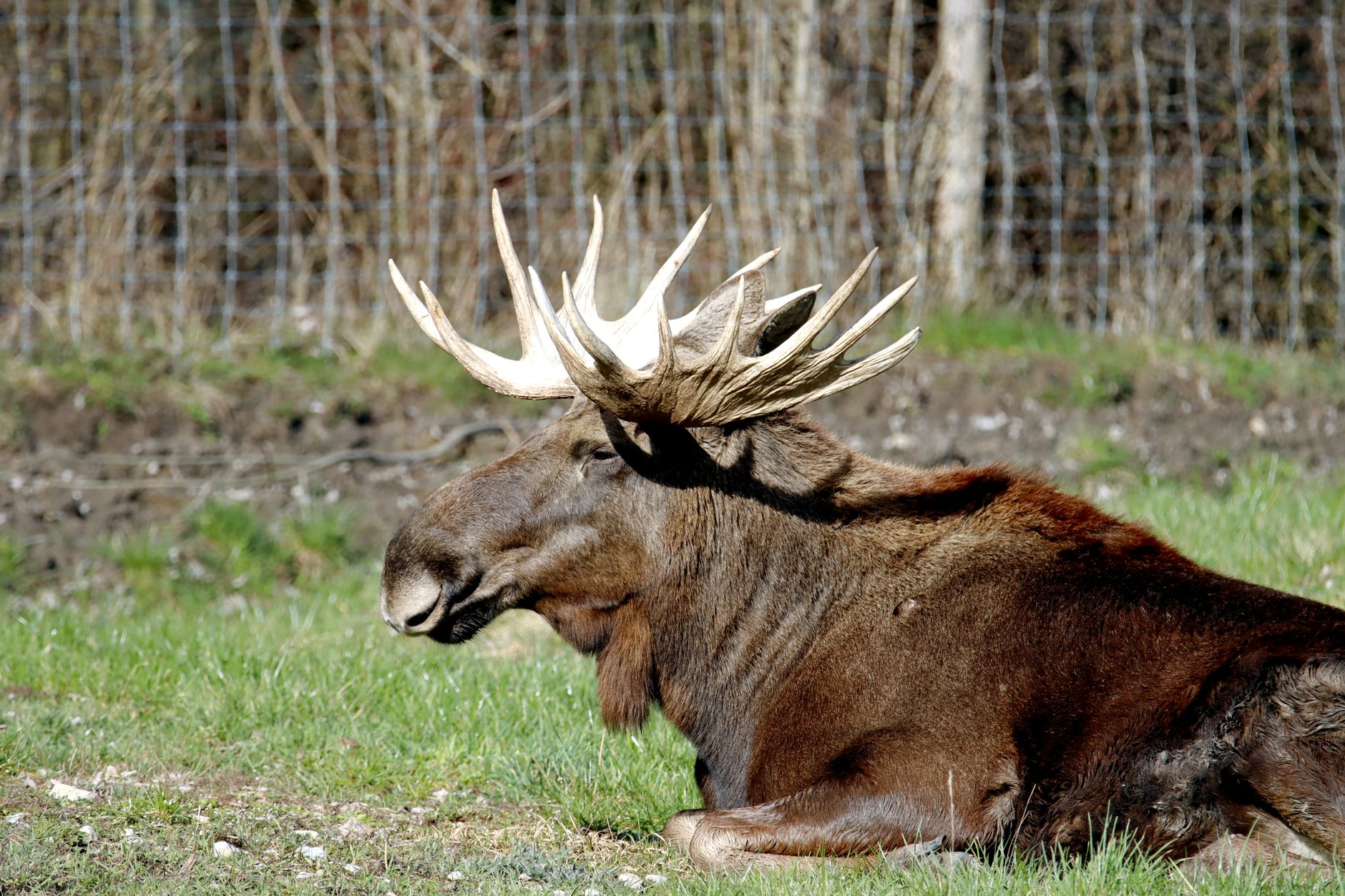
Are Moose Intelligent? Exploring the Cognitive Capacity of Alces Alces
Are moose intelligent? The answer is a nuanced one, suggesting that while moose may not exhibit complex problem-solving skills akin to primates, they possess a remarkable adaptive intelligence allowing them to thrive in challenging environments.

Understanding Intelligence in the Animal Kingdom
Defining intelligence across species is notoriously difficult. We often measure animal intelligence against human benchmarks, but this is inherently biased. A more accurate approach considers an animal’s ability to adapt to its environment, learn from experience, and solve problems relevant to its survival. Considering this broader definition, understanding are moose intelligent? becomes a question of examining their specific adaptive capabilities.
Moose Ecology and Behavior

Moose (Alces alces) are the largest members of the deer family, inhabiting vast stretches of boreal and temperate forests across North America and Eurasia. Their survival depends on a complex set of behaviors:
- Navigation: Moose must navigate vast territories to find food, water, and suitable mating partners.
- Dietary Adaptations: Their diet varies seasonally, requiring them to locate and consume a wide range of plants.
- Predator Avoidance: They face threats from wolves, bears, and humans, demanding effective predator avoidance strategies.
- Social Interactions: While generally solitary, moose engage in complex social behaviors during the mating season (rut).
Evidence of Moose Intelligence
While formal studies are limited, anecdotal evidence and observations suggest that moose possess a degree of intelligence exceeding simple instinct:
- Learning and Memory: Moose demonstrate the ability to learn from experience, remembering the locations of good food sources and avoiding areas where they have encountered danger.
- Problem-Solving: Reports exist of moose navigating complex obstacles, such as fences and rivers, to reach desired locations.
- Tool Use: While not using tools in the traditional sense, moose sometimes manipulate their environment to access food, such as breaking ice to reach submerged vegetation.
- Social Learning: Calves learn essential survival skills from their mothers, including foraging techniques and predator avoidance strategies.
Comparative Intelligence
Comparing moose intelligence to other animals is instructive:
| Animal | Intelligence Level |
|---|---|
| Moose | Demonstrates adaptive intelligence, including learning, memory, and problem-solving related to survival. Lacks the complex social cognition of primates. |
| Deer | Exhibits similar adaptive abilities to moose, but generally less developed. Rely more on instinctual behavior. |
| Wolves | Highly intelligent social animals capable of complex communication and cooperative hunting strategies. |
| Crows | Exceptionally intelligent birds known for their problem-solving abilities, tool use, and social learning. |
| Primates (e.g., Chimpanzees) | Highly intelligent animals with complex social structures, problem-solving skills, and the ability to learn and use tools. |
Limitations of Current Research
Research on moose intelligence is limited by several factors:
- Funding: Wildlife research often struggles for funding compared to studies on more charismatic or economically important species.
- Logistics: Studying moose in their natural habitat is challenging due to their remote locations and elusive behavior.
- Experimental Design: Designing experiments that accurately measure moose intelligence without interfering with their natural behavior is difficult.
The Future of Moose Intelligence Research
Future research should focus on:
- Cognitive Testing: Developing non-invasive cognitive tests to assess moose learning, memory, and problem-solving abilities.
- Observational Studies: Conducting long-term observational studies to document moose behavior in different environments and social contexts.
- Genetic Analysis: Investigating the genetic basis of intelligence in moose and comparing it to other closely related species.

Frequently Asked Questions (FAQs)
Are moose smarter than deer?
While both moose and deer exhibit adaptive intelligence, moose are generally considered to be smarter than deer. They display more complex problem-solving abilities and a greater capacity for learning from experience. This may be attributed to their larger brain size and more complex social interactions during the mating season.
Do moose have good memories?
Yes, moose appear to have good memories. They remember the locations of favorable food sources, avoid areas where they have encountered danger, and recognize individual humans or other animals that have interacted with them in the past. This spatial and associative memory is crucial for their survival.
Can moose recognize humans?
Moose can likely recognize humans, especially if they have had repeated interactions, either positive or negative. They may associate particular scents, sounds, or visual cues with specific individuals. This recognition can influence their behavior, making them more cautious or aggressive depending on their past experiences.
Are moose aggressive?
Moose are generally not aggressive unless provoked or threatened, especially during the mating season (rut) or when protecting their young. They can become aggressive towards humans or other animals that they perceive as a threat. It is important to give moose plenty of space and avoid approaching them, especially during these vulnerable periods.
How do moose learn?
Moose learn through a combination of instinct, observation, and experience. Calves learn essential survival skills from their mothers, including foraging techniques, predator avoidance strategies, and social behaviors. They also learn through trial and error, adapting their behavior based on the consequences of their actions.
Do moose communicate with each other?
Yes, moose communicate with each other through a variety of vocalizations, body language, and scent marking. They use calls to attract mates, warn of danger, and maintain contact with their young. Body language, such as posture and head movements, also plays a role in communication.
Can moose solve problems?
Moose demonstrate the ability to solve problems related to their survival, such as navigating complex terrain, accessing food sources, and avoiding predators. While they may not be able to solve abstract problems, they can adapt their behavior to overcome obstacles in their environment.
Do moose have a sense of self?
It is difficult to determine whether moose have a sense of self. They are capable of recognizing themselves in a mirror, which is often considered a sign of self-awareness. However, further research is needed to fully understand their level of self-awareness.
What is the brain size of a moose?
The brain size of a moose is relatively large compared to other ungulates. While precise measurements vary, a moose brain typically weighs between 600 and 800 grams. This larger brain size may contribute to their greater intelligence and adaptive abilities.
How do moose navigate their environment?
Moose use a combination of visual cues, scent, and memory to navigate their environment. They have excellent spatial awareness and can remember the locations of important resources, such as food, water, and shelter. They also use scent trails to find their way back to familiar areas.
Are moose trainable?
While not traditionally trained like dogs or horses, moose can be trained to a limited extent. Researchers have successfully trained moose to perform simple tasks, such as following a handler or entering a pen. However, their independent nature and strong instincts make them difficult to train for more complex tasks.
What is the biggest threat to moose intelligence?
The biggest threat to moose intelligence, and indeed their overall survival, is habitat loss and climate change. As their habitat shrinks and the climate warms, moose are forced to adapt to new environments and face increased competition for resources. This can put a strain on their cognitive abilities and reduce their chances of survival. Ensuring the preservation of their habitat is crucial for allowing moose to continue thriving and showcasing their unique adaptations.