
Maintaining a consistent power supply for remote wildlife monitoring is a common challenge for hunters and researchers alike. Traditional battery-powered units often fail during extended field deployments, requiring frequent, inconvenient site visits. The Best Solar Trail Camera models solve this by integrating high-efficiency solar panels and rechargeable batteries, ensuring your equipment remains operational throughout the season without manual intervention.
Whether you need cellular connectivity for instant alerts or a robust local-storage solution, selecting the right hardware is essential for successful scouting. We have analyzed the leading solar-powered options to help you identify which features—from AI detection to flexible mounting designs—best suit your specific outdoor environment and monitoring goals.
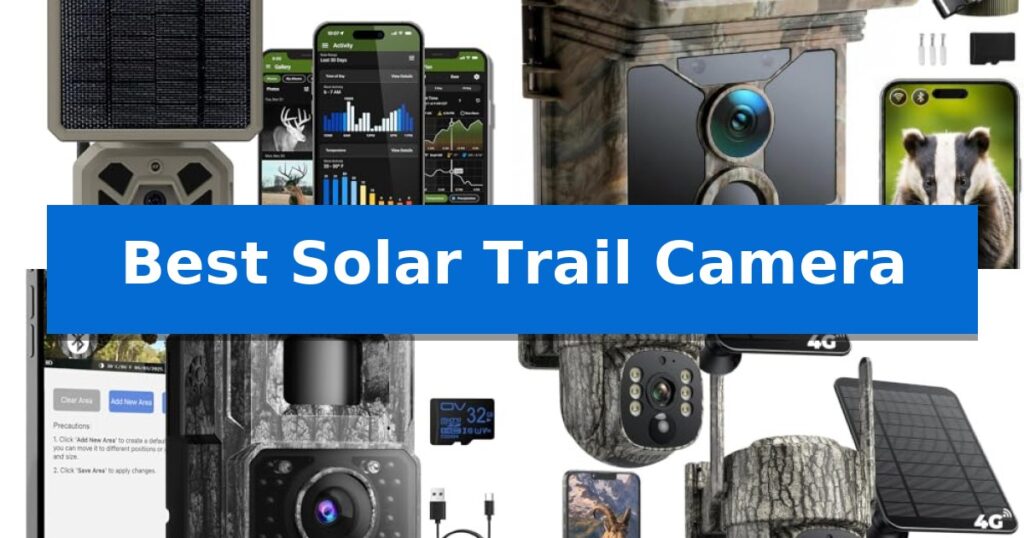
Best Solar Trail Camera in 2026: Uninterrupted Field Power
1 Moultrie Edge Solar Cellular Trail Camera — Best for Nationwide Cellular Coverage
Maintaining continuous surveillance in remote areas is simplified by the Moultrie Edge Solar Cellular Trail Camera, which eliminates the need for manual battery swaps through its integrated solar panel and built-in rechargeable battery pack. This design allows for long-term field deployment, ensuring the camera remains powered throughout the season without requiring frequent site visits.
Equipped with AI Buck Detection, the camera intelligently filters activity to deliver only relevant alerts, significantly reducing false triggers. When motion is detected, the system captures 40MP photos or 1080p HD video with audio, providing clear documentation of wildlife movement. The 0.4-second trigger speed and 100-foot detection range are engineered to capture fast-moving subjects with precision.
Connectivity is handled through a nationwide 4-carrier auto-connect feature, which automatically selects the strongest available signal across major U.S. networks without the need for manual SIM card configuration. Users can manage settings, view images, and request on-demand video remotely via the Moultrie Mobile app, where files are stored securely in the cloud.
The hardware is built for durability, featuring weather-resistant housing designed to withstand rain and heat. Installation is streamlined by the included Easy Aim mount, which allows for real-time previewing of the camera's field of view before final placement. The unit is further supported by a 2-year warranty from the date of activation, offering long-term peace of mind for outdoor enthusiasts.
PROS
- Integrated solar panel provides continuous, maintenance-free power.
- AI-powered detection reduces false alerts by identifying specific wildlife.
- Auto-connect technology ensures reliable cellular coverage across multiple networks.
- Cloud-based storage and remote app access eliminate the need for physical SD card retrieval.
CONS
- Active data plan required for cellular functionality, which is sold separately.
- Low-glow infrared flash may be visible to some wildlife compared to no-glow alternatives.
2 CEYOMUR 4K Solar WiFi Trail Camera — Reliable Integrated Solar Power
Maintaining consistent power for remote wildlife observation is simplified by the CEYOMUR 4K Solar WiFi Trail Camera, which utilizes an integrated top-mounted solar panel paired with a 5200mAh rechargeable battery. This all-in-one design minimizes the risks of cable-related power loss and water ingress, providing a reliable, long-lasting solution for outdoor monitoring without the need for frequent manual battery changes.
The camera captures high-definition content, supporting 68MP photos and 4K video at 30fps. For nighttime performance, it employs two high-power 850nm IR LEDs that provide clear visibility for wildlife identification. The system is designed for responsiveness, featuring a 0.1s trigger speed and three high-sensitivity PIR sensors that cover a wide 120° detection zone up to 20 meters away, ensuring that fast-moving subjects are captured effectively.
Usability is enhanced through local WiFi and Bluetooth connectivity, allowing users to pair their smartphones via the WILDLIFE CAM app to preview footage, adjust settings, and transfer files within a 10-meter range. The unit is built for durability with an IP66-rated housing, making it resistant to rain, dust, and humidity. A 2.0-inch built-in color screen provides a convenient interface for reviewing media and managing operational settings directly on the device.
To ensure a complete setup, the package includes a 32GB TF card, and the system supports expansion up to 256GB for extended recording needs. While the solar panel provides primary power, the camera also includes a slot for 4 AA batteries to serve as a backup power source during periods of limited sunlight or extreme cold. This combination of features makes it a versatile tool for monitoring trails, farms, and wooded property.
PROS
- Integrated solar panel and 5200mAh battery for consistent power.
- High-resolution 4K video and 68MP photo capture capabilities.
- Fast 0.1s trigger speed with a wide 120° detection angle.
- IP66-rated waterproof housing for reliable outdoor use.
- Local WiFi and app control for easy settings management.
CONS
- Local WiFi only; does not support remote viewing over the internet.
- Solar charging efficiency is dependent on sunlight intensity and exposure.
3 MAXDONE Solar Trail Camera — Flexible Split Solar Panel Design
The MAXDONE Solar Trail Camera distinguishes itself through an upgraded split solar panel design, allowing users to manually adjust the panel angle to maximize sun exposure regardless of terrain or seasonal changes. This flexible configuration ensures the integrated 6000mAh rechargeable power source remains consistently charged, providing a reliable, long-term solution for 24/7 surveillance in remote areas without the need for frequent manual battery replacements.
Engineered for high-fidelity monitoring, this device captures 4K video and 64MP images, utilizing a high-resolution sensor that excels in low-light conditions to minimize blur and noise. The camera features infrared night vision capable of recording clear footage up to 65 feet away, ensuring that wildlife activity is documented in detail without disturbing the environment. With a rapid 0.1-second trigger speed, it is optimized to accurately capture fast-moving subjects.
Usability is centered around the TrailCamGO app, which facilitates easy management via a WiFi + Bluetooth connection. The camera generates its own short-range hotspot for file downloads and configuration, allowing users to transfer media directly to their phones without needing to remove the SD card. This wireless functionality is complemented by a robust IP66 waterproof rating, ensuring the unit operates reliably during rainy or humid conditions.
The system offers versatile recording modes, including time-lapse, scheduled shooting, and a 5-shot burst mode, alongside customizable detection zones to minimize false triggers. While the unit provides significant convenience through its solar-powered design and app integration, it is important to note that it does not support home WiFi networks or cellular data, limiting remote connectivity to the camera's local hotspot range.
PROS
- Upgraded split solar panel for optimized charging efficiency.
- High-resolution 4K video and 64MP imaging capabilities.
- 6000mAh rechargeable battery supports long-term, non-stop operation.
- Fast 0.1-second trigger speed for capturing quick wildlife movement.
CONS
- No support for home WiFi or cellular networks.
- Limited wireless range of 33-50 feet for hotspot connectivity.
4 VOOPEAK 4G LTE Cellular Trail Camera — Best for Remote Multi-Area Monitoring
Maintaining surveillance over remote properties or hunting grounds often presents a challenge when traditional Wi-Fi is unavailable, making the VOOPEAK 4G LTE Cellular Trail Camera a practical solution for off-grid monitoring. This system utilizes 4G LTE connectivity with a built-in SIM card to transmit data directly to your smartphone, ensuring you stay connected to your property without needing a local network connection.
The camera is designed for versatility, featuring 360° human auto-tracking capabilities. With 355° pan and 90° tilt control accessible via the app, the device can automatically lock onto and follow moving targets, ensuring that activity is always properly framed. This functionality allows users to maintain a comprehensive view of their surroundings, functioning much like a high-end security system in a compact, outdoor-ready form factor.
For users managing multiple locations, the system offers the ability to monitor 4 areas on one screen through the "CloudEye 365" app. This synchronized viewing eliminates the need to toggle between different feeds, providing a streamlined experience for tracking activity across a farm or large hunting area. The 2.5K HD live streaming provides clear visuals, while instant motion alerts ensure you are notified immediately when activity is detected.
The bundle includes two cameras, each equipped with a dedicated solar panel, which supports continuous operation without the need for frequent battery changes. Nighttime visibility is handled by dual night vision modes, allowing users to switch between discreet infrared black-and-white monitoring and white-light full-color footage. This flexibility makes it an effective tool for both wildlife observation and property security in varying light conditions.
PROS
- 4G LTE connectivity enables remote surveillance without Wi-Fi.
- Solar-powered operation eliminates the need for constant battery maintenance.
- 360° pan and tilt with auto-tracking keeps moving targets in frame.
- Multi-camera synchronization allows viewing 4 feeds on one screen.
CONS
- Requires a separate data plan for each camera.
- Memory card not included and must be purchased separately.
5 FRKTCAM Solar Game Camera — High-Capacity Battery for Long Use
Maintaining consistent power for remote monitoring is a common challenge, but the FRKTCAM Solar Game Camera addresses this with a top-mounted solar panel paired with a built-in 5000mAh rechargeable battery. This design choice prioritizes long-term, autonomous operation, allowing the device to function effectively in outdoor environments without the constant need for manual battery replacements.
This system captures high-resolution 64MP still photos and UHD 4K video with audio, ensuring that wildlife activity is recorded with significant detail. The camera utilizes 120-degree wide-angle night vision that reaches up to 100 feet, featuring adaptive lighting technology to manage exposure levels and prevent the common issues of over- or underexposure during low-light conditions.
Durability and ease of integration are central to its construction. The FRKTCAM Solar Game Camera features an IP67 waterproof rating to protect internal components from rain and environmental moisture. The bottom-opening battery compartment keeps the design functional and secure, while the included mounting bracket simplifies the installation process for various outdoor settings, including property security or wildlife observation.
For added utility, the camera includes a 64GB memory card to provide immediate storage capacity. Users can leverage advanced settings such as loop recording, custom monitoring periods, and timestamping to tailor the device to specific surveillance needs. Its flexible activation technology is designed to trigger rapidly, ensuring that dynamic movements are captured accurately regardless of the time of day.
PROS
- Integrated solar panel and 5000mAh battery for extended power.
- High-resolution 4K video and 64MP photo capture capabilities.
- IP67 waterproof rating for reliable outdoor weather protection.
- Includes a 64GB memory card for immediate storage.
CONS
- Fixed internal battery design may limit power flexibility compared to swappable battery systems.
Best Solar Trail Camera Buying Guide
Power Management and Solar Efficiency
The primary advantage of a solar-powered system is the elimination of frequent battery swaps. Look for models with integrated solar panels and high-capacity rechargeable lithium-ion batteries. These systems are designed to harness ambient sunlight, providing a continuous power cycle that keeps your camera active even in remote, hard-to-reach locations.
Consider the camera's ability to handle low-light conditions and extended periods of cloud cover. Some advanced units include secondary battery support, such as AA battery compartments, which act as a reliable backup during winter months or prolonged rainy seasons to ensure your monitoring remains uninterrupted.
Connectivity: Cellular vs. Local WiFi
Choosing between cellular and local WiFi connectivity depends entirely on your access to the site. Cellular trail cameras utilize mobile networks to send photos and videos directly to your smartphone, providing instant alerts and remote management capabilities. These are ideal for properties where you cannot visit frequently.
Conversely, local WiFi or Bluetooth models create a short-range hotspot for file transfers and setting adjustments. While these do not offer remote cloud access, they are excellent for backyard monitoring or areas where cellular signals are non-existent, often providing a more cost-effective solution without monthly subscription fees.
Image Quality and Detection Speed
High-resolution imaging is critical for identifying specific wildlife or security threats. Look for cameras that offer at least 40MP photo resolution and 4K video recording capabilities. High-quality sensors ensure that you capture fine details, such as antler characteristics or animal behavior, even in challenging lighting conditions.
The trigger speed and PIR detection range determine how effectively the camera captures fast-moving subjects. A trigger speed of 0.4 seconds or faster, combined with a wide detection zone, ensures that you capture the animal's full movement rather than just a partial image or an empty frame.
Durability and Field Security
Trail cameras are exposed to harsh environmental conditions, including rain, heat, and humidity. Ensure your chosen model features a weather-resistant housing with an IP66 or IP67 rating. This protection is vital for preventing water ingress and internal component damage over long-term outdoor exposure.
Physical security is equally important when deploying cameras in public or remote areas. Features like lock holes for security cables, password protection, and discreet, low-glow infrared flash technology help protect your investment and ensure that the camera does not spook wildlife during nighttime operations.
Ease of Setup and Mounting
A user-friendly mounting system, such as an Easy Aim mount, allows for precise camera placement and real-time previewing of the field of view. This ensures that your camera is perfectly aligned with trails or feeders, maximizing the effectiveness of your PIR sensors.
Consider the flexibility of the solar panel design. Split solar panel designs offer the advantage of adjustable angles, allowing you to position the panel to face the sun directly regardless of the camera's mounting orientation. This flexibility significantly improves charging efficiency in shaded or uneven terrain.
Frequently Asked Questions
Do solar trail cameras work in shaded areas?
Yes, most modern solar trail cameras are designed to charge efficiently with ambient light. However, for best results, choose a model with an adjustable or split solar panel to maximize sun exposure, or ensure the camera is placed where it receives at least a few hours of direct sunlight daily.
Do I need a subscription for all solar trail cameras?
No. Only cellular-enabled trail cameras require a data plan subscription to transmit images to your phone. WiFi and Bluetooth-only models do not require subscriptions, as they transfer data directly to your device via a local connection.
Can I use these cameras for home security?
Many solar trail cameras are suitable for property monitoring. Features like motion-activated recording, instant alerts, and high-resolution video make them effective for keeping an eye on backyards, farms, or remote property boundaries.
What happens if the internal battery dies?
Most high-quality solar cameras include a built-in rechargeable battery. Some models also feature a secondary backup battery compartment (usually for AA batteries) to ensure the camera continues to function during extended periods of low sunlight.
Are these cameras waterproof?
Yes, most trail cameras are rated IP66 or IP67, meaning they are built to withstand rain, dust, and humidity, making them suitable for year-round outdoor use in various climates.
Conclusion: Our Top Pick
For those seeking the most reliable and feature-rich option, the Moultrie Edge Solar Cellular Trail Camera stands out as the premier choice. Its integrated solar technology eliminates the need for manual battery swaps, while its nationwide cellular auto-connect feature ensures you receive instant alerts from virtually any location. The combination of 40MP imaging and AI buck detection makes it an exceptionally powerful tool for serious wildlife scouting.
While other models offer excellent local-only features or flexible panel designs, the Moultrie Edge provides the best balance of convenience, connectivity, and performance. If you require a set-it-and-forget-it solution that keeps you connected to your property from anywhere, this camera is the most effective investment for your monitoring needs.